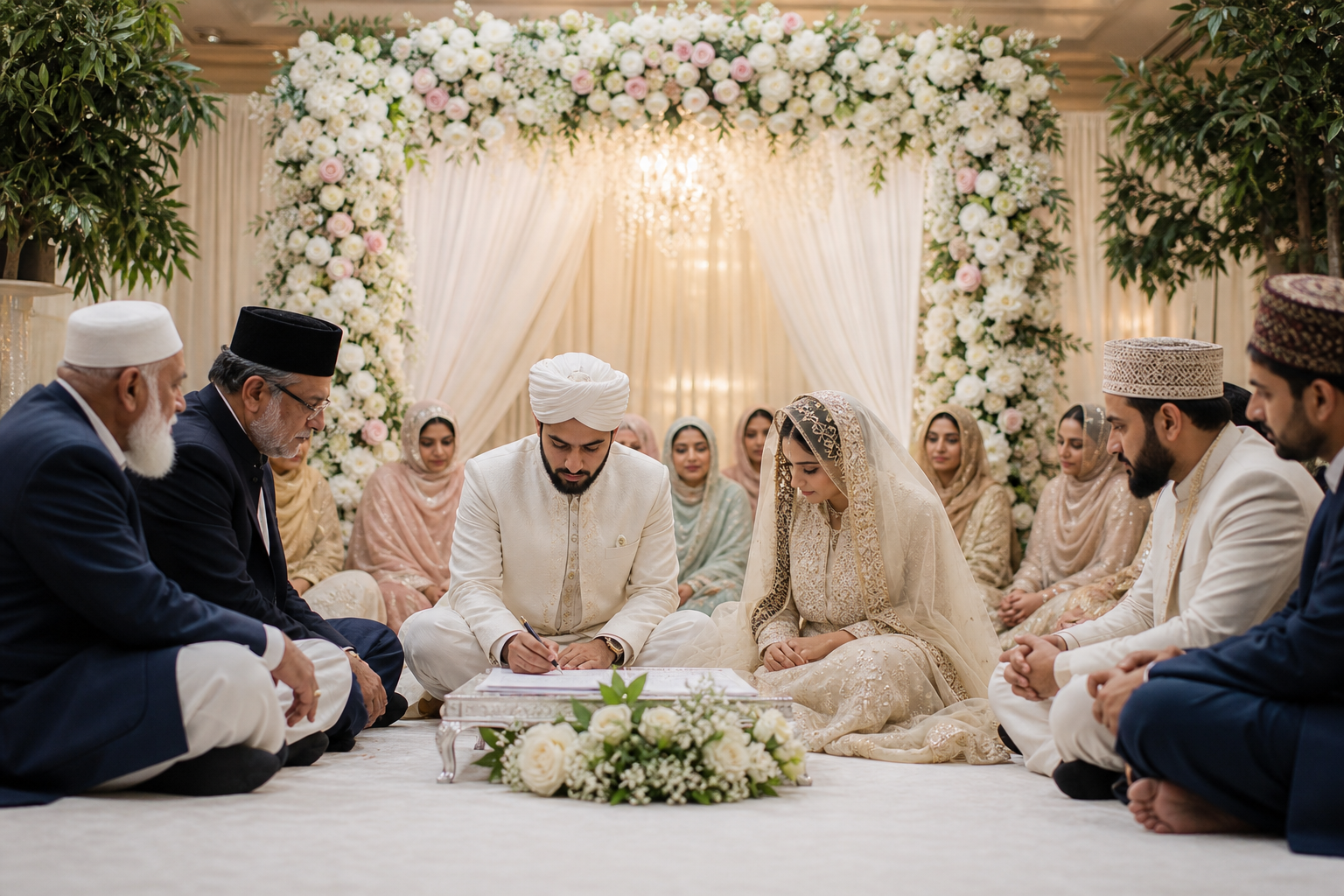
7-step Nikkah ceremony checklist to make the day run smoothly
What this Nikkah ceremony checklist covers
This article gives couples, parents, and planners a single, numbered Nikkah ceremony checklist to confirm ritual essentials, people and documents, venue and sound logistics, vendor timings, and a day-of run sheet. Use it as a working briefing for family and suppliers, then copy the run sheet section into your planner or hand it to the person running the ceremony.
Where the checklist refers to religious elements (consent, witnesses, mahr, ijab and qubool) it follows established practice and ceremony descriptions. For ceremony overviews and planning examples see resources from Jubily, Salwah Events, Invyt, and The Framers. For a printable planning sheet and a local planner resource, see Patel Events’ Nikkah ceremony planning checklist.
The 7-step Nikkah ceremony checklist
1. Confirm consent and the core ritual (ijab and qubool)
What to do: Verify that both bride and groom freely consent to the marriage and that the officiant (imam or authorised person) will perform the ijab (offer) and qubool (acceptance) in the language you have agreed. Confirm any readings, translations, or short sermons beforehand.
Who is responsible: bride and groom for consent; family or planner to confirm wording with the officiant; imam to lead the ritual.
Timing: at least two weeks before the ceremony confirm the officiant, and review the exact wording and any translations a week ahead.
Why it matters: clear verbal consent and the formal offer and acceptance are core to the Nikkah ceremony. Ceremony guides such as Jubily and Invyt outline these legal-religious essentials.
2. Verify the mahr and how it will be recorded
What to do: Confirm the agreed mahr (the gift or financial arrangement from the groom to the bride), decide whether it will be symbolic or immediate payment, and prepare a written note to be attached to the marriage contract or recorded by the officiant.
Who is responsible: the groom to propose the mahr; the couple or families to agree terms; the officiant or witness to note it on the contract.
Timing: agree terms during formal pre-wedding discussions and have the written mahr wording ready for signing on the day.
Notes: Documenting the mahr in writing prevents misunderstandings and is commonly included on Nikkah paperwork and planning checklists.
3. Confirm two adult Muslim witnesses and their details
What to do: Name two adult Muslim witnesses who will be present, and collect their full names and ID details for the paperwork. Confirm where they will sit and that they understand their role (witnessing the ijab and qubool and signing the contract).
Who is responsible: families or planner to secure witnesses; officiant to confirm their eligibility.
Timing: finalise witness names at least one week before the ceremony and brief them on arrival time and signing procedures.
Evidence: Guidance on required witnesses and their role is outlined in ceremony descriptions and practical checklists; ensure the people you nominate meet the officiant’s eligibility checks.
4. Book and brief the officiant, venue, and sound setup
What to do: Confirm the officiant (imam or authorised celebrant), the exact venue space for the Nikkah, and an appropriate PA system or microphone so everyone can hear the ijab and qubool. If the ceremony is in a mosque, private home, or a hired hall, check the building’s policy on photography and mixed seating.
Who is responsible: couple or planner to book the officiant and venue; venue manager to confirm sound and access; planner or AV supplier to perform sound checks.
Timing: book the officiant and venue as early as possible; schedule a sound or microphone check on the ceremony day morning or a rehearsal shortly before the service.
Practical note: core logistical items for a Nikkah—officiant confirmation, witness checks, required documents, venue space and PA—are highlighted in planning guides, which recommend early confirmation of these elements.
5. Prepare and check paperwork to take on the day
What to do: Collate the marriage contract, written mahr agreement, witness name list, copies of any required ID, and any venue-specific permit or booking confirmation. Have two clean copies of the contract for signing and an envelope for completed paperwork.
Who is responsible: the couple to provide ID and contract particulars; the officiant or a designated family member to manage signatures and storage.
Timing: assemble the paperwork a week before the ceremony and carry a final folder to the venue on the day.
UK note: practices differ by mosque and venue; some locations will ask to see ID for witnesses or the couple. Practical Nikkah checklists frequently list these items as mandatory to avoid delays.
6. Coordinate vendors: photographer, videographer, caterer, and DJ/PA
What to do: Issue a short vendor brief with arrival times, a shot list for photographers, guidance on where the imam and witnesses will sit, and PA routing so the imam can be heard without feedback. Confirm catering arrival and plating times relative to the ceremony end and any post-ceremony rituals.
Who is responsible: planner or couple to brief vendors; vendors to confirm arrival and technical needs.
Timing: confirm vendor arrival times and the shot list two weeks before and reconfirm 48 to 72 hours before the event. Schedule a 15 to 30 minute AV check near ceremony time.
Local support: a Harrow or London planner can coordinate vendor briefs, AV checks and a focused shot list so photographers and videographers know the ceremony cues. Patel Events offers local vendor coordination and example briefs.
7. Finalise a day-of run sheet and share it with all key people
What to do: Produce a concise day-of run sheet that lists arrival and setup times for family, vendors and officiant, the order of service with time estimates, signing and photo cues, and contact numbers for the planner and venue. Print two copies: one for the person running the ceremony and one for your immediate family lead.
Who is responsible: planner or designated family organiser to create and distribute the run sheet.
Timing: distribute the run sheet 48 hours before the ceremony and give a printed copy to each vendor on arrival.
Why this matters: a short run sheet prevents common day-of confusion and ensures photographers and AV teams capture the key moments. Ceremony-ready checklists routinely include a run sheet, PA and signing cues as core items.
Sample day-of run sheet and short order of service

Use this simple timeline as a copyable template for the person running the ceremony.
- 09:30 Vendors and AV arrive, PA and microphone test
- 10:00 Photographer arrives and reviews shot list with couple
- 10:30 Bride and groom arrival, private pre-ceremony photos
- 11:00 Guests seated; witnesses seated and briefed
- 11:15 Officiant arrival final check and opening remarks
- 11:20 Ijab (offer) and qubool (acceptance), witnesses observe
- 11:25 Signing of contract and mahr acknowledgement
- 11:35 Family photos and short group shots
- 12:00 Reception or refreshments begin
Tip: keep the order of service to a single page for family and vendors. For a downloadable or printable run sheet, see Patel Events’ Nikkah ceremony planning checklist for a planner-friendly version.
UK and London-specific documents and venue policies to confirm
Confirm the mosque or venue policy on Nikkah ceremonies: some locations require proof of booking, ID for witnesses, or restrictions on photography and food service. Religious ceremony practice varies by community and mosque, so always check with the chosen officiant and venue manager rather than assuming uniform rules across London.
Note on civil registration: a religious Nikkah is a religious contract; many couples in the UK also complete civil registration if they require a marriage recognised by civil authorities. Confirm any civil registration needs directly with your local registrar and the officiant if legal registration is important to you.
Vendor coordination: practical briefs and what to ask
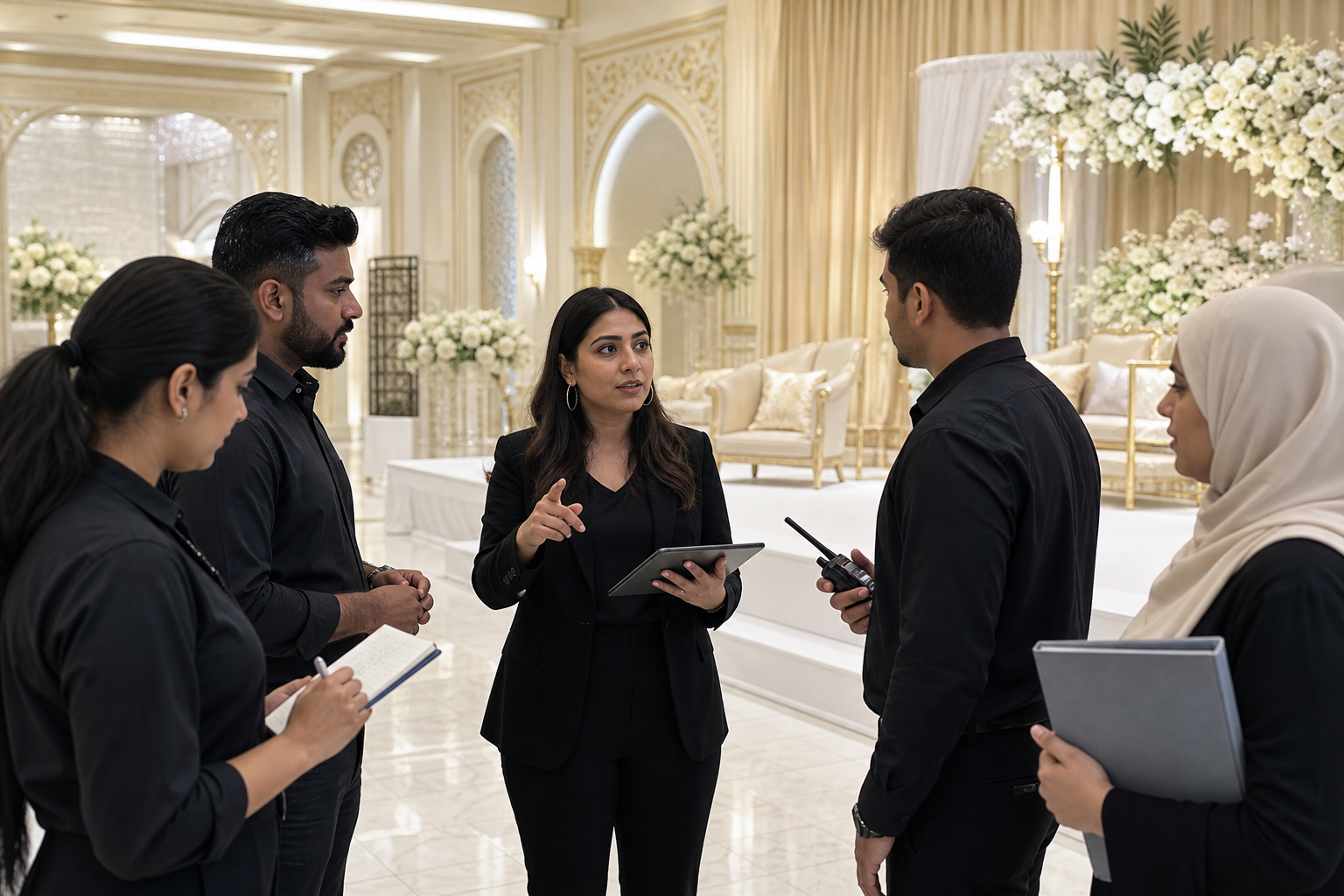
Photographer and videographer: provide a 6 to 10 shot list of must-capture moments (entrance, ijab, qubool, contract signing, family photos) and specify whether the imam needs to be miked. Ask for arrival and backup times for equipment.
PA, DJ and sound: confirm a wired microphone for the officiant and a quiet monitor level so the photographer’s playback does not interrupt the ritual audio. Plan a short AV rehearsal 20 to 30 minutes before the ceremony begins.
Caterer: confirm guest numbers for portioning and the service timeline if refreshments follow the ceremony. If the Nikkah is followed immediately by a reception, coordinate plating and service start times with the run sheet.
Planner role: a planner will consolidate these briefs, run the AV checks, confirm photographer placement, and manage the signing moment so the ceremony stays focused and respectful. Patel Events can prepare a one-page vendor brief for each supplier and manage local coordination in Harrow and London.
Common concerns, cultural sensitivities, and resolution steps
Seating and gender arrangements: agree seating plans with families and venue staff ahead of time. If separate seating is customary, show clear signage and a steward to guide guests.
Language and translation: if parts of the ceremony use Arabic or another language, provide an English translation or a short summary so non-speakers understand the sequence and can participate respectfully.
Disagreements about witnesses or who signs the contract: raise the issue early with the officiant and consult a religious authority if needed. Many planning guides recommend a calm family discussion before the ceremony; a planner can act as a neutral coordinator on the day.
When in doubt, consult the officiant or a local mosque for religious rulings and your local registrar for civil questions. Ceremony checklists and planning resources offer helpful context on these common edge cases.
Frequently asked questions
Do I need to register my Nikkah with UK authorities for the marriage to be legal
A religious Nikkah is a religious contract. If you need a marriage recognised under UK civil law you should confirm civil registration requirements with your local registrar. Requirements and local practice vary, so check early with the registrar and your officiant rather than assuming the religious ceremony alone will provide civil registration.
Who can act as the two required witnesses at a Nikkah
Typically two adult Muslim witnesses are required to observe the offer and acceptance and sign the contract. Confirm eligibility and any ID requirements with the officiant or venue before the ceremony.
What should be included in the mahr and how should it be recorded
The mahr can be monetary or symbolic. Record the agreed terms in writing and attach the wording to the marriage contract, and have both families and the officiant acknowledge it. Preparing the mahr wording in advance avoids misunderstandings on the day.
Can a Nikkah be held in a registry office, mosque, or a private venue in London
Yes, Nikkah ceremonies take place in mosques, private homes, hired halls and other venues. Each location sets its own policies on timings, photography and capacity. Confirm these rules with the venue manager and your officiant before booking.
What should a simple, copyable day-of run sheet for a Nikkah include
Include vendor arrival times, guest seating time, officiant arrival, order-of-service with minutes for ijab/qubool and signing, photography cues, and contact numbers for planner and venue. Keep it to one page and distribute it 48 hours before the ceremony.
If you would like a printable run sheet or a planner-prepared vendor brief, Patel Events provides a downloadable Nikkah checklist and can produce a customised day-of run sheet for Harrow and London ceremonies. For the printable checklist and local planning support see the Nikkah ceremony planning checklist or contact Patel Events.
For a planner-prepared, printable Nikkah checklist and a customised day-of run sheet, contact Patel Events.