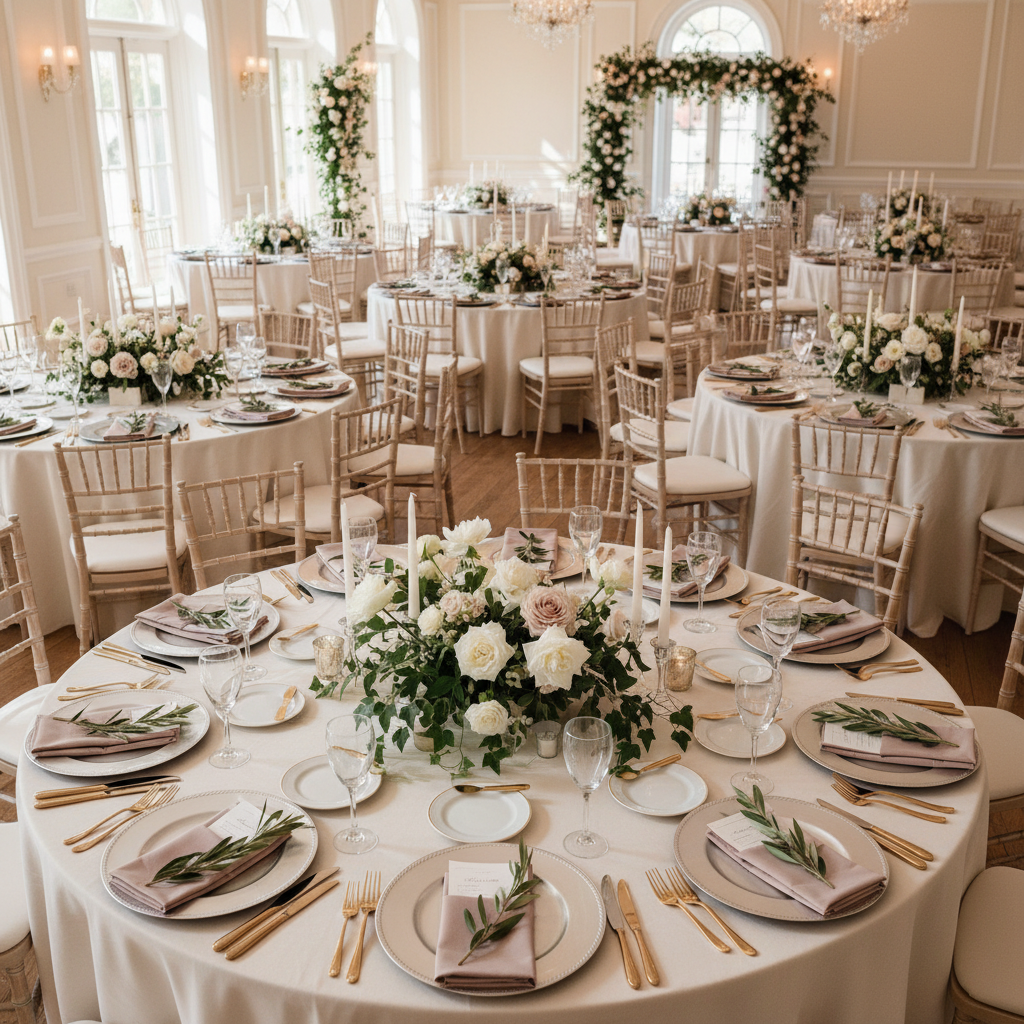
Wedding tablescapes and centerpieces are the curated combination of linens, place settings, florals, candles, and decor that define your reception’s look and feel. This wedding tablescapes and centerpieces guide explains how Patel Events in HA3 0PB at Abercorn Garden designs cohesive tables that wow guests and photograph beautifully while fitting your rituals and logistics.
By Patel Events • Last updated: 2026-05-05
What is a wedding tablescape?
A wedding tablescape is the intentional design of the entire tabletop—linens, chargers, plates, glassware, flatware, centerpieces, candles, stationery, and accents—arranged to unify style and guest experience. Great tablescapes balance beauty, function, and cultural rituals so dining, speeches, and photos flow without visual or physical clutter.
In our experience styling 500+ events across the UK, a strong tablescape starts with proportion and purpose. Each item must earn its place. That discipline is how intimate nikkahs, lively sangeets, and grand Gujarati receptions feel coordinated instead of crowded.
What a full tablescape includes
- Foundation: Table shape, floor plan, linens, runners, overlays, and chair style.
- Place settings: Chargers, dinner and salad plates, napkin fold, flatware, and glassware.
- Centerpieces: Low bowls, compotes, bud vases, candelabras, or elevated stands.
- Light layers: Taper, pillar, and votive candles; fairy lights; safe LED options.
- Stationery: Place cards, menus, table numbers, signage, and favors.
- Accents: Textures (velvet, rattan), metals (gold, brass), and seasonal greenery.
Here’s the thing: form follows function. If a 72-inch round hosts 10 guests, a centerpiece wider than 20–24 inches risks elbow clashes. Design choices must respect real dimensions and service flow.
Why thoughtful tablescapes matter
Thoughtful tablescapes elevate guest comfort, unify your visual story, and create cinematic photos. The best designs respect sightlines for speeches, keep surfaces usable for plates and glasses, and complement rituals like ring exchanges or blessing trays without blocking movement or cameras.
You might be wondering how much a table’s look truly changes the night. The reality is, guests engage with their setting for hours. Small choices—napkin texture, candle height, greenery density—affect conversation, food service, and how your film captures reactions.
Benefits you’ll feel and see
- Clear sightlines: Keep centerpieces under 12 inches or above 24–28 inches to avoid face-level blockages during toasts.
- Comfort-first spacing: Allow 24 inches per chair for easy seating and 20–24 inches for low arrangements on 72-inch rounds.
- Photogenic layers: Repeating elements (candles every 8–10 inches, bud vases in threes) create rhythm on camera.
- Ritual alignment: Make room for aarti thalis, mehndi trays, or ring boxes within reach—no last-minute reshuffles.
- Brand consistency (galas): Palette, texture, and lighting echo your identity across stage, dining, and lounges.
When our cinematography team is on-site, we coordinate candle positions and reflective surfaces so lenses avoid glare and faces glow evenly. That synergy between styling and film is why your highlight reel feels intentional.
How the design process works
The design process moves from vision to floor plan to tabletop mockups, then to vendor confirmations and timed setup. We translate your story into a palette, test proportions, confirm rentals and florals, and finalize a run-of-show so installation and service flow smoothly.
Step-by-step workflow we follow
- Discovery and vision: Mood, rituals, guest count, and non-negotiables. We align color and cultural motifs early.
- Floor plan and flow: Table shapes, aisle widths (5–6 feet for main walkways), and server clearances.
- Palette and texture draft: 2–3 hero colors, 1–2 metals, 1 texture (velvet, linen, silk) to anchor the scheme.
- Mockup table: We build one full setting: linens, centerpiece, candles, stationery, chair. Then we refine heights and spacing.
- Vendor lineup: Rentals, florals, candles/LEDs, stationery, and specialty decor confirmed with timelines.
- Run-of-show: Load-in, setup (often 3–5 hours per 200 guests), handoff to catering, and strike plan post-event.
Common pitfalls we eliminate
- Overfilling tables: If plates and glasses barely fit, the centerpiece is oversized—scale back by 15–20%.
- Unstable candles: Drip-prone tapers near loose fabrics are a hazard; choose dripless or LED in drafty rooms.
- Color misfires: Napkin and linen tones must match under venue lighting; always test under warm fixtures.
- Last-minute signage: Table numbers should be visible at 6–8 feet; test type size and holder stability.
We’ve found the mockup table to be the turning point. Seeing your exact bowl, flower scale, and candle rhythm clarifies choices instantly—and prevents costly rework on the day.
Popular styles and approaches
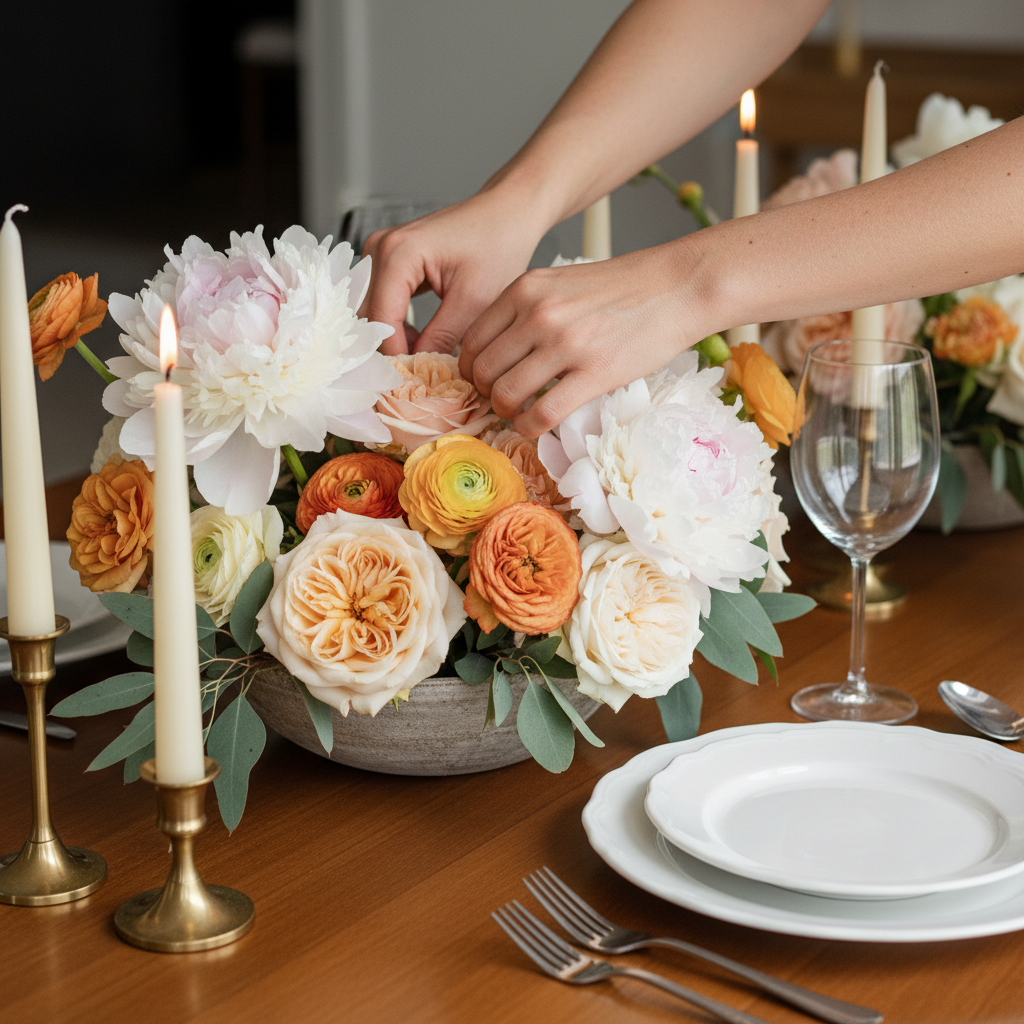
Popular wedding tablescapes include low garden bowls, airy elevated stands, mixed bud-vase meadows, candle-forward minimalism, and garland runners. Each approach balances visibility, setup time, floral volume, and atmosphere. Choose a style that suits your rituals, venue lighting, and service flow.
Low and lush garden bowls
- Look: Romantic, full, and face-to-face friendly. Great for heartfelt toasts.
- Best when: 60–72 inch rounds with 8–10 guests; ceiling height is average; speeches are central.
- Pro tip: Keep height under 12 inches; use 1–2 hero blooms (peonies, garden roses) and airy fillers.
Elevated stands (above sightline)
- Look: Dramatic without blocking faces; stems float at 24–32 inches.
- Best when: Large rooms, big guest counts, long banquet tables, lively sangeets with packed dance floors.
- Pro tip: Weight the base and test wobble; keep the canopy airy for server reach.
Bud-vase meadows
- Look: Scattered, organic, and customizable per table.
- Best when: You want flexibility with seasonal stems and easy re-distribution to lounges or mandap edges.
- Pro tip: Group in threes, vary stem heights by 2–3 inches, and repeat every 8–10 inches along runners.
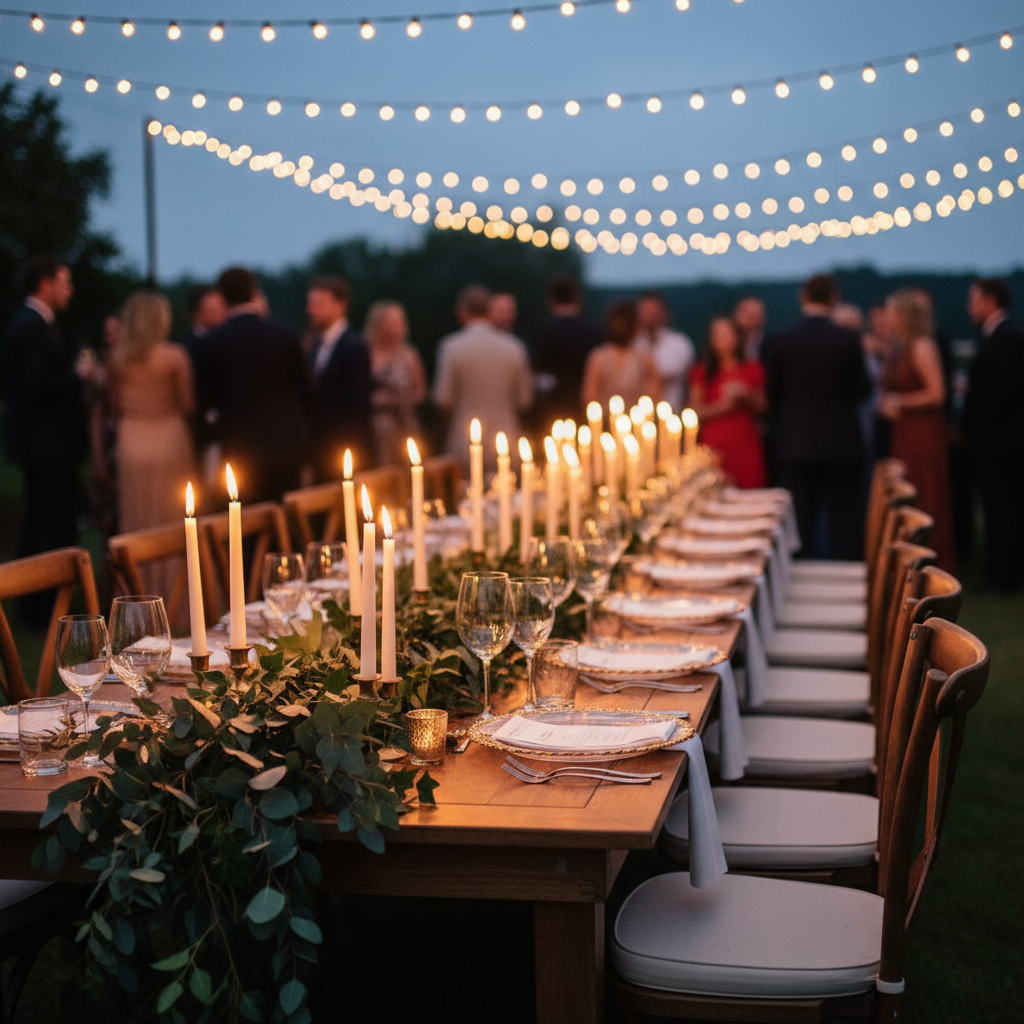
Candle-forward minimalism
- Look: Warm, architectural, and budget-savvy on floral volume.
- Best when: Evenings, cinematic films, and venues that shine with ambient glow.
- Pro tip: Mix pillar, taper, and votives; use hurricanes or LED where drafts or venue rules require.
Greenery garlands and runners
- Look: Textural and elongated; great on banquet tables and for mehndi nights.
- Best when: You need quick setups and a cohesive line across long tables.
- Pro tip: Add occasional bloom clusters; avoid heavy fragrance near sensitive guests.
For grand receptions in Greater London, we often hybridize: elevated pieces on perimeter tables for drama and low bowls at the center for intimacy. That mix keeps photos dynamic and conversations easy.
Best practices for a flawless look
Focus on function-first sizing, consistent repetition, and lighting tests. Keep sightlines clear, place candles safely, and coordinate color under venue lighting. Use a mockup table to finalize spacing, then document every measurement for setup teams to replicate at scale.
Proportion and spacing
- Leave 15 inches of plate-to-center clearance for servers and guest comfort.
- On 8-foot banquets, set runners at 14–18 inches wide; repeat candles every 8–12 inches.
- For elevated stands, maintain 24–28 inches to the canopy base to clear faces.
Lighting and flame safety
- Use hurricanes for pillars near drape; switch to LED in drafty or historic rooms.
- Stagger candle heights (votives, 8-inch pillars, 10–12-inch tapers) for depth without glare.
- Confirm with venues on open-flame rules during contracting; build LED equivalents into plans.
Color consistency and materials
- Test linens and napkins under the venue’s warm fixtures and daylight—colors shift 5–10%.
- Anchor metals (e.g., brushed gold) and repeat 2–3 times per place setting.
- Balance matte (linen, ceramic) and gloss (glass, lacquer) to avoid flat images.
Here’s why this matters: your setup crew replicates dozens of tables quickly. Clear rules—8-inch candle spacing, 1-inch napkin reveal, 20-inch centerpiece max—turn taste into repeatable systems.
Tools, checklists, and resources
Use a one-page spec, a mockup photo with measurements, and a run-of-show to align teams. A simple toolkit—tape measure, floral clippers, museum putty, LED remotes, gaffer tape—solves 90% of on-the-day issues. Share a color key with rentals, florals, and stationery for consistency.
Printable specs you’ll want
- Tablescape spec sheet: Linen code, place setting map, centerpiece height and width, candle counts.
- Mockup photo sheet: Labeled image of the final table with inches/cm for quick reference.
- Run-of-show: Load-in, styling window, candle lighting schedule, and strike plan.
Kit for your stylist
- Museum putty and clear clips for candle and holder stability.
- LED remotes, spare batteries, and dimmers to balance glow.
- Gaffer tape, zip ties, lint roller, microfibers, and a compact steamer.
Menu color and serveware also influence the palette; explore practical menu planning tips when coordinating hues with cuisine and plating style.
Free 20-minute styling consult
Planning a South Asian wedding, a corporate annual gala, or a milestone dinner? Share your palette and seating plan—we’ll suggest a mockup table and a fast checklist to align your vendors.
Local styling and logistics in HA3 0PB (Greater London)
In HA3 0PB and across Greater London, we time setups around venue access windows, transit flow, and local fire rules. We favor LED in draft-prone rooms and plan wide aisles for larger family blessings. Early mockups reduce day-of changes at busy sites.
Local considerations for HA3 0PB
- Plan arrivals with nearby Kenton station traffic in mind; widen main aisles to 5–6 feet to keep the processional smooth.
- Winter sunsets arrive early; schedule candle lighting before speeches and confirm LED dimming for video.
- For multicultural guest lists, label allergy-friendly tables and avoid heavily perfumed florals near elders.
We also map vendor load-in relative to Preston Road Station to avoid peak-time congestion. That logistics-first planning keeps styling on schedule and stress low.
Case studies and examples
Real events prove what works. Below are brief case highlights across South Asian weddings, corporate galas, and destination receptions—showing how palette, proportion, and logistics translate into guest comfort and cinematic visuals without overcomplication.
Gujarati reception in Greater London (320 guests)
- Goal: Palatial elegance with easy service during a vegetarian feast.
- Approach: Hybrid layout—elevated stands around the perimeter, low bowls at center, candle meadows on head table.
- Result: Clear sightlines at 28 inches; servers navigated 6-foot aisles; highlight film captured candle glow without glare.
Mehndi and sangeet night (200 guests)
- Goal: Vibrant color, fast turnover from mehndi seating to dance floor.
- Approach: Bud-vase meadows with marigolds and roses, textured runners, and LED candles for quick resets.
- Result: Tables flipped in under 30 minutes; photos show joyful color without cluttered surfaces.
Corporate annual gala (brand-aligned)
- Goal: Extend brand palette onto dining tables without feeling like signage.
- Approach: Monochrome linens with a brass accent, geometric candle clusters, and subtle logo hues in place cards.
- Result: Cohesive look across stage, lounges, and tables—exactly what our annual gala planning framework recommends.
Intimate nikkah (60 guests)
- Goal: Sacred simplicity with generous space for blessings.
- Approach: Low, airy bowls in neutral tones; clear runners for tray placement; minimal scent.
- Result: Unobstructed photos during vows and soft candlelight that read beautifully on film.
Destination welcome dinner (Goa)
- Goal: Tropical warmth, ocean breeze resilience.
- Approach: Greenery garlands with LED tapers in hurricanes; sand- and shell-inspired accents.
- Result: Stable flames, natural textures, and quick setup despite coastal winds.
Udaipur palace reception
- Goal: Royal drama with efficient service for a multi-course dinner.
- Approach: Elevated stands with airy canopies; gold-rim glassware; structured service lanes.
- Result: Regal ambiance and seamless pacing; cameras floated through clear sightlines.
Each scenario used the same playbook: mockup once, measure everything, repeat consistently. That’s how large teams hit identical details across dozens of tables—without second-guessing.
Centerpiece comparison table
Compare centerpiece types by visibility, setup time, floral volume, reusability, and ideal table shapes. Use this table to match your aesthetic with practical constraints like service lanes and ceiling height.
| Type | Visibility | Setup Time | Floral Volume | Reusability | Best For |
|---|---|---|---|---|---|
| Low garden bowl | Excellent | Moderate | Medium–High | Move to lounges | Rounds (8–10 guests) |
| Elevated stand | Clear sightlines | Slower (stability) | Medium | Pedestals/entrance | Banquets, large rooms |
| Bud-vase meadow | Flexible | Fast | Low–Medium | Gifting to guests | Any table shape |
| Candle-forward | Warm ambiance | Fast | Low | Reuse candles | Evening receptions |
| Greenery runner | Linear drama | Moderate | Low–Medium | Repurpose next day | 8–10 ft banquets |
Remember to align with venue policies. Some properties limit open flame or request LED in heritage rooms; others need weighted stands for safety. When evaluating venues, review their weddings page for visual cues—see general inspiration on this weddings overview.
Cinematography and the tablescape
Great tablescapes make films glow: warm, layered light; reflective accents placed to avoid lens flare; and clear lines for steadicams between tables. Coordinate candles, metals, and greenery heights with your cinematographer for flattering skin tones and easy camera paths.
- Even lighting: Mix warm LED tapers with low votives to avoid harsh shadows on faces.
- Glare control: Angle mirrors and metallic chargers so key lights don’t bounce into lenses.
- Camera paths: Keep 4–5 feet between tables for roaming shots without chair bumps.
- Hero table: Slightly denser candles and taller blooms on the head table read as focal points.
We often pre-light a test table, shoot 20–30 seconds of sample footage, and adjust candle spacing or metal angles. That micro test prevents hours of color correction later.
Stationery, keepsakes, and rituals
Stationery and keepsakes weave story and function: menu clarity, name cards for seating, and small trays or boxes for rituals. Keep layouts legible at a glance and leave clear space near the centerpiece for blessing trays or ring moments captured on camera.
- Place cards: Legible at arm’s length; consistent type; stable holders.
- Menus: Visible without moving plates; reinforce palette; note allergen icons.
- Keepsakes: Coasters, small candles, or local sweets—tidy and photo-friendly.
- Ring moments: Style a minimal tray and keep it within reach for the photographer; for general ring styling ideas, browse this wedding ring overview.
For multicultural celebrations, dual-language cards and simple icons (vegetarian, nut-free) reduce confusion and speed service.
How to build your tablescape: from blank table to final photo
Build in layers: linens and runners, place settings, centerpiece anchor, candle rhythm, stationery, and final polish. Measure once, then repeat the pattern across all tables so the room feels intentional from every camera angle.
- Foundation down: Steam linens, align seams, and clip corners under tables.
- Place setting map: Chargers centered; napkin fold repeated; glassware triangle consistent.
- Center anchor: Place the bowl or stand; confirm max width and height for sightlines.
- Candle rhythm: Alternate heights; test LED dim level; use museum putty for stability.
- Stationery set: Menus placed; table numbers visible at 6–8 feet.
- Final check: Walk the room at guest eye level; take a quick phone video to catch gaps.
Repeatable patterns are your friend. If a runner is 16 inches and tapers are 10–12 inches tall, write it down. The spec turns taste into a system your team can scale.
Frequently Asked Questions
These quick answers address the most common styling questions couples and planners ask our team. Use them to align expectations with venues and vendors before mockup day.
What’s the ideal height for wedding centerpieces?
Keep low arrangements under 12 inches so guests see across the table. For elevated stands, keep the canopy base at 24–28 inches to clear faces while preserving drama and server reach.
How do I keep candles safe and stable?
Use hurricanes for pillars near fabrics, add museum putty under holders, and switch to LED where drafts or venue rules apply. Stagger heights and confirm flame policy with your venue in advance.
What’s the best tablescape style for small venues?
Choose low bowls or bud-vase meadows. They protect sightlines, scale to tighter spaces, and let you reuse stems at the bar or lounges. Candle-forward minimalism also reads luxe without using much surface area.
How early should I build a mockup table?
Four to six weeks before the wedding is ideal. It locks your measurements, confirms rentals and florals, and gives time to adapt to venue lighting or guest accessibility needs.
Can my same tablescape work for a corporate gala?
Yes—apply the same proportion rules and adapt palette and stationery to brand guidelines. Our annual gala playbook mirrors wedding styling steps but adds stage sightlines and sponsor visibility.
Key takeaways and next steps
Measure once, repeat everywhere, and design for sightlines. Lock your spec with a mockup, document candle rhythm and heights, and coordinate color under venue lighting. That’s how your tablescape looks refined in person—and flawless on film.
- Start with a mockup table; write exact heights and spacing.
- Keep low pieces under 12 inches or elevate above 24–28 inches.
- Repeat elements every 8–12 inches for visual rhythm.
- Plan LED options for drafty rooms and heritage spaces.
- Coordinate palette with menu, rentals, and stationery early.
Ready to translate this wedding tablescapes and centerpieces guide into your event? Share your floor plan and palette—we’ll build a mockup spec you can hand to every vendor.
Serving couples and teams across London, Leicester, Kent, and Tooting—with destination expertise from Udaipur to Goa.