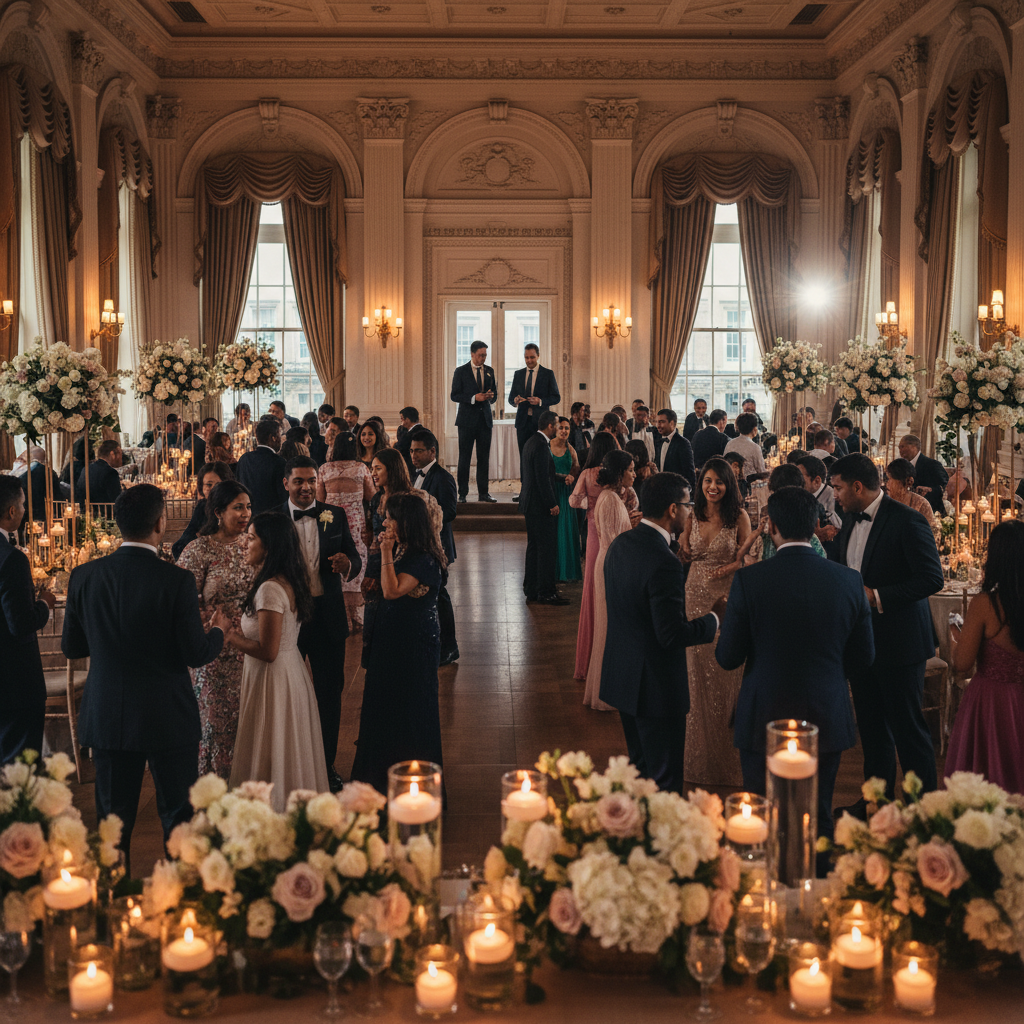
Wedding event management is the end-to-end planning, coordination, and on-the-day direction that turns a couple’s vision into a seamless celebration. From our base at Abercorn Garden (HA3 0PB) in Greater London, Patel Events delivers culturally fluent, detail-precise weddings and sangeets—so you enjoy the day while we run the show.
By Shani Patel — Patel Events
Last updated: 2026-06-03
Quick Summary and Table of Contents
Wedding event management brings together design, logistics, vendor coordination, timelines, and cultural protocols under one accountable lead. This guide explains what it is, why it matters, how it works, types of support, proven best practices, tools we use, and real case examples from London and UK South Asian weddings.
Here’s what you’ll find in this complete guide to wedding event management for London couples and families planning South Asian and multicultural celebrations:
- What wedding event management includes—and what it doesn’t
- Why expert coordination protects budgets, timelines, and guest experience
- How our process works from discovery to day-of direction
- Support models: full planning, partial, and wedding-day management
- Best practices and cultural considerations (nikkah, sangeet, Gujarati)
- Essential tools and templates we use on every engagement
- Four mini case studies from Greater London, Leicester, and destination settings
Local considerations for HA3 0PB
- Build arrival buffers for guests and vendors around weekend traffic near Preston Road Station; load-in delays ripple across ceremonies and setups.
- Spring and summer dates in Greater London book fast; lock venues and marquee providers early to secure weather-resilient contingencies.
- Venue handover windows can be tight; at Kenton station–adjacent sites we pre-stage décor offsite to compress changeovers safely.
What Is Wedding Event Management?
Wedding event management is the professional orchestration of your wedding’s moving parts—design, schedules, vendors, cultural rituals, and guest flow—so every moment runs on time and to plan. It turns vision into execution, translating preferences into precise actions before, during, and after the event.
In our experience, the term “wedding event management” often gets mixed up with generic planning. They’re related, but management focuses on systems, accountability, and execution quality. At Patel Events, we combine both functions, then tailor them to your wedding’s culture, scale, and venue rules.
Core components we manage
- Program design: Ceremony order, reception flow, speeches, first dance, and send-off sequencing.
- Vendor ecosystem: Sourcing, vetting, booking, and managing 10–20+ suppliers (venue, catering, décor, AV, DJ, photography, transport).
- Run-of-show: Master timeline, buffer times, load-in/load-out, stage cues, and “Plan B” triggers.
- Cultural protocols: Nikkah procedures, Gujarati traditions, sangeet entertainment blocks, parental and priest/imam coordination.
- Guest experience: Welcome flow, signage, seating, accessibility, and concierge support.
- Risk and safety: Weather cover, electrical and staging checks, food service flow, and incident-response roles.
Patel Events brings 27+ years, 500+ executed events, a 98% client satisfaction rate, and 50+ trusted vendors to bear on each of those components. Those numbers matter because precision at scale prevents schedule drift and protects the atmosphere you want.
Why Wedding Event Management Matters
Great weddings aren’t lucky; they’re managed. Effective wedding event management prevents timeline slippage, vendor misalignment, and cultural missteps. It keeps your day guest-focused, resolves surprises quickly, and preserves energy for the moments you actually want to remember.
Here’s the reality: a wedding day is a live production. There are no retakes. Without a unified command center, even small hiccups compound—a feeder coach stuck in traffic, a missing mic battery, a delayed priest or imam—each can knock a ceremony 20–30 minutes off schedule. With us coordinating, impacts are absorbed and the program stays intact.
- Protects pace: Master timelines, cue sheets, and vendor briefings keep events on track across 12–16 active hours.
- Prevents duplication: Clear role charts eliminate overlapping tasks that frustrate families and vendors.
- Safeguards culture: Ritual-specific checklists ensure respect for nikkah procedures, Gujarati customs, and sangeet flow.
- Elevates guest experience: Wayfinding, seating orchestration, and well-timed service create a relaxed, premium feel.
We’ve found that couples enjoy their day more when they’re not stage-managing it. Our London teams handle the invisible hundred micro-decisions so you can be fully present.
How Wedding Event Management Works
Our process moves from discovery to design, then production and on-the-day direction. We map your vision, build a vendor ecosystem, engineer a precise run-of-show with contingencies, and lead execution so timelines, rituals, and guest experience flow exactly as planned.
Think of this as a four-phase system. Each phase produces concrete outputs and approvals, so you always know what’s next and why.
Our four-phase framework
- Discovery: Vision intake, priorities, guest count, cultural rituals, venue shortlisting, and initial budget guardrails.
- Design: Mood boards, décor and floral concepts, tablescapes, entertainment, and ceremony sequencing mapped to your culture.
- Production: Vendor sourcing and contracting, site walks, technical drawings, logistics plans, transport, and accommodations.
- Direction: Final briefings, cue calling, timeline enforcement, family liaison, and on-site risk management.
DIY vs. professional management
| Aspect | DIY/Family-led | Professional manager (Patel Events) |
|---|---|---|
| Timeline control | Ad hoc; easy to slip 30–60 minutes | Engineered run-of-show with buffers and cues |
| Vendor alignment | Fragmented updates; missed handoffs | Single command channel; pre-briefs and debriefs |
| Cultural precision | Relies on memory | Ritual checklists for nikkah, Gujarati rites, sangeet |
| Risk response | Reactive | Pre-planned contingencies with role assignments |
| Guest experience | Inconsistent flow | Designed touchpoints and hospitality pacing |
| Family stress | High; split attention | Low; families can host and enjoy |
We coordinate 10–20+ suppliers per wedding, often across multi-day celebrations. That scale is where 27+ years and 50+ vetted partners make all the difference.

Types of Wedding Event Management
Choose full-service planning for concept-to-celebration support, partial planning when you’ve booked some vendors, or wedding-day management to run what you’ve arranged. For South Asian weddings, add culture-specific management for nikkah, sangeet, and Gujarati traditions, or destination management for overseas venues.
Full-service planning (concept to celebration)
- Venue sourcing and holds, including marquee and multi-space logistics.
- Design direction across décor, florals, tablescapes, and lighting.
- Vendor ecosystem buildout (catering, AV, DJ, photography, transport).
- Program design for ceremony and reception with cultural integration.
- Contract, schedule, and risk oversight through to strike.
Partial planning (you’ve started; we optimize)
- Audit of existing vendor bookings and terms; fill the gaps.
- Refine design and timeline to eliminate friction points.
- Centralize comms and handoffs to our command channel.
Wedding-day management (day-of direction)
- Final vendor briefings and cue calling.
- Guest flow, seating, and stage management.
- Issue triage with predefined escalation paths.
Cultural and destination layers
- Nikkah focus: Contract review for venue compliance, wali and witness coordination, imam timing, and private family moments.
- Gujarati traditions: Ganesh puja timing, mandap setup, baraat traffic control, and priest coordination.
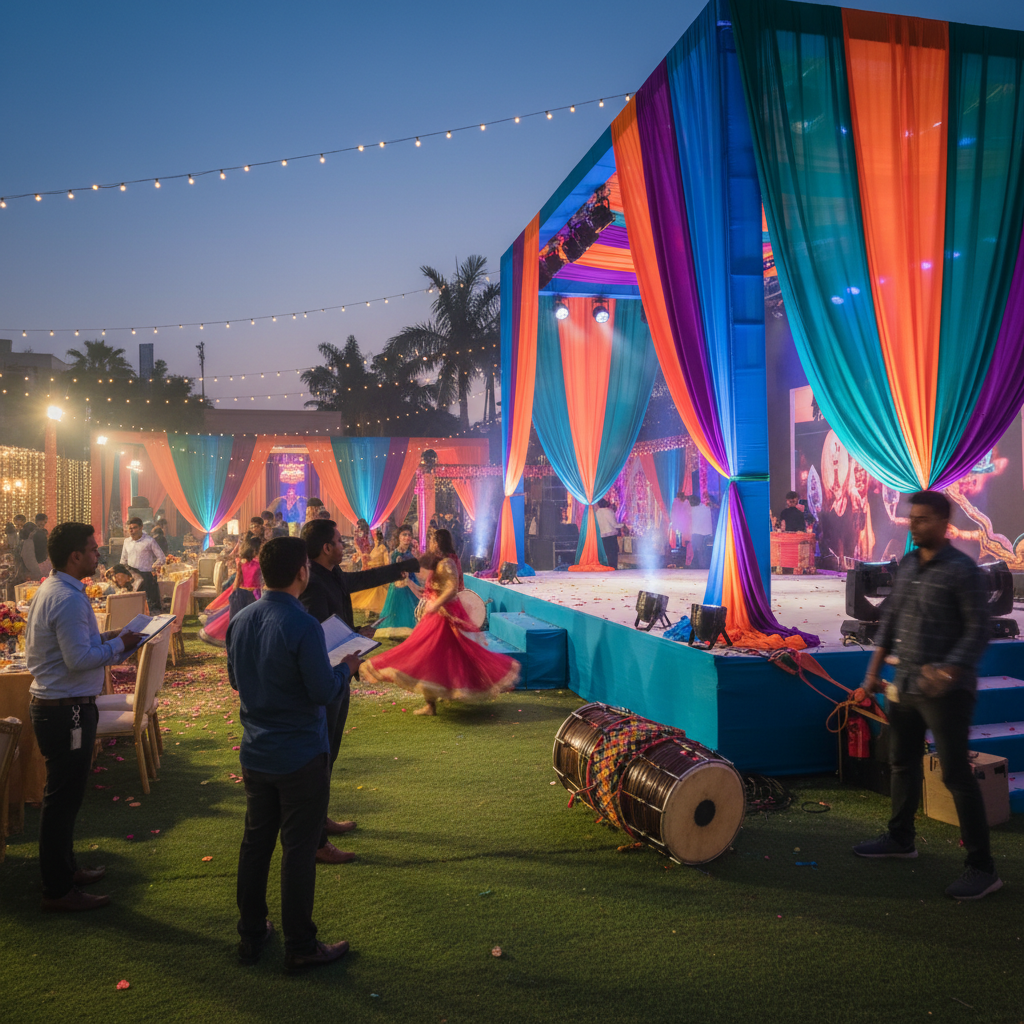
- Sangeet production: Rehearsal schedules, dhol/drummers, DJ and lighting cues, performance stage safety.
- Destination weddings: Udaipur and Goa logistics, local vendor alignment, guest travel and hospitality flow.
We regularly support London, Leicester, Kent, and Tooting families with multi-ritual weekends. For overseas settings, we align local partners to our playbook so quality stays consistent.
Wedding Event Management Best Practices
The best-managed weddings start early, document everything, and enforce timelines with calm authority. Build buffers, confirm roles, rehearse critical cues, and keep communication centralized. For cultural weddings, treat rituals as timeboxed milestones with named owners.
Timeline and rehearsal discipline
- Create a single master timeline with 10–15-minute buffers before every milestone.
- Run rehearsals for processional/recessional, vows, performances, and speeches.
- Issue cue sheets to AV, DJ, photography, and MCs with clear hand signals.
Vendor alignment and risk covers
- Send final briefs 7–10 days prior; require acknowledgment from each supplier.
- Confirm redundancies for power, mics, and transport; pre-stage spares.
- Map wet-weather routes and indoor resets for floral and stage elements.
Culture-first orchestration
- Build ritual checklists with elders and officiants; agree on non-negotiables.
- Translate customs into guest-friendly signage and announcements.
- Protect private family moments in the schedule; guard them from overrun.
Small actions—like labeling every road case and color-coding vendor zones—save real minutes. Across a 12–16-hour day, those minutes compound into a relaxed, elevated experience.
Tools and Resources We Use
Professional wedding event management relies on shared tools: a master timeline, vendor matrix, floor plans, inventory manifests, cue sheets, and escalation trees. We centralize these assets so every supplier sees the same, current, approved version.
Our standard toolkit
- Master timeline + run-of-show: Minute-by-minute, with buffers and owners.
- Vendor matrix: Contacts, scopes, deliverables, and service windows.
- Floor plans + elevations: Seating charts, mandap/stage placement, power.
- Inventory manifests: Décor, florals, rentals, and strike checklists.
- Cue sheets: AV, DJ, performances, and MC scripts.
- Escalation tree: Who decides what, and when.
Helpful references and inspiration
Couples sometimes like seeing sample checklists and venue planning articles to spark ideas. For inspiration, explore a practical venue checklist overview, a planning piece on staging an Indian wedding, and a menu-planning article that helps frame reception flow:
- South Asian venue checklist overview
- Planning an Indian wedding article
- Wedding catering menu planning
We’ll translate any inspiration into a plan that fits UK venues, regulations, and your family’s customs.
Case Studies and Examples
These four snapshots show how disciplined wedding event management keeps ceremonies on time, honors culture, and elevates guest experience. Each example highlights a different setting—London, Leicester, and destination venues—using Patel Events’ proven playbook.
1) Gujarati weekend wedding — Leicester
- Challenge: Multi-venue weekend with baraat street management and a 450-guest reception.
- Approach: Police-notified procession plan, dual load-in crews, mandap built offsite and craned in, two-stage catering service to prevent bottlenecks.
- Outcome: Program held within five-minute variance; families free to host while we directed cues.
2) Intimate nikkah — Greater London
- Challenge: Private vows with strict venue timing and prayer space requirements.
- Approach: Imam liaison, witness coordination, silent AV, and a fast-reset floral plan for photos and family time.
- Outcome: Ceremony completed precisely to plan; venue handover met with clean strike.
3) Sangeet night — London
- Challenge: Ten family performances, dhol drum acts, and dynamic lighting cues in a compact ballroom.
- Approach: Rehearsal call times, DJ cue sheets, stage manager for transitions, and floor team for guest safety.
- Outcome: High energy with zero overrun; dinner and dancing started on schedule.
4) Destination wedding — Udaipur
- Challenge: Overseas vendor alignment and guest travel for a palace setting.
- Approach: Local partner ecosystem, transport manifests, hospitality concierge, and weather-resilient décor.
- Outcome: A timeless ceremony and reception experience aligned to the family’s vision, delivered to UK-quality standards.
Across these scenarios, our 50+ partner network and 500+ event track record reduce risk and increase confidence for couples and parents alike.
Frequently Asked Questions
These concise answers address the questions we hear most from London couples and families about wedding event management, including timelines, roles, cultural coverage, and how day-of direction differs from full planning.
What does a wedding event manager do on the day?
We coordinate load-in, enforce the master timeline, cue vendors and performances, resolve issues, and manage guest flow. Families and the couple are updated only when decisions are needed—so you can relax and enjoy every moment.
How far in advance should we book wedding management?
For peak dates in Greater London, secure your planner 10–12 months out. Multi-ritual South Asian weddings or destination events benefit from even earlier holds to reserve venues, marquee suppliers, and key entertainment.
What’s the difference between day-of management and full planning?
Full planning covers concept-to-celebration support: design, vendor sourcing, logistics, and rehearsals. Day-of management runs what you’ve already arranged—final briefings, timeline enforcement, cue calling, and guest flow on the wedding day.
Do you handle nikkah, Gujarati, and sangeet traditions?
Yes. We maintain ritual checklists and liaise with officiants, elders, and performers. From imam scheduling to mandap builds and sangeet performance cues, we integrate culture respectfully and precisely.
Can you support a destination wedding while we’re London-based?
Absolutely. We align trusted local partners in locations like Udaipur and Goa to our London standards. You get one accountable lead, consistent quality, and a cohesive guest experience across borders.
Key Takeaways
Treat your wedding like the live production it is. Assign a single command center, document timelines and roles, rehearse critical moments, and protect cultural milestones. Experienced management turns potential friction into flow and frees you to be fully present.
- Wedding event management unifies design, logistics, culture, and vendors.
- Timelines with buffers and clear ownership keep ceremonies on time.
- Culture-first planning honors nikkah, Gujarati rites, and sangeet traditions.
- Tooling—timelines, matrices, cue sheets—prevents miscommunication.
- 27+ years and 500+ events give Patel Events proven, reliable execution.
Conclusion and Next Steps
If you want a calm, on-time celebration with culture at the center, invest in wedding event management. The best outcomes pair a disciplined process with warm hospitality—so the day feels effortless while everything runs with precision.
Ready to translate your vision into an organized, guest-first celebration? Let’s build a plan for your venue, rituals, and vendor team—and manage day-of direction so you can be present for the moments that matter. Book a discovery session in HA3 0PB or Greater London, and we’ll map your next steps with clarity.