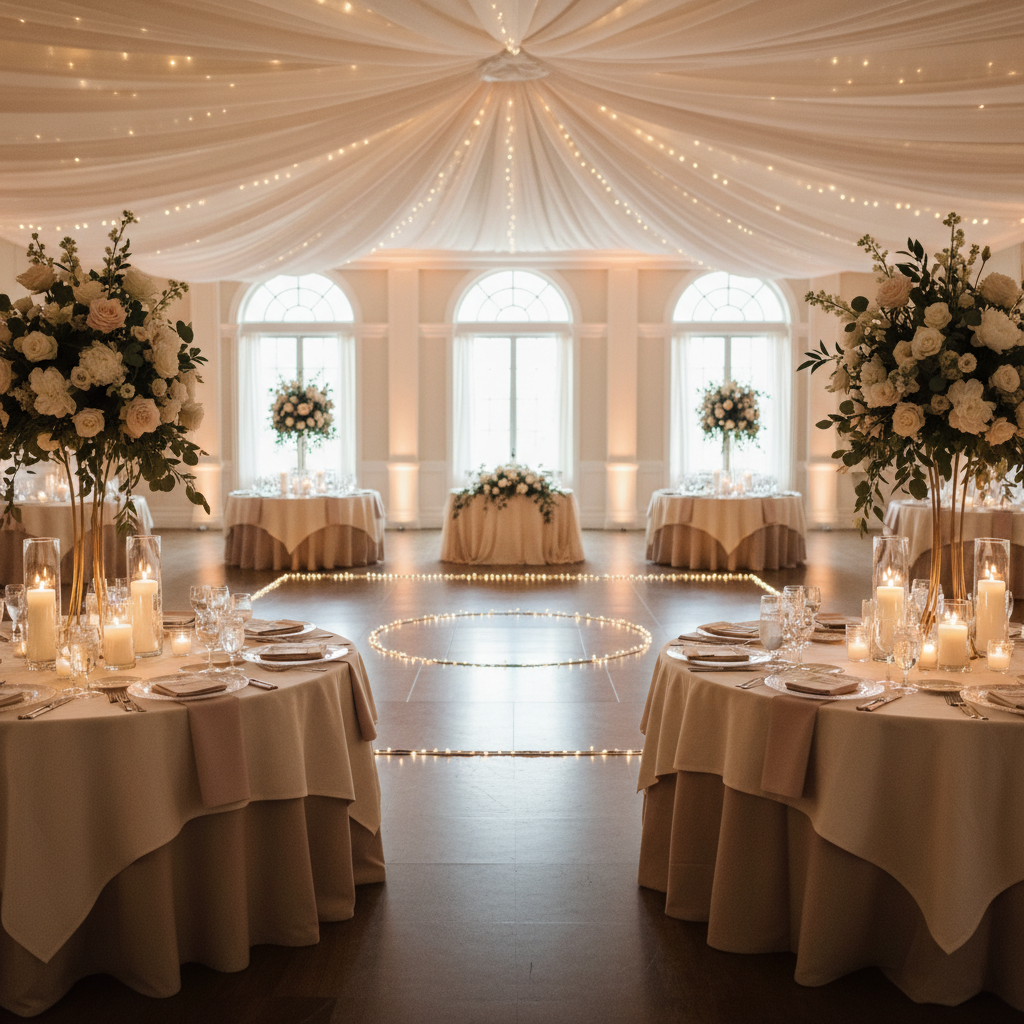
A wedding decor planning checklist is a structured, step-by-step list that organizes every visual and experiential element for your ceremony and reception. It covers layout, florals, lighting, tablescapes, signage, and cultural details so nothing is missed. From our base on Abercorn Gardens in HA3 0PB (Greater London), we use this system to deliver seamless, beautiful weddings.
By Patel Events • Last updated: May 12, 2026
Quick Summary
Use a wedding decor planning checklist to turn vision into logistics. Start with a style board, map your floor plan, lock rentals and florals, define lighting zones, and script setup/strike. Assign owners and deadlines so each decor task moves from idea to installed reality on your wedding day.
Here’s what you’ll get in this complete, planner-built guide:
- Clear definition of a wedding decor planning checklist and why it matters
- Step-by-step workflow used by our team across 500+ events
- Comparison table: DIY vs. planner-led vs. hybrid approaches
- Ultimate checklist by area: ceremony, reception, tables, lighting, signage
- Buying guide for linens, florals, rentals, and lighting
- Tools, templates, and real South Asian wedding examples
Jump to a section:
- What is a decor checklist?
- Why it matters
- How it works (step-by-step)
- Timeline & local logistics (HA3 0PB)
- Types & approaches
- The ultimate checklist
- Buying guide
- Best practices
- Tools & resources
- Case studies & examples
- FAQ
- Conclusion
What Is a Wedding Decor Planning Checklist?
A wedding decor planning checklist is a master list covering design intent, vendor tasks, materials, quantities, timelines, and on-site execution for every decor element. It aligns your vision with logistics, assigning owners, dates, and specs so each piece arrives, is installed safely, and is removed without disruption.
Think of it as your wedding’s design “playbook.” It translates mood boards into exact rentals, floral recipes, lighting zones, and labeled setup diagrams. It also captures cultural details for South Asian ceremonies—like mandap design, nikkah stages, sangeet backdrops, and garba layouts—so rituals feel authentic and on time.
- Scope control: Keeps choices within venue constraints, theme, and timeline.
- Vendor alignment: Share one source of truth with florist, rental, lighting, and venue teams.
- Risk reduction: Flag fire, aisle, egress, and load-in issues before event day.
- Clarity: Turn creative direction into labeled floor plans and run-of-show.
Why a Decor Checklist Matters
A decor checklist prevents oversights, compresses setup time, and protects guest experience. It ensures quantities match guest counts, decor respects venue rules, and cultural moments are ready on cue. Couples gain confidence knowing every visual element is pre-planned, labeled, and assigned.
Here’s the thing: design without logistics breaks under event-day pressure. We’ve found that rooms turn faster, vendor teams coordinate better, and couples stay calmer when each decor item has a SKU, a bin label, and a person responsible for placement and strike.
- Setup efficiency: Aim for a 2–4 hour install window with parallel crews.
- Guest flow: Keep 36-inch aisles clear and sightlines open to the couple.
- Durability: Choose textures and mechanics that withstand a 10–12 hour event day.
- Memory capture: Ensure photo backdrops and highlight moments are well lit.
How Wedding Decor Planning Works (Step-by-Step)
Map design to milestones: define style, survey venue, build layouts, lock rentals and florals 8–12 weeks out, plan lighting and signage, then script load-in, install, flip, and strike. Assign owners for every line item so no task is unclaimed on wedding day.
Planner-tested workflow
- Vision and priorities (10–12 months): Two or three words (e.g., “modern, romantic”), a palette, and must-include customs.
- Venue survey (6–9 months): Measure entry widths, ceiling rig points, wall power, dimmer locations, and egress paths.
- Layouts and counts (4–6 months): Seat 8–10 per round; estimate 3–5 lighting zones; plan 1.5–2 chairs per guest for multi-ritual days.
- Vendors (12–16 weeks): Reserve rentals, linens, florals, drape, and lighting; request certificates and access notes.
- Samples (8–10 weeks): Approve linen swatches, centerpiece mockups, and signage proofs.
- Run-of-show (3–4 weeks): Include exact load-in times, elevator bookings, room flips, and power checks.
- Install and QA (event day): Walk the space every 45 minutes; confirm candle safety and aisle widths.
- Strike and handover: Label bins, log any damages, and photograph inventory before departure.
For couples blending ceremonies—like a daytime nikkah followed by an evening reception—build decor that re-purposes assets. Example: reuse a stage backdrop as a reception photo lounge or sangeet performance set with a fabric swap and lighting shift.
Timeline & Local Logistics (HA3 0PB, Greater London)
In HA3 0PB across Greater London venues, plan for urban load-ins, tight parking, and elevator timing. Confirm security hours, power access, and any noise cutoffs. Stagger vendor arrivals, secure reserved bays, and build buffer time for rush-hour traffic to keep installation on schedule.
Local timelines often hinge on venue access windows. In our area, we routinely coordinate early dock arrivals, shared elevators, and precise install sequences to avoid congestion. When your decor checklist reflects those realities, crews move faster and nothing is left in a van when doors open.
Local considerations for HA3 0PB
- Use off-peak arrival routes near Preston Road Station to reduce vendor delays during morning load-in.
- Expect holiday season traffic; add a 30–45 minute buffer and pre-stage decor in labeled bins.
- Confirm venue dock rules and elevator holds; near Kenton station, request timed bay access in writing.
Types, Methods, and Approaches
Choose an approach that fits your time and risk: DIY for hands-on control, planner-led for turnkey precision, or hybrid to split effort. Style-wise, align palette and materials with rituals, venue architecture, and guest flow so the room feels cohesive and culturally faithful.
Approach options
- DIY: You source, store, and install decor; expect 25–40 staff-hours for a mid-size wedding.
- Planner-led: Your planner designs, sources, and manages all logistics with vetted vendors.
- Hybrid: You handle keepsakes and personal touches; the planner manages infrastructure and installs.
Common decor styles we execute
- Modern minimal: Clean lines, monochrome florals, matte metals.
- Classic romantic: Layered textures, candlelight, soft neutrals.
- Regal South Asian: Carved mandap, rich textiles, saturated hues.
- Garden chic: Loose greenery, natural woods, daylight emphasis.
- Destination-inspired: Udaipur opulence or Goa breeziness translated for UK venues.
Comparison: DIY vs. Planner-Led vs. Hybrid
| Factor | DIY | Planner-Led | Hybrid |
|---|---|---|---|
| Control | High, but time-intensive | High on quality; curated choices | Shared; clear boundaries needed |
| Time demand | 25–40 staff-hours | 5–10 client-hours | 12–20 client-hours |
| Logistics risk | Higher (transport, install) | Lower with pro crews | Moderate |
| Cultural accuracy | Variable (self-researched) | High with specialists | Strong if roles are clear |
| Venue compliance | Must self-verify | Managed by planner | Split responsibilities |
The Ultimate Wedding Decor Planning Checklist
Build your decor checklist by area: ceremony, cocktail hour, reception, and cultural rituals. For each, list visuals, quantities, placement notes, timing, and owners. Confirm fire safety, guest flow, and venue approvals. Photograph final setups so strike crews can return spaces exactly as found.
Use these sections to structure your master list. Add SKUs, quantities, setup notes, and who is responsible for install and strike. Where useful, we’ve included typical counts for mid-size weddings.
Ceremony
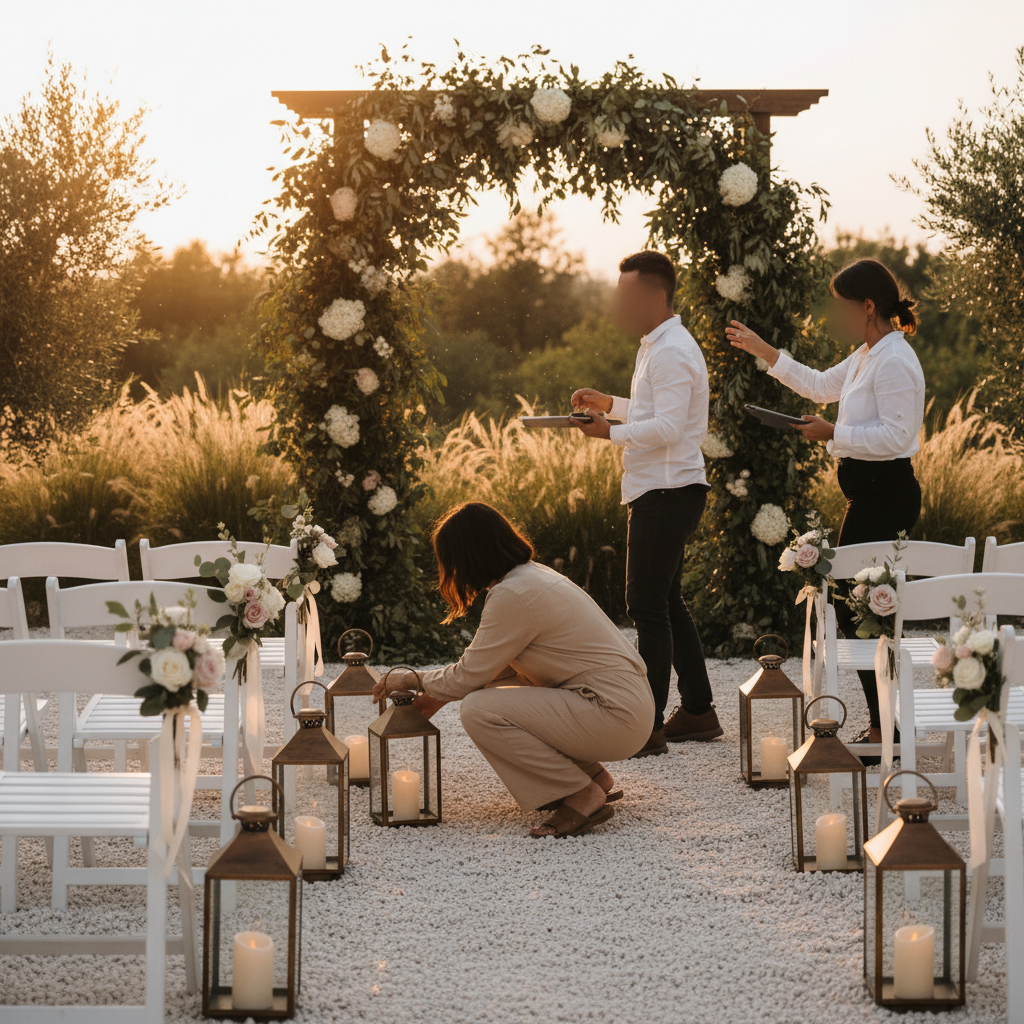
- Entrance markers: Florals or lanterns at doors (2–4 units)
- Aisle decor: Posies, petals, or floor lanterns; keep 36-inch center clear
- Seating: Rows or crescent; 1.1–1.2 chairs per guest to allow spacing
- Altar/mandap/nikkah stage: Structure, drape, floral swags, seating
- Sound and lighting: Wash on couple, backlight for depth
- Signage: Welcome sign + order of ceremony
- Essential kits: Zip ties, gaffer tape, floral wire, safety pins
Cocktail hour
- High-top linens: 8–12 tables with sashes or bands
- Lounge vignettes: 1–3 groupings; rugs, sofas, side tables
- Escort display: Alphabetized, well lit, ADA reachable
- Ambient lighting: Uplights or stringers in transitions
- Bar styling: Backbar greenery, menu, signature-drink props
Reception
- Floor plan: Dance floor centered; 5–6 feet clearance to first tables
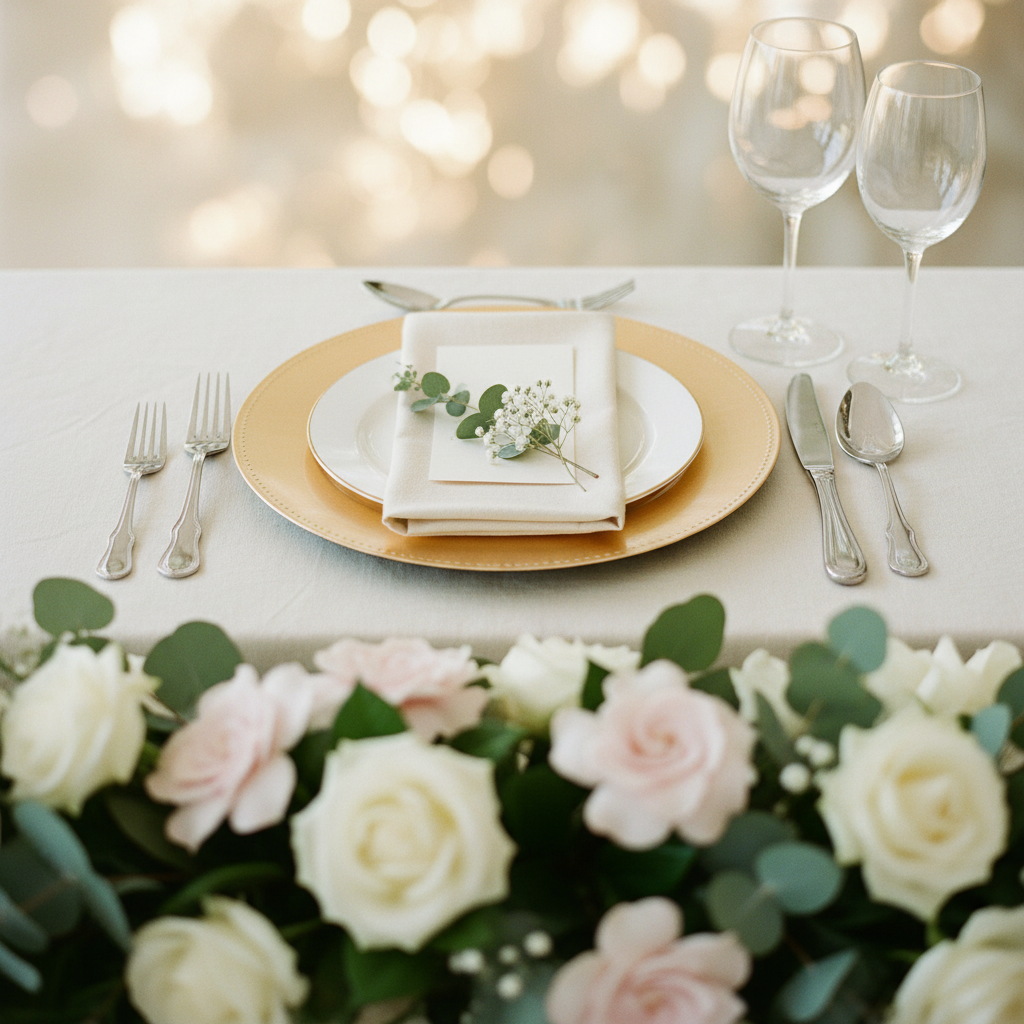
- Tablescapes: Chargers, linens, napkin fold, menu, place card
- Centerpieces: Mix heights; confirm sightlines to stage
- Chair decor: Sweetheart chairs with florals or signage
- Lighting zones: Stage, dance floor, perimeter, bars, lounges
- Stage design: Backdrop, risers, band/DJ facade
- Photo ops: Flower wall or step-and-repeat
Signage and stationery
- Welcome sign with names and schedule
- Seating chart or escort cards (alphabetical)
- Bar menus and dessert labels
- Directional signs for multi-ritual days
Florals and greenery
- Personal florals: bouquets, boutonnieres, hair florals
- Installations: arches, chandeliers, ceiling drape with greenery
- Centerpiece recipes: stem counts, vessel sizes, water sources
- Maintenance plan: water refresh, petal top-offs, wilt checks
Lighting and power
- Uplights set to palette; warm dim for dinner
- Pin-spots on focal decor and cake
- Dance floor wash + DJ/band key light
- Power map: circuits, cable covers, and no-trip paths
South Asian rituals (as applicable)
- Nikkah: Stage, thrones, Quran stand, elegant modest backdrop
- Mandap: Pillars, canopy drape, havan safety tray, stools
- Sangeet: Performance stage, vibrant backdrops, floor seating
- Garba: Open dance floor, perimeter seating, colorful lighting
Guest comfort and experience
- Welcome water and shawls in cooler seasons
- Restroom amenity baskets and nursing area signage
- Quiet corner or prayer space with respectful signage
- Accessibility: unobstructed 36-inch routes and ramp checks
Strike and sustainability
- Label all bins; inventory sheet for returns
- Reuse plan: move ceremony florals to reception
- Donation or composting pathways for florals
- Battery collection and recycling box for LEDs
Buying Guide: Linens, Florals, Rentals, and Lighting
Buy with your floor plan in hand. Prioritize linens that fit table sizes, florals scaled to ceiling height, rentals that roll through doorways, and lighting that shapes mood and safety. Test samples under venue lighting and confirm lead times, power, and load-in rules before you sign.
Linens
- Match cloth drops to table height; avoid tripping at corners.
- Choose textures that photograph well and resist wrinkles.
- Order 5–10% overage for backup cloths and last-minute tables.
Florals
- Scale centerpieces to room height; pin-spot tall pieces for drama.
- Confirm water sources and load-in path for large installs.
- Plan re-use: aisle meadows to head table; arch sprays to lounges.
Rentals and decor
- Measure doorways/elevators for bars, backdrops, and stages.
- Ask for flame-retardant certificates for drape and soft goods.
- Choose modular pieces that flip from ceremony to reception.
Lighting
- Warm at 2700–3000K for dinner; cooler at 4000K for prep spaces.
- Program a first-dance cue and later a high-energy scene.
- Confirm cable paths and tape-down policy with venue.
For timeline structure and role clarity, review this practical wedding reception timeline template. When comparing venues and their built-in decor rules, skim this venue comparison guide for a simple framework. Planning your food displays? This menu planning primer pairs well with display decor decisions.
Best Practices and Pro Tips
Design from the floor up, light for faces, label everything, and pre-pack decor in install order. Keep aisles and egress clear, secure candles, and test a full place setting before event day. Assign a decor captain so all questions route to one accountable person.
- Safety first: Keep exits visible and cords covered; use LED candles when open flame is restricted.
- Photography: Aim for even face light during toasts; pin-spot centerpieces sparingly.
- Flip strategy: Pre-build lounge vignettes offsite; roll them in during room turns.
- Labeling: Color-code bins by zone (ceremony, cocktail, reception).
- Test table: Fully set one table a week out and photograph it for crews.
- Cultural accuracy: Validate ritual placements and pathways with elders or officiants.
Tools and Resources
Use a shared checklist, floor-plan software, and labeled bins to streamline installs. Pair a run-of-show timeline with a vendor contact sheet. Photograph mockups and final setups so communication stays visual and fast for every crew member.
- Master checklist: One sheet with SKUs, counts, owners, and setup notes.
- Floor-plan app: Drag-and-drop layouts; export PDFs for crews.
- Run-of-show: Minute-by-minute with install/flip/strike timing.
- Inventory photos: Pictures of packed bins and final placements.
- Vendor sheet: Names, roles, call times, and mobile numbers.
As you plan, align decor milestones with a tangible event-day run order. The reception timeline template above offers a helpful structure to adapt for your venue and team.
Case Studies and Examples
Real weddings prove the checklist’s value: design decisions lock earlier, installs run faster, and cultural moments feel effortless. These brief examples show how we use one master checklist to coordinate florals, rentals, lighting, and ritual staging across different venues and guest counts.
Harrow nikkah + evening reception
At a Harrow venue near HA3 0PB, we staged an intimate nikkah with an elegant, modest backdrop, then flipped the room for a dinner reception. The checklist drove re-use: aisle florals moved to the head table, and the nikkah stage became a photo lounge after a lighting shift. Result: on-time transitions and a cohesive look.
Gujarati wedding with sangeet night
For a Gujarati couple, we designed a carved mandap for the ceremony and a vibrant sangeet stage the evening prior. The checklist mapped color transitions, prop storage, and stage resets. Guests enjoyed clear sightlines, and performances started to the minute because every cable run and lighting cue was pre-planned.
Destination-inspired London reception
Drawing on our destination work in Udaipur and Goa, we translated “palatial garden” into a London ballroom: layered greens, warm uplighting, and a larger-than-standard dance floor. A precise floor plan and lighting scene list helped bands and caterers share space without compromising guest flow or safety.
Planning a complex multi-ritual day? We’ll tailor this wedding decor planning checklist to your venue, rituals, and timeline—then coordinate vendors so every piece arrives and installs on schedule.
Start a design conversation with our team at Patel Events.
Frequently Asked Questions
The best decor plans balance design with safety, flow, and venue rules. These concise answers address common questions couples ask as they turn mood boards into an executable, venue-compliant plan for their ceremony and reception.
When should I finalize my wedding decor?
Lock core decor vendors 12–16 weeks out, approve samples 8–10 weeks out, and freeze counts 3–4 weeks before your date. That schedule keeps ordering, staffing, and delivery aligned and gives time for mockups and any venue approvals.
What goes in a wedding decor planning checklist?
Include layouts, florals, linens, rentals, lighting, signage, and cultural elements. Add quantities, placement notes, owners, call times, and safety checks. Attach photos of mockups and a run-of-show so install, flip, and strike are clear for every crew.
How do I keep decor within venue rules?
Request written guidelines for candles, rigging, adhesives, and power. Confirm egress routes stay clear, protect floors with mats, and use cable covers. Share approvals with every vendor and photograph final placements for your strike crew to replicate in reverse.
How can I reuse ceremony decor at the reception?
Plan re-use from the start. Move aisle meadows to the head table, convert arch florals into bar or lounge pieces, and repurpose stage backdrops as photo ops. Assign a flip crew and cart paths so transitions happen quickly and safely.
Conclusion and Next Steps
A strong wedding decor planning checklist turns inspiration into an executable plan. Commit your style, layouts, quantities, and responsibilities to one document, then run practice setups. On event day, teams install faster, spaces flow better, and your design vision shines without stress.
- Key takeaways: Design with logistics, label everything, protect guest flow, and plan re-use.
- Next steps: Draft your checklist, request samples, and walk your venue with floor plans in hand.
- Need help? From nikkah to Gujarati weddings and gala-style receptions, we’ll tailor and execute your plan.
Ready to design? Book a discovery session with our team at Patel Events—we’re local to HA3 0PB and plan across Greater London and the UK.