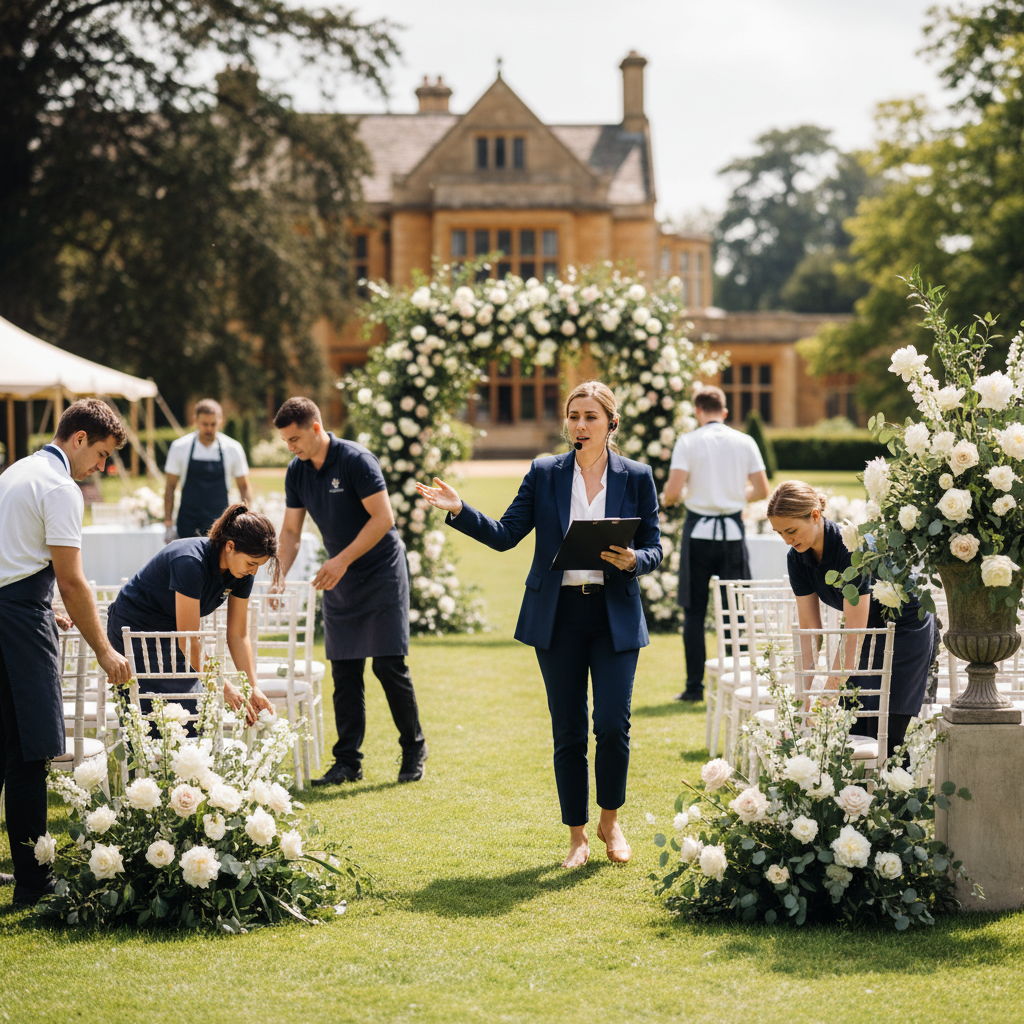
Wedding day coordination checklist refers to a structured, minute-by-minute run sheet that keeps your ceremony, reception, vendors, and rituals on time. It clarifies who does what and when, prevents bottlenecks, and builds in buffers. For couples near Abercorn Gardens in HA3 0PB (Greater London), this checklist anchors a calm, precise, culturally faithful day.
By Patel Events — 27+ years, 500+ events, 98% satisfaction. Last updated: May 17, 2026
At a Glance: What You’ll Get
Use this wedding day coordination checklist to align vendors, timelines, and cultural rituals with buffers and backups. You’ll get a ready-to-run schedule, role assignments, contingency triggers, and a buying guide for choosing a coordinator in Greater London—plus a comparison table of planner vs. day-of coordinator vs. venue manager.
This complete guide blends Patel Events’ South Asian wedding fluency with universal best practices. You’ll find:
- Definitive definitions and a sample, hour-by-hour run sheet
- Why coordination matters for timelines, guest experience, and vendor flow
- How day-of execution works across ceremony and reception
- The complete wedding day coordination checklist (morning to last dance)
- Comparison table: planner vs. coordinator vs. venue manager
- Buying guide for Greater London couples, with local tips for HA3 0PB
- Tools and templates for timelines, cue sheets, and emergency kits
- Mini case snapshots from Patel Events across nikkah, Gujarati, and sangeet
What Is Wedding Day Coordination?
Wedding day coordination is the on-site management of your wedding’s logistics and timing, using a detailed run sheet to direct vendors, cue rituals, and solve issues without interrupting you. It turns plans into execution through checklists, buffers, and clear role assignments.
Think of coordination as your event’s operating system. It converts months of planning into minute-by-minute execution. The coordinator runs the timeline, cues the processional, manages vendor arrivals, and troubleshoots quietly. For multicultural weddings, this also means pacing rituals—nikkah, pheras under the mandap, or sangeet sequences—with accuracy.
- Scope: timeline control, vendor liaison, ceremony/reception cues, guest flow
- Artifacts: production schedule, contact sheet, floor plans, cue lists
- Guardrails: buffers (10–15 minutes), weather plans, and backup equipment
- Outcome: an on-time day, decisive decisions, discreet fixes
Why Wedding Day Coordination Matters (Greater London + HA3 0PB)
Coordination protects your schedule, guest experience, and cultural fidelity. In Greater London’s fast-moving venues and traffic, a robust run sheet with vendor buffers, transit notes, and rain plans prevents cascading delays—keeping rituals and receptions on time for couples near HA3 0PB.
London weddings often involve complex logistics—multiple locations, transit windows, and vendor teams of 8–12 specialists. Without a coordinator, 5-minute delays snowball. With one, buffers absorb hiccups and re-sequencing happens in seconds. For South Asian weddings, precise cueing of rituals (e.g., nikkah khutbah, pheras, sangeet performances) ensures cultural fidelity and guest understanding.
- Transit variability: plan 20–30-minute transit buffers for key moves
- Vendor density: 10+ vendors (DJ, caterer, photo/video, décor, priest/imam, transport)
- Guest flow: staggered bar and seating opens prevent bottlenecks of 50–100 guests
- Ritual timing: 30–60 minutes for ceremony segments; 90–120 minutes for sangeet flow
How Wedding Day Coordination Works
Day-of coordination follows a production schedule: pre-calls, vendor check-ins, arrivals with buffers, ceremony cues, reception transitions, and end-of-night breakdown. The coordinator updates the run sheet in real time, communicates on headsets, and shields you from issues.
Execution starts days earlier with a final vendor reconfirm. On the day, the coordinator:
- Arrives 90–120 minutes early for a walkthrough and floor plan check
- Stages essentials: signage, place cards, gift/guest books, emergency kit
- Runs sound checks for aisle music, mics, and performance tracks
- Manages cues: processional pacing, readings, blessings, and seating blocks
- Controls transitions: ceremony to cocktails (10–15 minutes), dinner to dancing (15–20 minutes)
- Documents incidents and resolutions for a smooth close-out with vendors
In our experience, a tight headset protocol (call signs, 10-second confirmations) saves minutes across every phase. Over 500+ events, that’s the difference between a 10:00 p.m. sparkler send-off and a slipping schedule.
The Complete Wedding Day Coordination Checklist
Use this hour-by-hour wedding day coordination checklist to guide arrivals, cues, and transitions. It divides the day into morning prep, ceremony, cocktail hour, dinner, and dancing—building in 10–20-minute buffers, vendor confirmations, and backup triggers at each step.
Morning Prep (Hair, Makeup, Attire)
- Confirm hair/makeup start: 4–6 hours before ceremony start; last touch-ups end 30 minutes before photos.
- Steam attire 2–3 hours out; pin boutonnieres and fasten jewelry with gloves for delicate stones.
- Photographer arrival: 90–120 minutes before first look; detail flat-lays (invitations, rings, garlands).
- Distribute contact sheet (names, roles, phones) to wedding party and family point people.
- Prep emergency kit: sewing set, stain remover, fashion tape, earpiece spares, analgesics, bandages.
Vendor Arrivals and Setup
- Venue opens: confirm access time; build a 30-minute load-in buffer.
- Décor/florals: mandap or arch install; centerpieces hydrated; candles tested for 4–6-hour burn.
- DJ/AV: sound check mics (officiant/reader), aisle tracks, and dance-floor wash; keep backup cables.
- Catering: kitchen brief; dietary flags; water stations placed; Dessert/late-night labeled.
- Transport: confirm driver staging and 15-minute early arrivals for VIPs.
Ceremony (Civil, Nikkah, or Hindu)
- Guest seating opens 30 minutes prior; ushers briefed; signage placed.
- Processional pacing: 6–8 seconds between pairs; parents/grandparents pre-seated.
- Nikkah: khutbah timing, nikah-nama ready, witnesses seated up front, pens pre-tested.
- Hindu: havan readiness, garlands, pheras count confirmed, footwear station prepped.
- Civil/other: readers cued; handheld mic standby; vow cards and tissues staged.
- Backup trigger: if officiant is 15 minutes late, call alternate script reader and adjust music loop.
Post-Ceremony and Photos
- Recessional: cue upbeat track; direct wedding party to staging area for group photos (20–30 minutes).
- Family photo list in order of elders first; 2–3 minutes per grouping keeps to 20–30 minutes.
- Refresh station: water, compact snacks, and blotting sheets for couple and party.
Cocktail Hour (60–90 Minutes)
- Open bar and passed canapés; announce guest book and seating chart locations.
- Roaming photo/video coverage; couple sneak peek of reception room (5 minutes).
- Transition cue at 10-minute mark: gentle move to dinner seating.
Reception Dinner and Formalities
- Grand entrance cue: music set; doors coordinated; emcee briefed.
- Toasts: 2–4 speakers; cap at 3–5 minutes each; water on lectern; mic handoff protocol.
- First dance/parents’ dances: choreo notes to DJ; light levels rehearsed.
- Meal service pacing: first course within 15 minutes of seating; check dietary markers per table.
- Cake and dessert: knife set staged; photography light ready; slice service planned.
Dancing and Late-Night
- Open dance floor set with a 3-song energy ramp; slow dance at 15-minute mark for inclusivity.
- Late-night snacks deployed around 10:00–10:30 p.m.; hydration station topped every 30 minutes.
- Send-off: sparklers or eco-confetti; safety brief; 5-minute line formation; transport staged.
- Breakdown: vendor exit checks; rentals counted; gifts/cards secured; tips and thank-yous delivered.
Want a simple visual? Here’s a compact sample schedule you can adapt.
| Phase | Time Window | Key Cues |
|---|---|---|
| Prep | 8:00–12:00 | Hair/makeup, details, first look |
| Ceremony | 13:00–14:00 | Processional, vows/rituals, recessional |
| Cocktails | 14:15–15:15 | Bar open, photos, room reveal |
| Dinner | 15:30–17:30 | Entrances, toasts, courses |
| Dancing | 17:45–22:30 | First dances, open floor, send-off |

Planner vs. Day-Of Coordinator vs. Venue Manager (Comparison)
A planner designs and manages the entire journey months in advance; a day-of coordinator executes the plan on the wedding day; a venue manager protects the venue’s operations. Many couples need both a planner (or partial planner) and a day-of coordinator for seamless results.
| Role | Primary Focus | Timeline Ownership | Vendor Management | Design/Styling | Who It Suits |
|---|---|---|---|---|---|
| Wedding Planner | End-to-end planning months out | Builds master plan + day-of run sheet | Sources, negotiates, and leads | High (concept to install) | Busy couples; complex, multi-ritual events |
| Day-Of Coordinator | On-site execution and issue solving | Runs the schedule in real time | Confirms/dispatches; fixes problems | Low–Medium (styling touch-ups) | DIY planners needing professional execution |
| Venue Manager | Venue logistics and policies | Venue block timing | In-venue vendors only | Venue standards | Couples using in-house packages |
Buying Guide: Choosing a Day-Of Coordinator in Greater London
Choose a coordinator with multi-ritual fluency, a 12–14-hour on-site standard, clear headset protocols, and a detailed production schedule. Verify at least 25 events led, strong vendor network references, and contingency planning for transit, weather, and technical failures.
What to verify in 30 minutes
- Experience: 25+ weddings coordinated; for South Asian weddings, confirm nikkah/sangeet/mandap fluency.
- Run sheet: request a redacted sample with buffers, cues, and contingency triggers.
- Team: 1 lead + 1–2 assistants for 150–250 guests; radios with earpieces; call signs defined.
- Vendor network: 30–50 trusted partners signal reliability; Patel Events works with 50+.
- On-site hours: standard 12–14 hours with early arrival and post-event checks.
Interview prompts
- “Walk me through how you recover a 20-minute delay before dinner.”
- “Show a rain-plan diagram for our ceremony setup.”
- “How do you brief emcees and manage toast overruns?”
- “Which cultural moments do you cue verbally versus musically?”
Local considerations for HA3 0PB
- Build transit buffers around event-day rail use near Kenton station; keep a rideshare backup for VIPs.
- Mind seasonal timing: summer light helps golden-hour photos until ~9:00 p.m.; winter sunsets compress portraits before 4:00 p.m.
- Coordinate vendor arrival windows around residential access near Preston Road Station; confirm unloading plans 48 hours prior.
Free 20-minute coordination consult: Share your date, guest count, and venue. We’ll review your draft wedding day coordination checklist and suggest timeline buffers and cueing refinements based on 500+ events.
Tools and Resources (Templates You Can Adapt)
Use a production schedule, contact sheet, cue lists, and floor plans to keep everyone aligned. Pair these with a headset protocol and a compact emergency kit. Start from a sample reception timeline and adapt it to your rituals and venue logistics.
- Production schedule: minute-by-minute spine with buffers, color-coded cues, and owner per line.
- Vendor contact sheet: company, lead, mobile, arrival, power needs, dietary notes.
- Cue lists: ceremony procession, vows/readings, first dance, toasts, cake, send-off.
- Floor plans: ceremony rows, aisle width; reception tables, DJ booth, dance floor, bars.
- Emergency kit: 30+ items (mini steamer, sewing kit, meds, chargers, tape, snacks, blotting).
For a reception-only model you can customize, review this helpful reception timeline planning guide, and pair it with a timeline template to format your schedule cleanly. For menu pacing ideas that affect timeline, this menu planning overview can inform service timing and dietary signage.
Mini Case Snapshots (Patel Events)
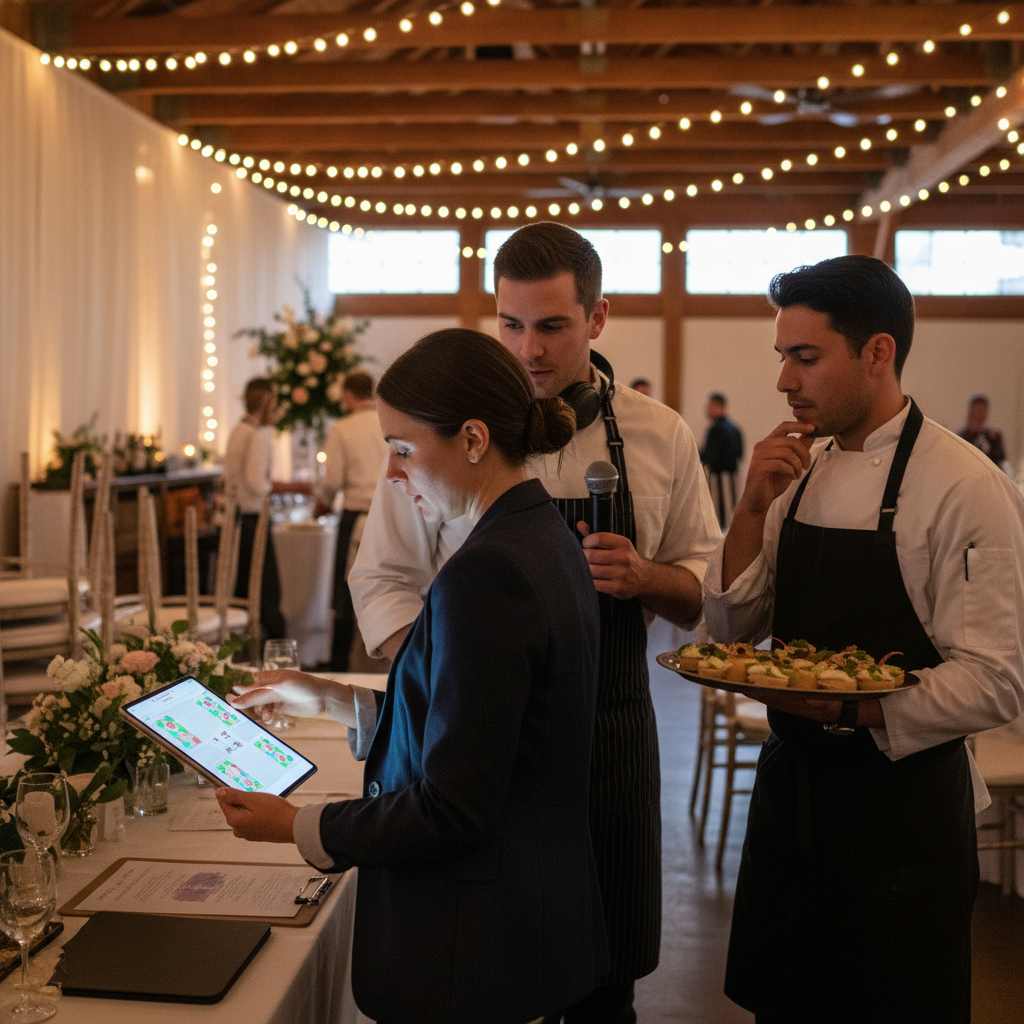
Real events show how checklists prevent delays and protect key moments. Across 500+ events, we’ve used buffers, cue sheets, and vendor radio protocols to rescue timelines and keep ceremonies and receptions on track without guest disruption.
Gujarati Wedding + Sangeet (Greater London)
Challenge: 250 guests, mandap install, live dhol, and a packed sangeet stage list. Risk: a delayed décor install could push pheras past golden hour.
- Action: doubled florals crew for a 45-minute install gain; set 15-minute photo buffer.
- Result: pheras began exactly on cue; reception doors opened on time; 0 missed speeches.
Intimate Nikkah (Harrow HA3 0PB)
Challenge: keeping vows intimate while ensuring witness seats and audio clarity for elders.
- Action: front-row witness reservation, pre-tested pens, lapel mic for imam, overflow speakers.
- Result: 30-minute ceremony, crisp audio, documentary-style cinematography capturing every dua.
Corporate Annual Gala (Cluster Reference)
We apply the same production rigor to corporate events—think brand-aligned run sheets, cueing keynotes, and pacing reveals. This mirrors our internal pillar on annual gala planning and keeps sponsor moments on time.
Best Practices and Pro Tips
Lock the final run sheet 7 days out, then protect buffers, empower a single decision-maker, and use radio call signs. Test mics, confirm dietary markers, and stage a compact emergency kit. Treat every 5-minute save as a win—it adds up to an on-time finish.
- Lock + brief: freeze the schedule 7 days out; host a 30–45-minute all-vendor huddle.
- Pick a decider: one empowered person (not the couple) for real-time calls.
- Protect buffers: never spend them early; use them only for live issues.
- Sound first: rehearse readings and first-dance lighting; check every mic input.
- Guest flow: open bars and seating in phases; post two clear directional signs.
- Document: note issues and fixes; debrief with vendors in 10 minutes post-event.
Frequently Asked Questions
These FAQs answer the most common coordination questions—timing, responsibilities, arrival standards, and multicultural specifics—so you can finalize your wedding day coordination checklist with confidence.
What does a day-of coordinator actually do?
They run your timeline, cue the ceremony and reception, direct vendors, and solve problems without pulling you in. Expect headset communication, minute-by-minute run sheets, and quick decisions that keep everything on schedule.
How early should vendors arrive on the wedding day?
Aim for 30–60 minutes before setup time, plus a 15-minute buffer. DJs/AV typically arrive 90 minutes before guest seating to allow thorough sound checks. Stagger arrivals to reduce loading bottlenecks and protect your schedule.
Do I need both a planner and a day-of coordinator?
If you’ve done most planning yourself, a day-of coordinator is essential to execute your vision. For complex, multi-day or multi-ritual weddings, many couples add a planner or partial planner months ahead for sourcing and design integration.
How do multicultural rituals fit into the timeline?
Outline each ritual’s duration and cues, then place buffers before and after. For example, schedule 30–45 minutes for nikkah, 45–75 minutes for pheras, and 90–120 minutes for a sangeet sequence including performances and open dance.
Conclusion and Next Steps
A solid wedding day coordination checklist turns plans into a calm, on-time celebration. Lock your run sheet, protect buffers, and empower a coordinator to manage vendors and rituals—so you can be fully present for every moment.
Key takeaways
- Use a single, minute-by-minute production schedule with buffers.
- Define one empowered decision-maker and headset protocols.
- Schedule multicultural rituals with precise cues and transitions.
- Choose a coordinator with proven experience and a vendor network.
Ready to tailor this to your venue and rituals? Share your date, guest count, and ceremony style. We’ll refine your run sheet and cue lists for an on-time day—where every detail feels effortless.