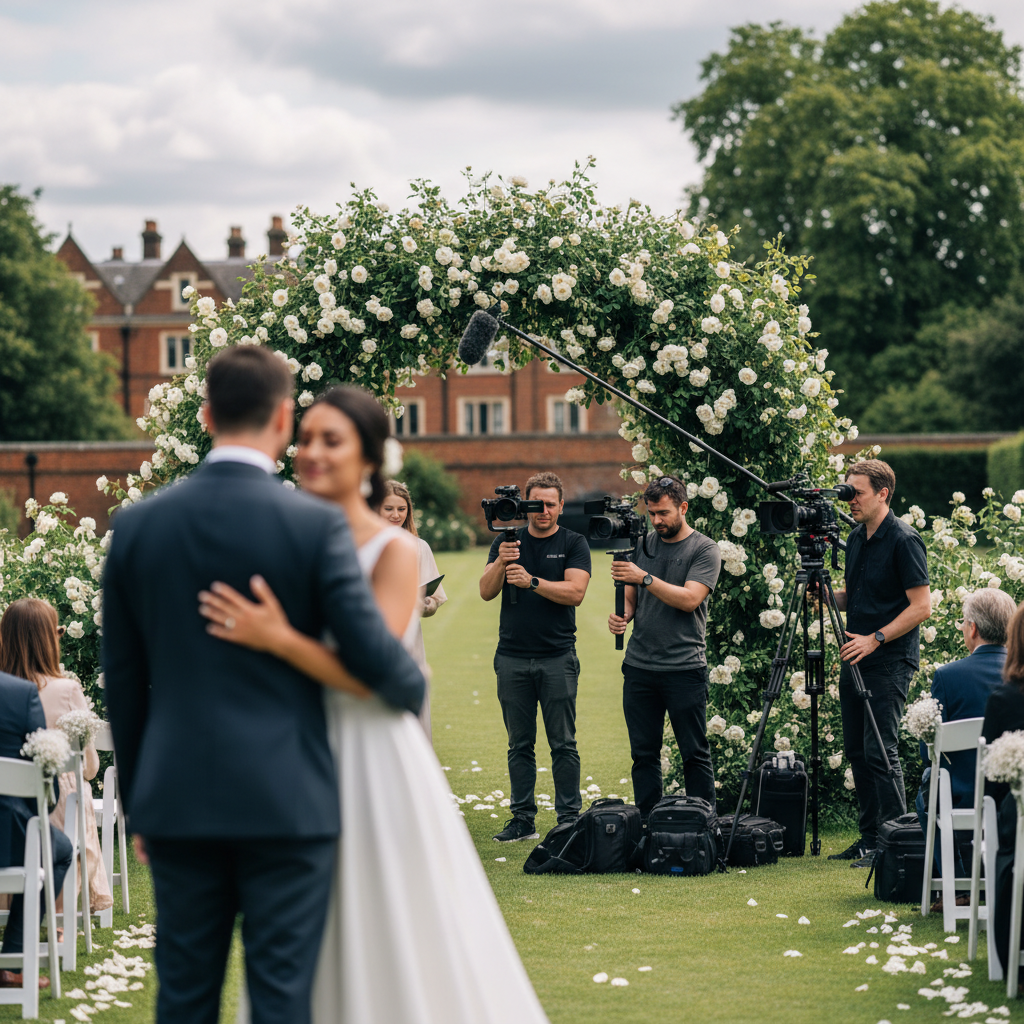
Wedding cinematography checklist refers to the structured plan filmmakers use to capture every key moment, sound, and detail of a wedding day. At our HA3 0PB base on Abercorn Garden in Greater London, Patel Events relies on a proven checklist so no vows, rituals, or reactions are missed—especially during fast-moving South Asian ceremonies.
By Patel Events • Last updated: 2026-05-18
Quick Summary
Use a wedding cinematography checklist to lock in story beats, audio, gear, crew roles, and timings. Confirm cultural rituals, build a shot list by event segment, pre-wire audio, and assign coverage to at least two cameras. Rehearse entrances, assign backups, and preplan delivery formats for smooth post-production.
- What you’ll learn: Definitions, why it matters, step-by-step workflow, gear and audio planning, styles vs. approaches, and local logistics in Greater London.
- Who it’s for: Couples, families, and planners—especially for Gujarati weddings, sangeet nights, and nikkah ceremonies.
- Outcomes: A practical, printable wedding cinematography checklist you can use immediately.
What Is Wedding Cinematography?
Wedding cinematography is the art and craft of filming a wedding with storytelling intent. It blends documentary coverage with crafted visuals, premium audio, and editorial pacing to deliver films that feel immersive, cinematic, and true to the couple’s culture and personality.
In our work across London and the wider UK, we define wedding cinematography as purpose-built coverage designed to replay your day the way it felt. It uses multiple cameras, clean audio, intentional lighting, and a planned edit. The result is a film, not just footage.
- Story-first: We design a narrative arc—anticipation, vows, celebration—so scenes connect.
- Multi-layer audio: Vows, speeches, ambient sound, and music guides for editing.
- Cultural fidelity: Ritual sequences (e.g., pheras, nikkah) filmed with respect and context.
- Editorial plan: Deliverables mapped in advance (highlight, feature film, teasers).
Here’s the thing: most couples only get one take. A written plan keeps the crew aligned, protects coverage during schedule slips, and preserves the emotional beats you’ll replay for decades.
Why a Checklist Matters (And Saves Your Film)
A documented checklist reduces missed shots, protects audio, and speeds delivery. It forces clarity on timing, roles, and cultural rituals. The payoff is fewer reshoots, cleaner edits, and a film that feels complete and intentional.
We’ve found crews lose 10–15 minutes per transition without a plan. That’s enough to miss a parent reaction, a blessing, or the first dance dip. A checklist sets priorities, creates backups, and ensures redundancy when timelines shift.
- Prevents misses: Critical beats are highlighted and assigned—no duplication, no gaps.
- Protects audio: Mics and redundancy are scheduled before talent arrives.
- Stabilizes edits: Consistent angles and coverage speed up post by 20–30% in our experience.
- Aligns vendors: Keeps photography, planning, and cinematography in sync.
For South Asian weddings, multiple rituals often run in parallel. A written plan keeps crews split intelligently, so intimate moments aren’t sacrificed for spectacle.
The Wedding Cinematography Checklist (2026 Edition)
This 2026 wedding cinematography checklist organizes your day into prep, ceremony, portraits, reception, and exit. It assigns A/B cameras, locks audio redundancy, flags cultural rituals, and maps delivery formats, so post-production stays fast and consistent.
1) Pre-Production
- Discovery call: Confirm names, family dynamics, must-have moments, and cultural priorities.
- Timeline build: Create a minute-by-minute map. Buffer 10 minutes around entrances and speeches.
- Venue scout: Identify natural light, power, and mic-safe zones; check ceremony sightlines.
- Brief + shot list: Draft creative intent, look references, and segment-based shot lists.
- Vendor alignment: Exchange call sheets with photography and planning teams.
2) Gear & Power
- Camera bodies: Two principal bodies minimum; third static safety cam.
- Glass: Fast primes (35/50/85) and a 24–70mm; macro for rings.
- Support: Gimbal, monopod, tripod, and light stands.
- Lighting: Two LED panels, small on-camera light for dark dance floors.
- Power/media: Fully charged batteries, dual-slot cards, and a backup SSD kit.
3) Audio Plan
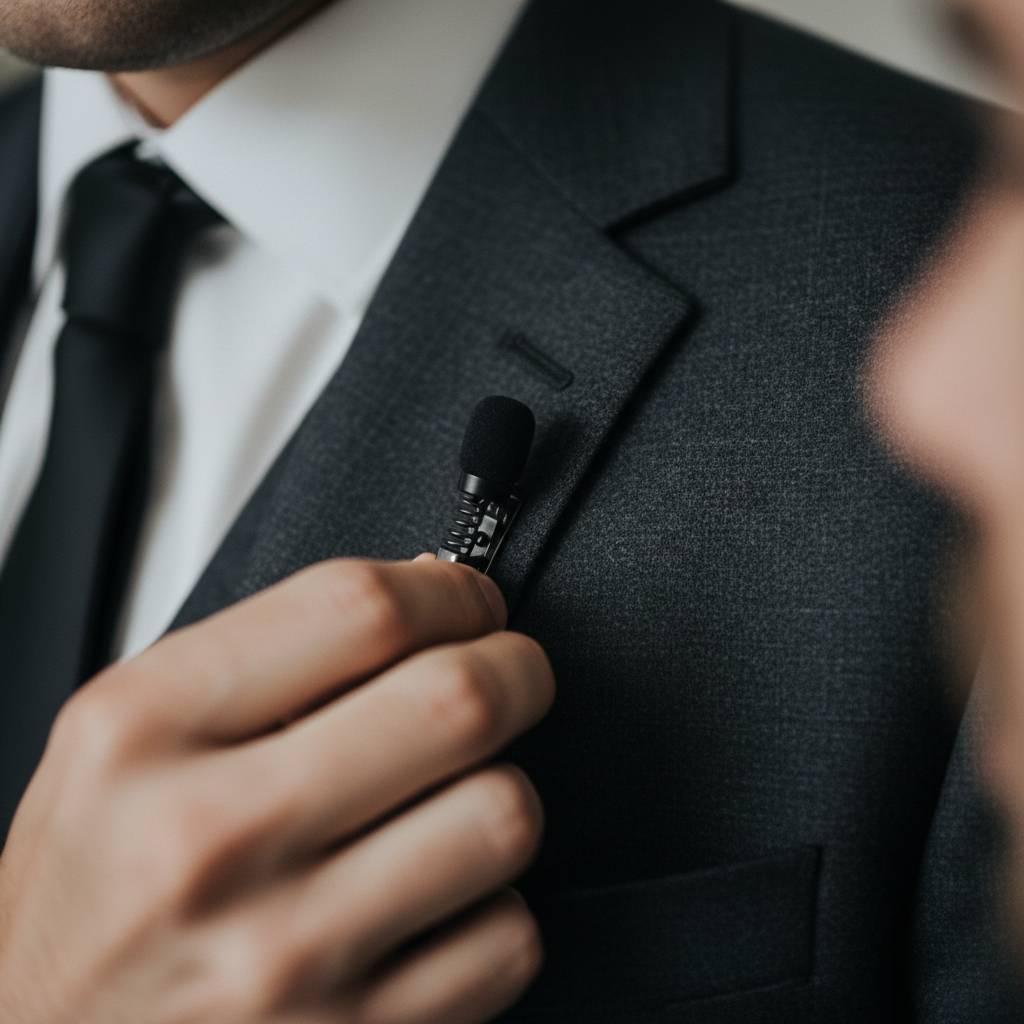
- Lavalier mics: Clip mics on officiant, groom, and a podium spare.
- Recorder taps: Take a board feed for speeches; keep a pocket recorder at the lectern.
- Ambient capture: Plant a stereo mic for room tone and crowd reactions.
- Redundancy: Always record at least two sources during vows and toasts.
4) Morning Prep
- Details: Dress, jewelry, invitations, rings, perfume, heirlooms.
- Beauty moments: Final touches, veil placement, family reactions.
- Letters + gifts: Record live readings; capture room tone first.
- First look: Stage in open shade or bright window light; cross-shoot.
5) Ceremony Coverage
- Entrances: A-cam on couple, B-cam on parent reactions, static cam on wide.
- Rituals: For pheras or nikkah, brief sequence order with the officiant ahead of time.
- Angles: Over-shoulder for vows, medium for officiant, cutaways for elders.
- Exit: Track walkout on gimbal; mic stays rolling until outside.
6) Portraits & Family
- Couple sequence: 10–15 minutes in best light; gimbal + handheld for variety.
- Family groupings: Coordinate with photographer; capture hugs and asides between frames.
- B-roll: Venue exteriors, tablescapes, signage, floral details.
7) Reception & Speeches
- Room reveal: Shoot empty room, then guests entering for energy.
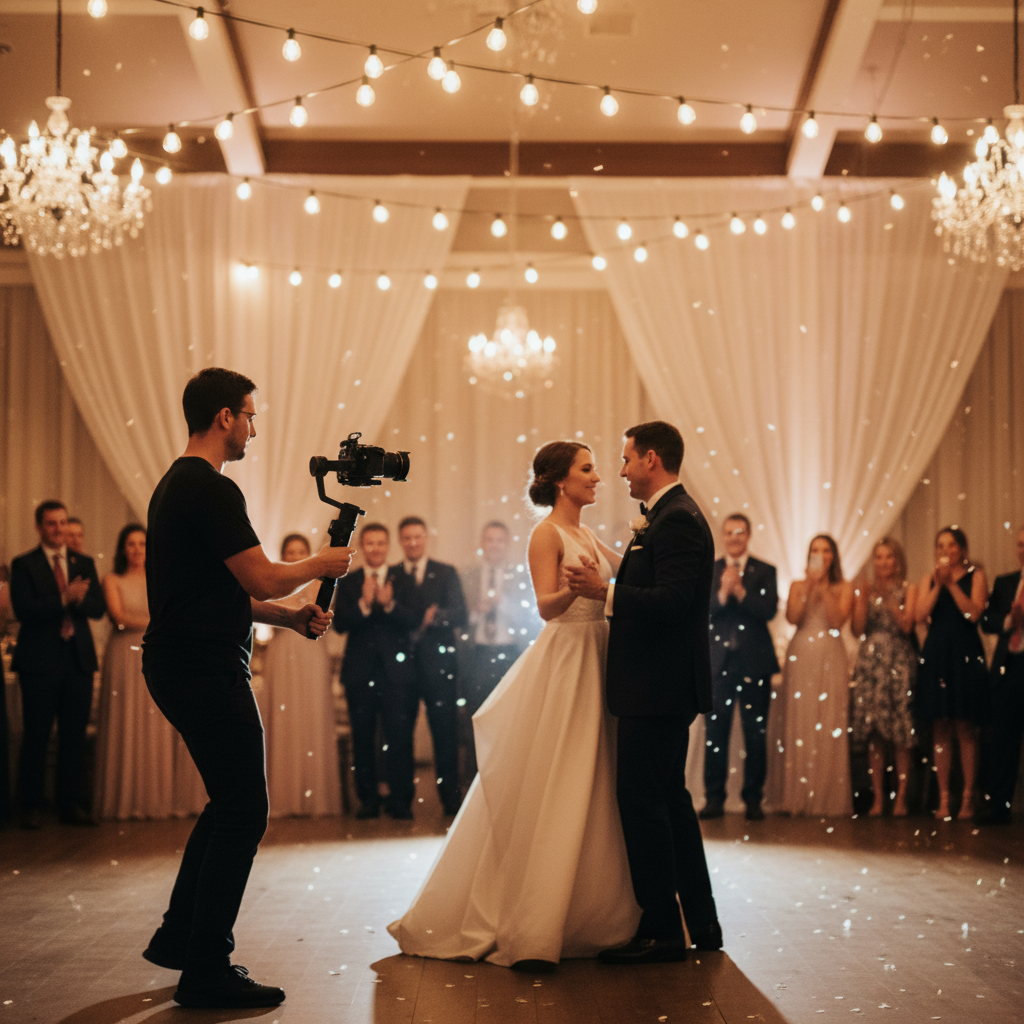
- First dance: Cross-shoot with a gimbal and a locked-off telephoto.
- Speeches: 5–7 minutes each on average; lock audio from the board and a podium mic.
- Open dancing: 20–30 minutes coverage captures enough for montage pacing.
8) Exit & Post
- Exit plan: Sparkler, confetti, or doli—prelight and assign positions.
- Data wrangle: Triple-backup to two SSDs and one cloud before leaving venue.
- Edit map: Mark selects within 24 hours; tag vows, toasts, reactions.
- Deliverables: Confirm highlight film length, feature cut, and teaser.
Use this section as your working wedding cinematography checklist. Print it, annotate it, and bring it to the venue—small checkmarks lead to big peace of mind.
Step-by-Step Filming Plan (From Call Sheet to Export)
Map the day in five phases: pre-production, prep, ceremony, reception, and post. Assign camera roles, pre-wire audio, scout light, and set backups. After the event, wrangle media, sync audio, and export in agreed formats for fast delivery.
- Pre-pro week: Lock the timeline, share the call sheet, and circulate the shot list. Aim for a 30–45 minute scout.
- Morning of: Stage details, white-balance, and test audio with a ten-second room tone recording.
- First look: Place A-cam behind the groom for reveal, B-cam at 45° on the bride, third wide for safety.
- Ceremony: Two moving angles + one locked wide; redundant audio on officiant and lectern.
- Portraits: Keep lenses between 35–85mm for flattering compression; favor golden hour if available.
- Reception: Prelight the dance floor; test a 1/100–1/125 shutter for flicker-free LEDs.
- Speeches: Frame a medium telephoto on speaker; cut between crowd reactions every 10–15 seconds.
- Exit: Walk backward on gimbal; maintain a constant distance and let confetti fill the frame.
- Backup: Copy to two SSDs and verify checksums; keep cards safe until client delivery.
- Post: Sync, rough cut, score, color, and deliver web-safe and archive masters.
Each step has a purpose: protect the moment, protect the story, and protect the files. When timelines slip—which they do—this plan keeps the essentials on track.
Gear & Audio Buying Guide (2026)
Prioritize reliability over novelty: dual-card cameras, fast primes, two lavs plus a recorder, and lightweight stabilization. Build redundancy into audio and power first, then expand to creative tools like gimbals and on-camera LEDs.
Cameras & Lenses
- Dual card slots: Protects against card failure during vows and entrances.
- Low-light sensors: Reception scenes often run at ISO 3200–6400; clean output matters.
- Essential lenses: 24–70mm for versatility, 50mm/85mm primes for portraits, macro for rings.
Audio Essentials
- Two lav kits + recorder: A single dropout can cost an entire vow sequence.
- Board feed cable set: XLR/TRS adapters cover most DJ consoles.
- Headphones: Real-time monitoring avoids preventable retakes.
Stabilization & Lighting
- Gimbal + monopod: Switch rapidly between motion and locked shots.
- Compact LEDs: Two panels and one on-camera unit manage prep rooms and dance floors.
- Light stands & clamps: Small footprint, big flexibility in crowded rooms.
Styles and Approaches Compared
Choose between cinematic, documentary, or hybrid styles. Cinematic emphasizes crafted visuals and music; documentary favors natural sound and continuity; hybrid blends both. Match style to your culture, venue, and how you want the day to feel on replay.
| Approach | How it Feels | Coverage | Best for | Trade-offs |
|---|---|---|---|---|
| Cinematic | Music-driven, stylized, emotional arcs | Planned angles, controlled light | Highlights, trailers, grand receptions | May stage brief moments; needs extra prelight |
| Documentary | Natural sound, minimal intervention | Long-form continuity, ambient audio | Full-ceremony films, cultural rituals | Less stylized visuals; longer edits |
| Hybrid | Best of both—polish and realism | Stylized set-pieces + live sound beds | Most weddings and sangeet nights | Requires strong planning and crew roles |
Hybrid is our default for multi-ritual South Asian weddings: cinematic sequences for entrances and portraits; documentary sound for vows, blessings, and toasts.
Tech Specs That Actually Matter
Lock frame rate, resolution, and color profile before call time. Common pairs: 4K/24 fps for storytelling, 4K/60 fps for slow-motion, and a flat profile for flexible grading. Keep shutter near 1/50–1/60 at 24/30 fps for natural motion.
- Frame rates: 24 fps for narrative feel; 60 fps yields 40% speed slow-motion at 24 fps timeline.
- Resolution: 4K capture downsamples well to 1080p for smaller files without visible loss.
- Shutter/ISO: Follow 180° rule; add ND for bright exteriors; keep ISO as low as light allows.
- White balance: Set Kelvin manually; avoid auto shifts during vows and dances.
- Audio levels: -12 dB target peaks with a safety -6 dB backup channel.
Standards evolve, but consistency wins. Align settings across bodies so multicam edits cut cleanly.
Local Logistics: Filming in HA3 0PB and Greater London
In HA3 0PB, plan around traffic patterns, venue load-ins, and restricted street parking. Build 20-minute buffers between locations, and pre-clear vendor access. For public transport proximity, reference Preston Road Station or Northwick Park station when routing guests or crew.
Local specifics affect real days more than gear specs do. London venues can have long walks from loading bays; older lifts may slow setups. We budget 20–30 extra minutes for high-rise hotels and 10–15 minutes for security checks at large ballrooms.
Local considerations for HA3 0PB
- Time arrivals to avoid rushes near Preston Road Station on weekend mornings; allow extra time for crew parking.
- Winter light fades by late afternoon; plan portraits earlier and schedule indoor B-roll just in case.
- Coordinate with planners for early vendor badges at venues near Northwick Park station to speed security checks.
Our neighborhood knowledge means we can preempt small snags—like elevator queues or one-way systems—before they cause missed entrances or delayed formals.
Tools & Resources (Templates, Briefs, Standards)
Use a creative brief, a segment-based shot list, and a delivery spec sheet. Document preferred aspect ratios, codecs, and backup locations. Templates protect speed and quality, especially when multiple vendors collaborate.
For briefs and alignment, this video creative brief template offers a useful structure you can adapt to weddings. When calibrating expectations for screening experiences, reviewing professional cinema standards helps frame display considerations for large venues. Planning a South Asian celebration? A South Asian venue checklist can prompt important staging and flow questions.
Keep templates short (one page each). If a crew member can’t skim the brief in two minutes, it won’t be used on the day.
Case Studies and Real-World Examples
Examples clarify the process. Here are three scenarios from our London and UK portfolio showing how a checklist protects coverage across different cultural formats and venue types.
Gujarati Ceremony + Sangeet (Hotel Ballroom)
- Challenge: Tight same-day turn from morning pheras to evening sangeet.
- Checklist win: Split crew; one team handled ballroom reset B-roll while another covered couple portraits.
- Outcome: Full ritual coverage plus a dynamic dance montage; edit completed on schedule thanks to clean multicam sync.
Nikkah + Intimate Reception (Historic Venue)
- Challenge: Low light and strict noise rules.
- Checklist win: Pre-approved mic placements and compact LED plan; 24 fps base with 60 fps inserts for motion.
- Outcome: Natural-sound ceremony film and a tasteful highlight cut that respected venue restrictions.
Destination Vows (Overseas Venue)
- Challenge: Customs delays and power plug mismatches.
- Checklist win: Packed universal adapters, surge protection, and a data-wrangling kit in carry-on.
- Outcome: Zero downtime; footage backed up thrice before return travel.
In every case, the wedding cinematography checklist served as the single source of truth—for timing, rituals, and redundancy. It’s the quiet hero of a drama-free edit.
Best Practices That Separate Good From Great
Over-communicate, over-prepare, and over-backup. Share the plan early, label batteries and cards, test audio twice, and keep two angles on anything unrepeatable. Respect rituals, and let culture lead your pacing.
- Two angles on vows: One shot can fail; two almost never do.
- Room tone first: Ten seconds of silence speeds mixing for the entire edit.
- White-balance locks: Prevents color shifts that ruin multicam continuity.
- Lens discipline: Don’t overswitch; plan sequences around two primary focal lengths.
- Quiet comms: Hand signals during ceremonies; radios for resets.
What most people don’t realize: labeling and logging save hours later. A two-minute slate routine at each phase often trims a full day from post.
How We Work With Your Photographer and Planner
We co-create the run-of-show, lock shot priorities, and defer to cultural leaders for ritual flow. Clear lanes avoid crowding, while shared comms make entrances and transitions seamless.
- Run sheet unity: One shared timeline eliminates surprises.
- Angle choreography: Staggered positions keep both teams clear of each other’s frames.
- Ritual respect: We consult elders or officiants to honor sequence and proximity rules.
- Post handoff: We coordinate stills for album-video continuity.
Good vendor chemistry shows up on film. Clear lanes equal clean frames—and cleaner audio.
Free planning consult: Want a wedding cinematography checklist tailored to your venue and rituals? Let’s map it together so you never miss a moment.
Frequently Asked Questions
These quick answers address the most common planning questions couples ask about timelines, crew size, audio, and deliverables. Each answer is built from our on-the-ground experience across London and the wider UK.
How many videographers do we need?
Two videographers cover most weddings well—one lead, one support—with a third static camera for safety. Large ballrooms or multi-ritual days may benefit from a third operator to avoid missed reactions and speed setups.
What frame rate should we choose?
Use 24 fps for the main storytelling timeline and 60 fps for slow-motion inserts like entrances and dance floor energy. Keep shutter near double the frame rate and match settings across cameras for consistent edits.
How do you record vows and speeches clearly?
We use two lavaliers (officiant and groom or speaker), a podium recorder, and—when available—a clean board feed from the DJ. Redundancy is non-negotiable; at least two sources roll during vows and toasts.
What deliverables should we expect?
A common set includes a 3–6 minute highlight, a longer feature cut, and full-length ceremony and speeches. We also supply social-ready clips and archival masters for safe long-term storage if requested.
Conclusion
A smart, culture-aware checklist is the best insurance for your wedding film. Plan roles, pre-wire audio, assign backups, and align vendors. The result is simple: fewer surprises and a film that feels exactly like your day.
Key takeaways
- Create a living wedding cinematography checklist and use it on-site.
- Protect audio first; moments can be reframed, but vows can’t be rerecorded.
- Choose a style—cinematic, documentary, or hybrid—that fits your culture and venue.
- Add buffers for HA3 0PB and Greater London logistics; traffic and load-ins take time.
- Back up media before leaving the venue—twice local, once offsite.
Ready to plan a film-forward celebration? Book a discovery chat and we’ll tailor this framework to your timeline, rituals, and venues across London or overseas destinations.