Overseas wedding planning mistakes are the avoidable slip-ups that derail international celebrations—from missing legal documents to misreading vendor contracts. For couples near HA3 0PB on Abercorn Gardens, our Patel Events team prevents these issues with structured timelines, vendor oversight, and cultural expertise so your destination vows stay joyful, not stressful.
By Shani Patel — Patel Events
Last updated: 2026-05-23

Summary and Table of Contents
This complete guide explains the most common overseas wedding planning mistakes and how to avoid them with checklists, timelines, and proven workflows. You’ll learn documentation essentials, venue and vendor due diligence, cultural-ritual sequencing, and contingency planning so your destination celebration runs smoothly.
Use this guide as your working playbook from first idea to wheels-up. It’s structured for quick decisions and deeper dives when you need them. Jump to what matters now, then circle back to refine details with your planner.
- What this topic means
- Why it matters
- How overseas planning works
- Planner models compared
- Best practices to avoid errors
- Tools and resources
- Case studies and examples
- Local logistics from HA3 0PB
- FAQ
- Conclusion and next steps
What are “overseas wedding planning mistakes”?
Overseas wedding planning mistakes are preventable errors that create delays, added stress, or legal risks when marrying abroad. They span documents, visas, vendor contracts, logistics, and cultural sequencing. Avoiding them requires early timelines, precise paperwork, vetted suppliers, and on-site coordination tuned to the destination.
At Patel Events, we define a “mistake” as any missed dependency that triggers a cascade—like booking décor before confirming local import rules or scheduling a sangeet without checking amplified-sound curfews. The risk isn’t just inconvenience; it’s lost time and compromised guest experience.
Typical categories of missteps
- Documentation gaps: Expired passports, mismatched names, missing apostilles, or misunderstood residency rules.
- Vendor due diligence: No backup suppliers, unclear scope, or deposits without milestone protections.
- Program sequencing: Ritual clashes (nikkah, pheras, sangeet) with venue timing, weather, or sound limits.
- Logistics blind spots: Underestimating transfer times, freight customs, or power requirements for DJs and cinema teams.
- Guest care: Vague travel guidance, inaccessible venues, or no plan for elders and toddlers.
We’ve found that clarifying definitions at the start improves decision quality all year. When couples know the top five risk areas, they prioritize wisely and feel calmer throughout planning.
Why avoiding mistakes matters
Avoiding overseas wedding mistakes protects your legal status, budget, and guest experience. A single oversight—like misfiled documents—can delay ceremonies, while weak vendor terms can limit recourse. Tight, proactive planning safeguards timelines, honors culture, and keeps energy on celebration instead of fire-fighting.
The reality is that destination weddings stack variables: border rules, language, multiple venues, and many vendors. With 50+ supplier touchpoints common across décor, styling, transport, and entertainment, unclear ownership quickly creates confusion. A structured plan reduces friction and increases joy at every milestone.
- Legal assurance: Correct paperwork ensures your marriage is recognized when you return.
- Experience quality: Guests remember timing, food, music, and warmth; logistics shape all of these.
- Cultural fidelity: South Asian rituals deserve accurate sequencing, from nikkah to sangeet to pheras.
- Stress control: Timeboxing decisions and assigning owners prevents last-minute scrambles.
Patel Events brings 27+ years, 500+ events, and a 98% satisfaction history to exactly these pressure points. That lived experience turns potential pitfalls into calm, confident choices.
How overseas wedding planning works (step-by-step)
International planning follows a 9–12 month track: align vision, secure legal path, select venue, lock core vendors, map rituals, confirm travel blocks, and rehearse on site. Each phase has deliverables and owner assignments so nothing drifts. Success comes from sequencing decisions in the right order.
Here’s the proven cadence we use for destination weddings in places like Udaipur and Goa, adapted to your culture and guest mix. You’ll see what to decide when, which documents to prepare, and how to keep momentum without overwhelm.
12-month destination timeline (high level)
| Month | Milestones | Primary Owner |
|---|---|---|
| 12 | Vision brief, guest estimate, target destinations shortlist | Couple + Planner |
| 11 | Legal path review, passport validity check (6+ months), venue scouting | Planner |
| 10 | Venue hold, soft room block, draft budget structure | Planner |
| 9 | Contract venue, lock dates, begin core vendor RFPs (photo, video, décor, DJ) | Planner |
| 8 | Ceremony sequencing (nikkah/pheras/sangeet), menu direction | Couple + Planner |
| 7 | Visas/affidavits prep, translation needs, start design board | Planner |
| 6 | Flights guidance to guests, finalize rooming list, transport matrix | Planner |
| 5 | Tentative décor mockups, entertainment lineup, AV power map | Planner |
| 4 | Menu tasting plan, welcome kit plan, production schedule draft | Planner |
| 3 | On-site reconnaissance or virtual run-through, final vendor confirmations | Planner |
| 2 | Shipping/cargo if needed, floor plans, guest comms (airport, transfers) | Planner |
| 1 | Final briefs, rehearsal blocks, rain/wind contingencies validated | Planner |
Core deliverables by phase
- Vision & scope: Cultural priorities (imam/pandit needs), guest count bands, accessibility notes for elders.
- Legal & docs: Passport checks, affidavits of eligibility to marry, translations, potential apostilles.
- Venue & rooms: Date holds, curfews, sound policies, backup indoor spaces, rooming lists, child-friendly areas.
- Vendors: Clear scope statements, milestone payments, cancellation protections, backups for décor and transport.
- Program: Ritual order (nikkah, sangeet, pheras), timing by daylight, fatique-aware pacing.
- Travel: Flight windows, airport transfer waves, VIP/elder assistance, luggage and outfit strategies.
- Production: AV load maps, generator needs, wind/rain contingencies, run of show, on-site command post.
We assign owners and deadlines at each stage so nothing falls through the cracks. It’s the difference between smooth celebration and stressful guesswork.
Planner models compared: destination, local, and hybrid
You can work with a destination-based planner, a local planner, or a hybrid team. The best model balances cultural fluency, on-site access, and vendor leverage. Hybrid models often win by pairing your home-base team with a trusted local network for rapid problem-solving.
Because Patel Events serves London and international venues, we frequently anchor a hybrid: we own design, rituals, and production; trusted local partners supply venue intel and rapid-response labor. This mitigates language gaps and speeds last-mile execution.
| Model | Strengths | Risks | When to choose |
|---|---|---|---|
| Destination-based | Local venue access; immediate troubleshooting | May lack cultural depth for multi-ritual programs | Simple programs; heavy reliance on venue packages |
| Local/home-based | Deep cultural fluency; consistent communication | Less on-the-ground leverage for last-minute needs | Complex South Asian rituals; design-led productions |
| Hybrid (Patel Events model) | Best of both: culture + access; redundancies | Requires strong project management and clear roles | Most destination weddings beyond a single ceremony |
Decision cues for your situation
- Ritual complexity: Multiple ceremonies favor hybrid oversight.
- Language: If you don’t speak the local language, on-site partners pay dividends.
- Supplier scarcity: Remote islands or peak seasons need redundant vendors.
- Design ambition: Custom builds need a planner with engineering-level production.
Our hybrid framework creates two safety nets: cultural accuracy from London and instant response on the ground abroad. That duality prevents the most common mistakes.
Best practices to avoid overseas wedding errors
Protect your day with a layered plan: verify legal path early, confirm venue constraints, lock core vendors with backups, sequence rituals to daylight and curfews, and stress-test logistics. Written run-of-show documents, escalation trees, and weather plans keep execution calm.
Documentation and legal path
- Passport validity: Many countries expect 6+ months validity beyond travel dates.
- Eligibility proofs: Affidavits of no impediment; check translation/apostille rules.
- Name consistency: Ensure spellings match across passports, affidavits, and venue contracts.
- Ceremonial vs civil: Decide whether civil registration occurs at home or at destination.
Venue due diligence
- Sound and curfew: Confirm decibel limits and last-dance times before booking the DJ.
- Wind and rain: Identify covered alternatives and wind ratings for mandaps or stages.
- Power map: List exact loads for lighting, cinema, and entertainment; validate generator needs.
- Freight rules: Ask about customs on florals, candles, fabric, and pyrotechnics.
Vendor contracts that protect you
- Milestone schedule: Tie payments to proofs (design sign-offs, mockups, rehearsals).
- Replacement clauses: Require comparable substitutes for key staff or inventory.
- Scope matrix: Write inclusions and exclusions so there’s no gray zone on the day.
- Insurance: Verify venue and supplier coverage and certificate exchange.
Program design for multi-ritual weddings
- Sequence with intention: Space nikkah, sangeet, and pheras to respect fasting, elders, and sunset.
- Transition buffers: Add 15–30 minutes for outfit changes and prayer breaks.
- Accessibility: Minimize stairs and long walks for elders and wheelchair users.
- Catering cadence: Plan hydration and light bites between rituals—energy matters.
Operations and contingency
- Run-of-show: One authoritative schedule with version control shared to all vendors.
- Escalation tree: Who solves what in under 5 minutes? Write it down.
- Weather triggers: Define wind/rain thresholds that flip Plan B without debate.
- Comms plan: Group chats by function; radio call signs for on-site leads.
In our experience, writing decisions down is half the win. The other half is rehearsing them—virtually or in person—so your team moves as one.
Tools and resources that actually help
Use a shared project board, a document vault, a venue-constraint checklist, and a travel brief template. These keep decisions visible, align stakeholders, and prevent rework. Templates also speed approvals so you can enjoy planning instead of chasing details.
Your core toolkit
- Planning board: A Kanban or Gantt view for milestones and vendor tasks.
- Document vault: Passports, affidavits, translations, and vendor contracts in one secure folder.
- Venue checklist: Curfews, sound, power, weather, loading bays, storage.
- Travel brief: Flights windows, transfer instructions, local etiquette, dress guidance.
- Ritual playbooks: Nikkah requirements, pheras fire safety, sangeet sound plan, imam/pandit coordination.
Helpful reading (non-sponsored)
For venue thinking, this resort-focused perspective on choosing a property can spark useful questions; see this resort selection overview. For checklist inspiration tailored to South Asian weddings, review a venue checklist example. For additional venue-evaluation angles, skim this dream venue primer.
We favor tools that reduce context switching and capture decisions the first time. Your future self—at rehearsal—will thank you.
Case studies and examples from Patel Events
Real-world examples show how layered planning prevents problems. In Udaipur and Goa, we pre-empted weather, curfews, and multi-ritual handoffs through hybrid teams, clear run-of-show documents, and vendor redundancies—turning potential stress into smooth, joy-first experiences.
Udaipur: palace courtyard pheras + city logistics
- Challenge: Wind exposure in a historic courtyard with narrow lanes for load-in.
- Action: Wind-rated mandap design, earlier floral install, porter-based load plan, and backup staging.
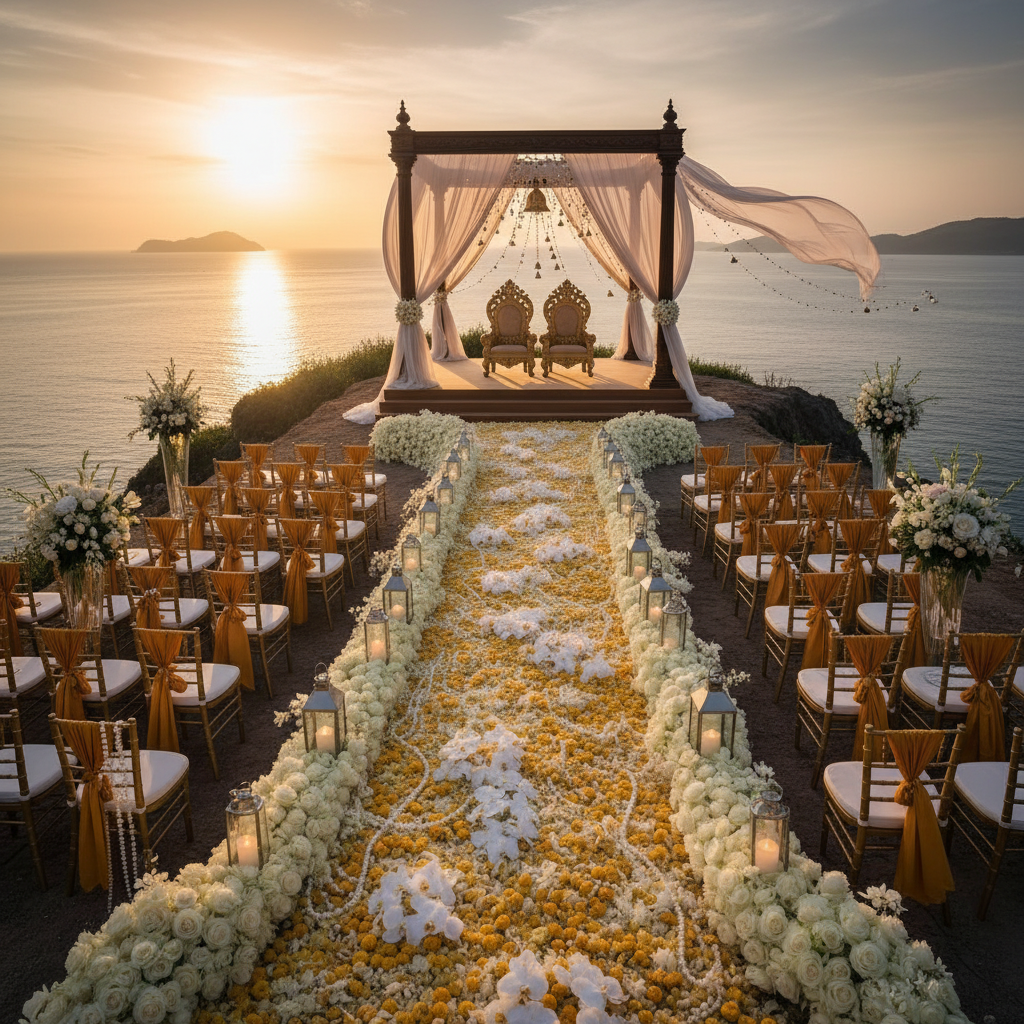
- Outcome: On-time pheras with pristine florals; guests escorted in small groups; cinema team captured sunset vows.
Goa: beachside nikkah + sangeet under curfew
- Challenge: Ocean breeze, sand terrain, and amplified-sound restrictions near residences.
- Action: Platformed aisle, concealed wind baffles, cardioid speaker layout, and tightened sangeet schedule.
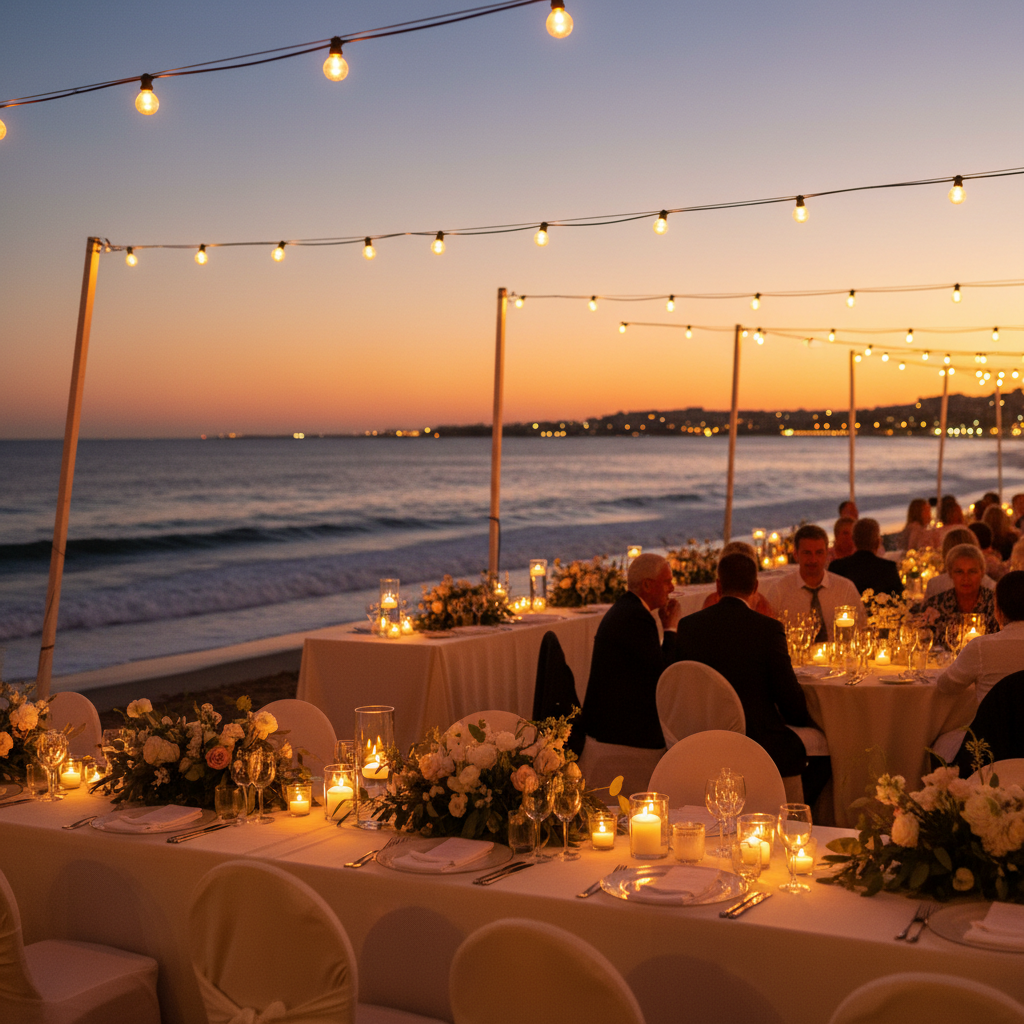
- Outcome: Reverent nikkah, vibrant sangeet, and elegant transition to a candlelit dinner—all within curfew.
Greater London send-off + overseas arrival
- Challenge: Coordinating elders, toddlers, and luggage for connecting flights.
- Action: Staggered airport transfers, color-coded luggage tags, and dedicated welcome hosts.
- Outcome: Calm departures, happy arrivals, and guests ready to celebrate on Day 1.
Across these events, redundancies made the difference. We keep duplicate entertainment, backup décor options, and extra transport capacity on call so show flow never stops.
Planning from HA3 0PB (Greater London): local logistics that matter
Couples planning abroad from HA3 0PB in Greater London benefit from strong flight connectivity and supplier access—but must account for rush-hour transfers and embassy appointment lead times. Build buffers for passports, visas, and airport runs to keep the whole journey smooth.
Patel Events’ Harrow base keeps us close to families across Greater London for design reviews, tastings, and send-offs. Local fluency plus global partners is why our hybrid model works so well for South Asian destination weddings.
Local considerations for HA3 0PB
- Schedule fittings and luggage drop-offs to avoid rush windows near Kenton station or Preston Road Station—your transfers will run on time.
- Account for peak travel seasons (summer holidays and late December). Embassy or consular appointments can book out weeks in advance.
- Use our Harrow meeting point for final checks: ritual items, attire, and travel briefs handed out in one organized session.
Curious how a hybrid team would work for your venue? We’ll map your top three risks and a first-draft timeline you can act on immediately.
Frequently Asked Questions
These quick answers address the most common questions couples ask about international weddings—from paperwork basics to planner scope and guest communication. Share them with family to align expectations and reduce back-and-forth.
What documents do we usually need to marry abroad?
Expect valid passports, birth certificates, and an affidavit/letter confirming you’re free to marry. Some destinations require translations or an apostille. Decide whether you’ll complete a civil registration at home or at the destination, then gather documents accordingly.
How far in advance should we start planning a destination wedding?
Begin 9–12 months ahead. You’ll need time to choose a venue, secure room blocks, align rituals to daylight and curfews, and brief guests on travel. Complex multi-ritual programs benefit from a full year to stage design mockups and rehearsals.
Do we need a local planner at the destination if we already have one at home?
A hybrid model often works best. Your home planner protects culture, communication, and design; vetted local partners deliver speed and access on-site. The pairing reduces language gaps and accelerates last-mile problem-solving.
How do we help guests with travel and accessibility?
Share a simple travel brief with flight windows, transfer instructions, and packing tips. Offer stroller and wheelchair guidance, and seat elders near exits. Stagger airport transfers and assign a point person to monitor arrivals.
Conclusion and next steps
Great destination weddings are engineered, not improvised. When you lock paperwork, validate venue limits, and write a production-grade plan, your celebration flows. The best next step is a focused risk review that turns potential pitfalls into a calm, confident timeline.
Key takeaways
- Sequence decisions—legal, venue, vendors—so each one supports the next.
- Use written scopes, backups, and weather triggers to prevent stalls.
- Hybrid planning balances cultural fluency with on-site speed.
- Buffers for passports, visas, and transfers keep energy on celebration.
We love designing culturally faithful South Asian celebrations—nikkah, sangeet, Gujarati pheras—that feel effortless on the day. If you’re planning from Greater London, our Harrow base and overseas partners make an ideal launchpad for your ceremony abroad.