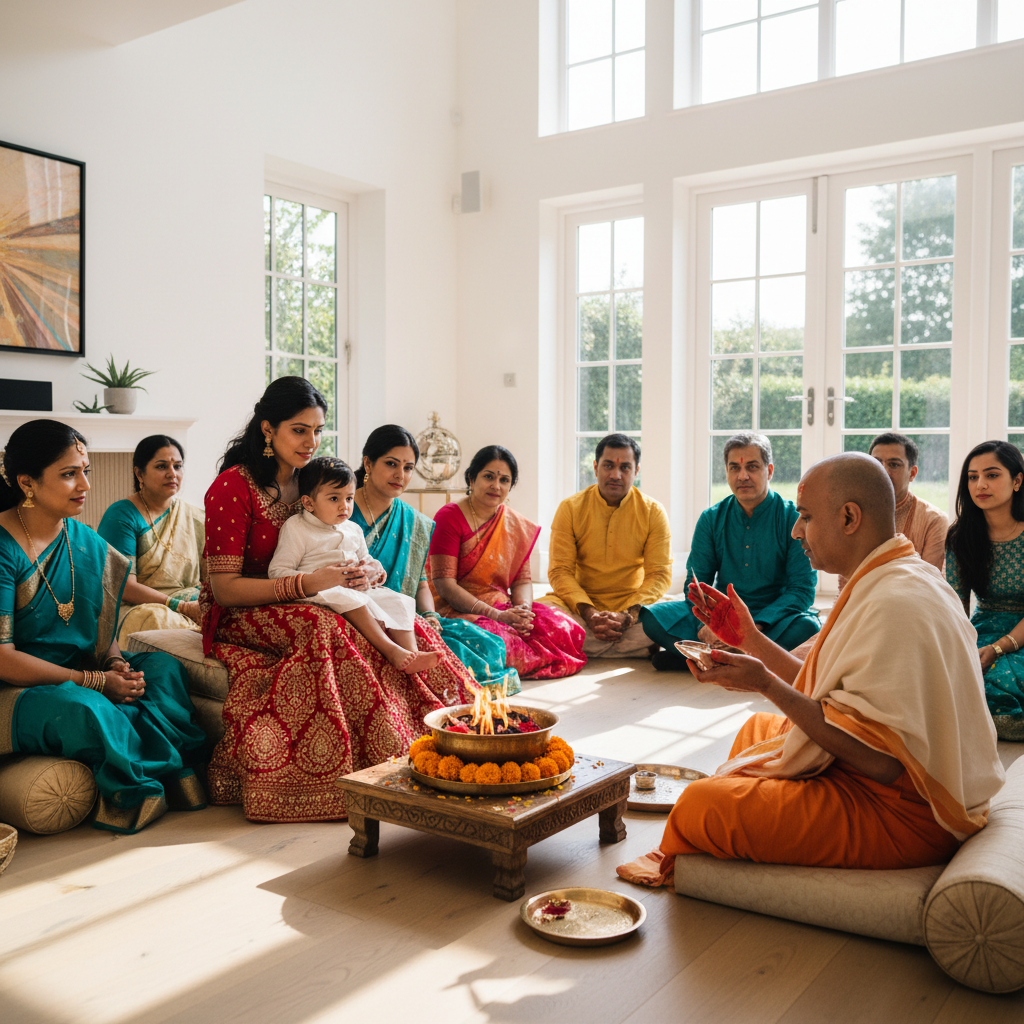
Mundan Sanskar planning guide is a step-by-step framework for organizing a child’s first hair-shaving ceremony with cultural fidelity and family comfort. For families near HA3 0PB in Greater London, Patel Events coordinates priests, decor, and logistics so your mundan is serene, on time, and fully supported from setup to cleanup.
By Patel Events • Last updated: May 14, 2026
Overview
This mundan sanskar planning guide explains the ceremony from meaning to execution, including timelines, materials, roles, and safety. You’ll get a templated checklist, venue comparisons, and child-comfort tips, plus Greater London logistics. Use it to plan at home, a temple, or a hall with confidence.
- What mundan sanskar is and why it matters
- Exact steps, roles, and timing from first call to final blessing
- Venue comparisons: home, temple, and community hall
- Child comfort, hygiene, and safety essentials
- Materials list, vendor coordination, and photo tips
- Greater London logistics and HA3 0PB local considerations
Jump to: What Is Mundan? • Why It Matters • How It Works • Approaches • Venue Comparison • Checklists • Vendors • Safety • Ritual Meaning • Case Studies • London Logistics • Photo/Video • Keepsakes • FAQ • Conclusion
What Is Mundan Sanskar?
Mundan Sanskar is a Hindu samskara marking a child’s first hair removal, symbolizing purification and a fresh start. Families perform it at home, a temple, or a hall with a priest, offerings, and blessings. Planning ensures cultural fidelity, safety, and a calm experience for baby and parents.
Mundan (also called chudakarana) is traditionally performed in the first or third year, though families adjust based on health, travel, and priest guidance. The ritual may include a brief homa (sacred fire), mantras, offerings, and blessings for long life and wisdom. In our experience supporting London families, a well-timed, well-briefed ceremony takes about 60–90 minutes end-to-end from welcome to prasad.
- Occasion window: commonly 6–24 months; flexible per family tradition and health considerations.
- Typical duration: 60–90 minutes including setup, shaving segment, and post-ritual blessings.
- Core roles: parents, priest (pandit), a licensed barber/trimmer, and two calm relatives to assist.
- Venue options: home living room, temple courtyard/room, or a small community hall.
With 27+ years coordinating cultural ceremonies, Patel Events sequences decor, priest briefings, and guest flow so the moment feels sacred and effortless while honoring your family’s lineage and preferences.
Why Thoughtful Mundan Planning Matters
Thoughtful mundan planning protects child comfort, ritual accuracy, and family flow. Clear roles, sanitized tools, and a realistic schedule minimize stress. A prepared plan also preserves photos and keepsakes without disrupting the ceremony’s spiritual focus.
Parents often juggle decor, puja items, elders’ expectations, and a baby’s nap schedule. Without a plan, small frictions—like missing ghee, late arrivals, or a chilly room—snowball. A written run-of-show (down to 5–10 minute blocks) keeps everyone coordinated and builds buffer time for baby breaks, photos, and blessings.
- Ritual fidelity: Align mantras, offerings, and sequence with your family’s tradition (Gujarati, Punjabi, Marathi, etc.).
- Child-first pacing: Schedule around naps and meals; keep the 15–25 minute shaving window calm with soothing aids.
- Safety and hygiene: Disinfect tools, prepare warm water, and designate a clean area for hair collection.
- Guest experience: Clear arrival time, seating plan, and visibility reduce crowding and distractions.
When we facilitate mundan ceremonies, we distribute a one-page cue sheet to helpers and vendors. That simple document keeps the room peaceful and focused, especially during first snip and tilak moments.
How Mundan Sanskar Works: Step-by-Step
A well-run mundan follows a clear sequence: welcome, sankalpa, brief homa, first hair removal, blessing, and distribution of prasad. Assign roles, pre-stage items, and time-box each segment to 5–20 minutes. Document the flow in a one-page run-of-show.
- Arrival & staging (10–15 min): Set puja table, sanitize tools, cue soft music, check temperature (70–72°F), and brief helpers.
- Sankalpa & invocation (5–10 min): Parents state intent; priest recites opening mantras; tie kalava thread.
- Homa & offerings (10–15 min): Small fire or symbolic lamp; offer ghee, grains, and flowers; maintain ventilation and safety.
- First hair removal (15–25 min): Licensed professional leads; begin with a small lock; continue methodically with pauses for comfort.
- Blessing & tilak (5–10 min): Elders bless; apply sandalwood paste and kumkum; brief photo moment.
- Prasad & photos (10–15 min): Share sweets; capture family portraits while baby is calm and warm.
- Cleanup & keepsakes (10–15 min): Collect hair respectfully; store in a labeled pouch/box; tidy the puja area.
Roles and responsibilities
- Lead parent: Holds baby during shave; signals breaks; manages comfort items.
- Second helper: Passes items; manages toys, pacifier, or snack; monitors white noise or music.
- Priest: Guides sequence; confirms venue rules (flame/diya); keeps mantras concise if needed.
- Licensed groomer: Handles trimmer/razor; follows disinfection protocol; communicates before each pass.
- Photographer: Stays non-intrusive; captures planned angles; avoids flash during key mantras.
Contingency planning
- Quiet room: Prepare a nearby space for short breaks if baby becomes fussy.
- Lamp-only option: If flame is restricted, confirm diya placement and smoke alarms.
- Plan B timing: If naps shift, swap sequence: blessings first, shave second.
- Weather backup: For temple courtyards, keep blankets and umbrellas handy in cooler months.
Types, Methods, and Approaches
Families adapt mundan by venue, grooming method, and level of ritual. Choose home, temple, or hall; select trimmer or razor; include a homa or keep it minimal. Match the approach to your child’s temperament, guest count, and cultural preferences.
Common venue formats
- Home: Maximum control and nap-friendly. Seat 10–25 guests; stage near natural light for photos; ensure good ventilation if using a diya.
- Temple: Built-in sanctity; coordinate exact slot and rules. Often best for 6–12 guests; ask about photography guidelines.
- Community hall: Space for 25–60 guests; requires more setup and teardown time; confirm load-in and parking.
Grooming methods
- Electric trimmer (guarded): Quieter and generally calmer for infants; disinfect heads and keep spares.
- Ritual razor (with pro): Traditional look; ensure licensed professional, new blades, antiseptic, and gloves.
- Hybrid: First lock with ritual blade, remainder with trimmer for speed and comfort.
Ritual depth
- Full homa: Fire, offerings, and mantras; allocate 20–30 minutes and ventilation.
- Lamp-only: Symbolic diya when open flame isn’t allowed; keep fire-safe distance from textiles.
- Minimalist: Blessing, first snip, prasad—concise yet meaningful for very young infants.
Home vs Temple vs Hall: Quick Comparison
Choose a venue by weighing privacy, logistics, and guest flow. Homes offer control and comfort, temples provide sanctity and structure, and halls scale for larger families but need more setup. Match the space to your headcount and ritual depth.
| Venue | Best for | Pros | Considerations |
|---|---|---|---|
| Home | 10–25 guests; nap windows | Control, comfort, easy breaks | Limited parking, smaller staging |
| Temple | 6–12 guests; spiritual setting | Sanctity, priest on-site | Fixed time slots, rules vary |
| Community Hall | 25–60 guests; open layout | Space, seating, visibility | More logistics and teardown |
Checklists and Best Practices
Use a two-page checklist to align materials, roles, and timing. Stage a calm shaving zone, sanitize tools, and pre-brief helpers. Build a 10-minute buffer before and after the shave to protect child comfort and photos.
4-week timeline
- Week 4: Confirm priest and venue; choose grooming method; create guest list (10–40); secure parking or drop-off plan.
- Week 3: Order decor and puja items; book photographer; align on run-of-show; confirm flame policy.
- Week 2: Send schedule to family; test trimmer; confirm ritual flow and language with priest.
- Week 1: Final headcount; pack kit; print 1-page checklist; set arrival windows and assign roles.
Materials kit (core)
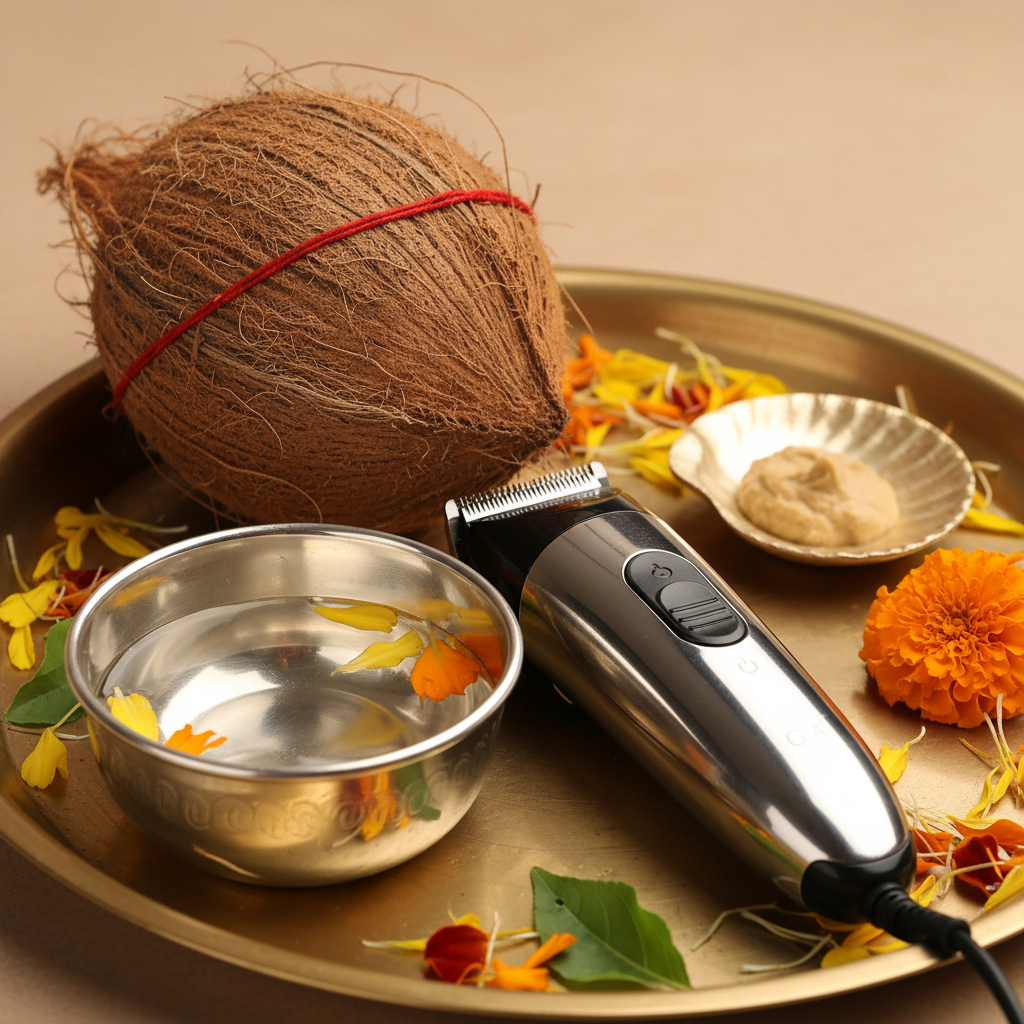
- Sanitized trimmer and spare head or single-use razor (professionally handled)
- Sandalwood paste, kumkum, and tilak bowl
- Holy water, ghee, grains, flowers, and coconut
- Kalava (red thread), small mirror, and clean towels
- Waste bag, labeled keepsake pouch/box for hair
- Hand sanitizer, antiseptic, cotton pads, and warm water bowl
Run-of-show cues
- Seat baby on parent’s lap; second helper ready with toys or snack.
- White noise or soft bhajans at low volume (approx. 45–55 dB) to soothe.
- Natural light or 5600K softbox for clear photos and a calmer ambiance.
- Signal points: first snip for video, blessings, prasad distribution, and family portrait.
Printable one-pager (example)
Arrival 10:00 — Staging, temperature check, sanitize tools
10:15 — Sankalpa & invocation
10:25 — Lamp/homa & offerings
10:40 — First snip & shave (breaks as needed)
11:05 — Blessings & tilak
11:15 — Prasad & family photos
11:30 — Keepsake hair collection & tidy-up
Lead: Parent A  |  Helper: Relative B  |  Priest: Confirmed  |  Groomer: Licensed
Tools, Resources, and Vendor Coordination
Centralize vendors: priest, licensed barber/trimmer, photographer, and decor. Share a minute-by-minute schedule and a single contact number. Provide a labeled kit and safety brief to reduce delays and elevate the experience.
Patel Events maintains a vetted network of 50+ partners. For mundan, we typically coordinate a priest, decor stylist, and a family photographer. Sharing a concise shot list and kit photo the day prior helps everyone arrive aligned and ready.
- Priest briefing: Ritual depth, language preference, preferred mantras, and time cap; confirm diya/fire policy.
- Grooming pro: Disinfection routine, blade/trimmer policy, gloves, and child-calming practices.
- Photo/video: Shot list: arrival, sankalpa, first snip, blessings, family portrait, prasad, and keepsake box.
- Decor: Compact mandap or backdrop, seating arc for visibility, safe fire or lamp placement, and walkway clearance.
Exploring seating flow ideas can spark inspiration; for example, some banquet hall guides illustrate efficient arcs and stage positioning that adapt well to family ceremonies. You can review sample layouts and ideas from venues that share planning tips, such as these perspectives on seating and venue flow and guest-view angles. For families seeking ritual suggestions, general puja recommendation lists like this overview can help you discuss preferences with your priest.
Planning help, start to finish. If you prefer a calm, culturally faithful mundan with zero guesswork, our Harrow-based team coordinates priests, decor, and flow. One brief, one point of contact, and smooth delivery—so you stay present with your child.
Safety, Hygiene, and Child Comfort
Prioritize sanitized tools, a warm room (70–72°F), and a calm, well-fed child. Use guarded trimmers where possible, pause on distress cues, and apply antiseptic after shaving. Keep a first-aid kit nearby and document your sanitation checklist.
- Sanitation: Disinfect trimmer heads, use new blades, and wash hands before the shave; keep a clean towel under the neck.
- Environment: 70–72°F room temperature and no drafts; soft blanket on parent’s lap; reduce sudden noises.
- Comfort aids: Pacifier/teether, favorite toy, and familiar music at low volume.
- Skin care: Dab antiseptic; avoid scented products right after shaving; monitor for redness.
- Break protocol: Pause briefly at first signs of fussing; resume when settled; offer sips of water if appropriate.
Where open flame isn’t allowed, swap homa for a lamp to maintain symbolism. If you prefer a razor finish, use a licensed professional and single-use blades handled with gloves for added safety and hygiene.
Ritual Components and Meaning
Mundan symbolism centers on purification and new beginnings. Offerings like ghee, grains, and flowers carry prayers for health and wisdom. The first snip marks transition, while tilak and blessings seal intentions for the child’s path ahead.
- Sankalpa: Parents state intent, anchoring the ritual to values, gratitude, and hopes for the child.
- Offerings: Ghee and grains symbolize nourishment and prosperity; flowers honor the divine.
- First snip: A visible milestone, often saved as a keepsake in a labeled pouch or silver box.
- Tika/Tilak: Protective and auspicious marking for the child, typically sandalwood or kumkum.
- Prasad: Sweet sharing that closes the ceremony with community and joy.
We prepare cue cards so helpers know what’s next without interrupting mantras—this keeps the ceremony reverent and efficient for elders and guests.
Case Studies and Real-World Examples
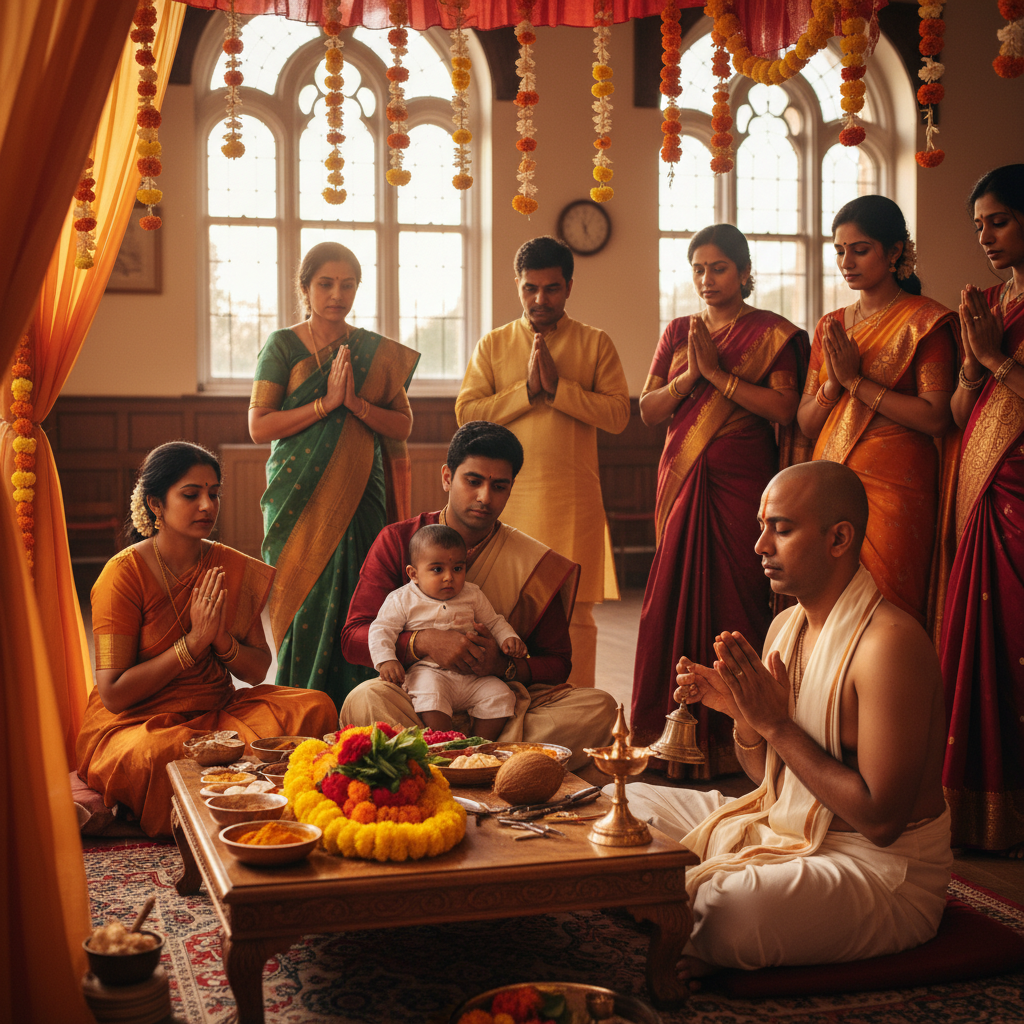
Successful mundan events follow simple patterns: plan around naps, pre-stage items, and brief the priest and groomer. These short examples show how small tweaks improved flow, comfort, and photos for London families.
- Harrow living room (14 guests): Scheduled immediately after a feeding, used a guarded trimmer, and ran soft bhajans. Shaving segment stayed calm; portraits captured within 10 minutes.
- Leicester hall (32 guests): Lamp-only ritual due to venue rules; added a compact floral backdrop and a 270° seating arc. The first-snip photo was captured from two angles.
- Temple slot in London (8 guests): Fixed 30-minute window; we pre-labeled the hair keepsake box and trimmed in three passes to match the priest’s cadence.
- Home flat near HA3 0PB (12 guests): Limited space; we staged a corner mandap and moved the photo backdrop to the hallway for cleaner frames.
- Kent community center (26 guests): Early morning slot; we set the room to 72°F and used white noise; the baby rested calmly between passes.
- Leicester temple courtyard (10 guests): Breezy day; we secured diya wind guards and prepared blankets; mantras remained audible.
- London townhouse (20 guests): Narrow staircase; we planned a ground-floor flow with separate entry and exit to reduce congestion.
- Tooting hall (28 guests): No open flame; we briefed a lamp-only sequence and added extra marigold garlands to elevate ambience.
- Harrow garden setup (15 guests): Spring day; we kept a shaded area and backup indoor spot; the first-snip photo used natural backlight.
- Leicester apartment (9 guests): Minimalist ritual; first snip, blessings, prasad; efficient and heartfelt for a nap-sensitive toddler.
- London temple prayer room (11 guests): Low light; we positioned a 5600K softbox at 45° and avoided flash during mantras.
- Harrow community hall (40 guests): We set a semi-circle seating arc for visibility, leaving stroller and elder seating near the aisle.
- Kent home (16 guests): We printed the one-page schedule for each helper; transitions stayed smooth and unhurried.
Across hundreds of family ceremonies, the consistent thread is clarity: a simple run-of-show, a prepared kit, and a calm, child-first pace. Those elements keep the day meaningful and memorable.
Planning in Greater London: Logistics and Local Notes
In HA3 0PB and Greater London, plan transport buffers, venue rules, and priest timing. Home ceremonies flow best with staged seating, while small halls need clear load-in paths. Confirm flame policies early and pre-arrange parking or drop-off windows.
For Harrow-area families, we stagger arrivals and hold a 10-minute buffer ahead of the first snip for photos and calm. Where homa isn’t permitted, we substitute a diya and add a concise offering sequence to retain meaning while meeting venue policies. When we coordinate, we also share a neighborhood map pin and suggested rail times to avoid bunching at the door.
Local considerations for HA3 0PB
- Coordinate arrivals around Kenton station schedules if guests use rail; share a 15-minute window in invites.
- Weekend temple and hall slots book fast near Northwick Park; secure your preferred time 2–4 weeks ahead.
- Homes near Abercorn Garden benefit from a compact decor plan that leaves stroller space and a clear photography lane.
Photography and Video Tips
Prioritize natural light, a clean backdrop, and a short shot list. Capture the first snip, parent reactions, and blessings. Keep ISO low with a softbox if needed, and record 10–20 seconds of steady video per milestone.
- Angles: Front for emotion, side for technique, overhead for keepsake hair in bowl.
- Lighting: North-facing window or 5600K softbox at 45° for flattering skin tones; avoid harsh mixed color temperatures.
- Sequence: Arrival, sankalpa, first snip, tilak, blessings, family portrait, prasad, keepsake close-up.
- Backup plan: Assign one relative for phone video if a pro isn’t engaged; stabilize elbows on a chair back.
- Respect: Mute shutter sounds during mantras; avoid blocking elders’ views.
Post-Ceremony Traditions and Keepsakes
Seal the memory with labeled hair keepsakes, a short note of blessings, and a family photo. Some families plant the hair with a sapling or store it in a silver box. Share photos within 48 hours to include faraway relatives in the joy.
- Label pouch/box with child’s name and date; store in a cool, dry place.
- Create a one-page “Mundan Story” with three photos and a blessing from grandparents.
- Optional: Plant hair with a houseplant or in the garden as a renewal symbol.
- Print a postcard-size portrait for elders who prefer physical keepsakes.
Frequently Asked Questions
These concise answers cover timing, venues, safety, and photography. Each response is practical and aligned with family comfort and cultural fidelity.
When is the best age for a mundan?
Many families choose between 6 and 24 months, often aligning with priest guidance and family travel. Schedule around naps and meals, and keep a 10-minute buffer before the first snip for calm photos and blessings.
Can we do mundan at home?
Yes. Home ceremonies offer comfort and control for 10–25 guests. Stage a clean shaving zone, confirm flame rules, and align a brief with your priest. If open flame isn’t allowed, use a diya and symbolic offerings.
Do we need a professional barber?
We recommend a licensed professional, especially for razors. Guarded trimmers are generally calmer for infants. Always disinfect tools, use single-use blades when applicable, and keep antiseptic and warm water on hand.
How long does the ceremony take?
Plan 60–90 minutes total. The shaving segment typically lasts 15–25 minutes with short pauses for comfort. Build a 10-minute buffer before and after to protect child pacing and photo moments.
Conclusion and Next Steps
A clear plan—timeline, kit, roles, and venue fit—creates a serene mundan. Brief vendors, stage a child-first shaving zone, and keep a calm cadence. When in doubt, simplify and protect comfort.
- Key takeaways: Time-box segments; sanitize tools; brief priest and helpers; build buffers for baby.
- Next steps: Lock your date, confirm venue rules, assemble the kit, and print the run-of-show.
- Optional support: Engage a coordinator to manage vendors and flow so you can stay present.
Ready to plan a calm, culturally faithful mundan? Our Harrow-based team supports families across Greater London, Leicester, Kent, Tooting, and beyond—honoring tradition, maximizing comfort, and capturing the memories beautifully. If you’re also planning corporate milestones, our annual gala planning guide approach informs how we structure timelines and talent for smooth, high-visibility events.