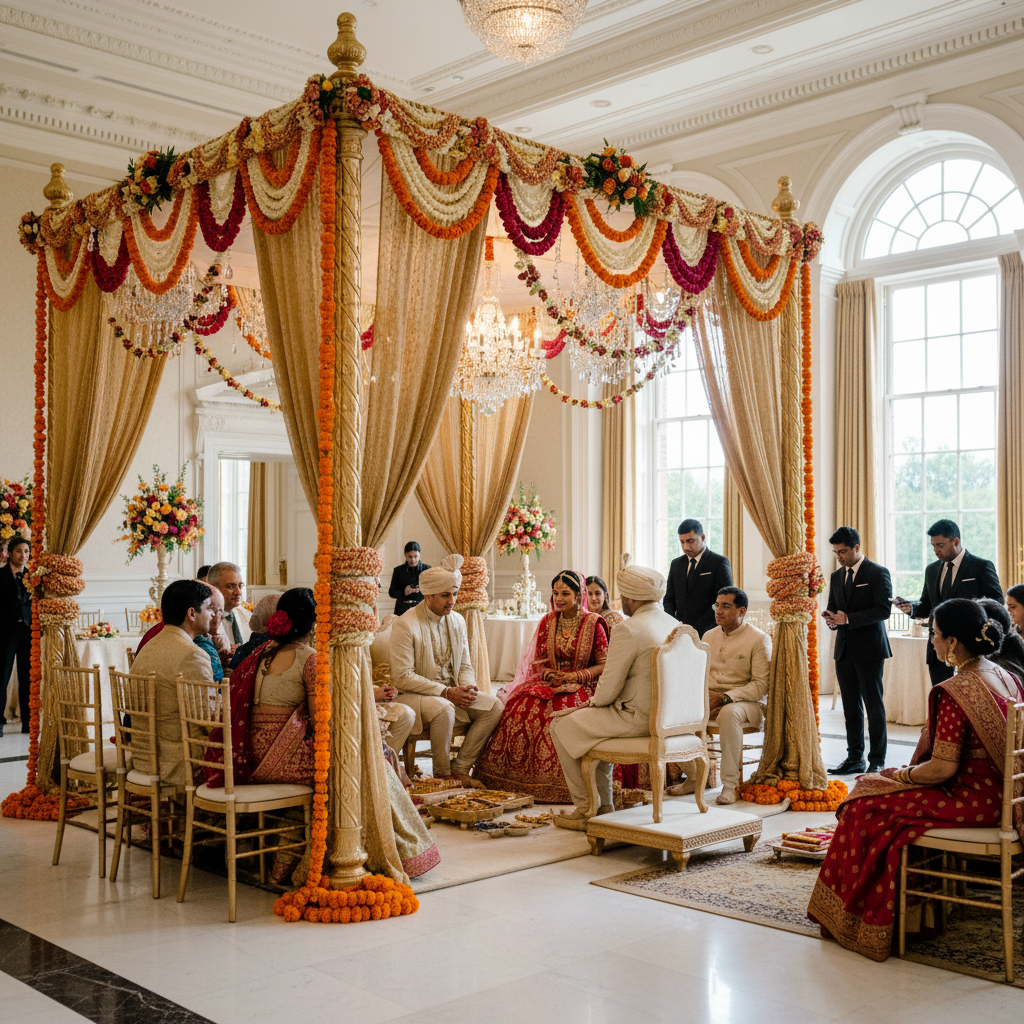
Indian wedding coordinators are specialist planners who orchestrate rituals, timelines, vendors, and guest logistics so your multi-day celebration runs flawlessly. At Patel Events in HA3 0PB (Greater London), our coordination team safeguards cultural details—from nikkah to sangeet to Gujarati pheras—so you enjoy every moment while we manage moving parts behind the scenes.
By Shani Patel · Last updated: 2026-06-07
Quick Summary
An Indian wedding coordinator turns complex, multi-ritual events into a seamless guest experience by managing timelines, vendors, décor, and ceremonies. For South Asian weddings, coordination ensures cultural accuracy, smooth handoffs across events, and stress-free hosts—especially in busy hubs like Greater London.
Here’s what this complete guide covers and how to use it:
- Clear definitions: planner vs day-of coordinator vs full-service producer
- Why coordination matters for South Asian weddings in the UK
- Step-by-step: how coordination works from inquiry to post-event
- Approaches: day-of, month-of, destination, and hybrid support
- Best practices we use at Patel Events (27+ years, 500+ events)
- Tools and templates you can apply this week
- Case studies across London, Udaipur, and Goa
At a Glance: Table of Contents
- What is an Indian wedding coordinator?
- Why coordination matters
- How coordination works
- Coordination approaches
- Best practices (Patel Events)
- Tools and resources
- Case studies and examples
- Local coordination in HA3 0PB
- Planner vs Coordinator
- Frequently Asked Questions
- Conclusion & Next Steps
What Is an Indian Wedding Coordinator?
An Indian wedding coordinator is the specialist who operationalizes your plan—aligning rituals, vendors, and timelines across events like mehndi, sangeet, nikkah, and pheras. They ensure cultural precision and guest flow while solving issues in real time, so the couple and families stay present and stress-free.
Think of coordination as mission control. You set the vision; we turn it into a minute-by-minute experience across multiple days, locations, and ceremonies. That includes lining up baraat logistics, managing the mandap team, cueing processions, and keeping the reception program on time.
- Scope: Day-of or month-of orchestration, vendor liaison, run-of-show execution.
- Focus: Ceremony accuracy, guest experience, AV cues, décor checks, transitions.
- Output: Final timeline, contact matrix, floor plan, ceremony cue sheets.
Patel Events supports coordination for South Asian weddings across London and the wider UK, blending cultural fluency with show-calling discipline. Our network of 50+ trusted vendors makes execution smooth under real-world time pressure.
Why Indian Wedding Coordinators Matter
Coordinators protect culture, timing, and guest flow in high-stakes, multi-ritual weddings. They reduce family stress, prevent schedule overruns, and keep ceremonies faithful. The result is a celebration that feels effortless for guests and meaningful for elders—without last-minute scrambles.
South Asian weddings often include 5–8 distinct segments across two or three days. Each segment has unique rituals, vendor needs, and handoffs. Without a coordinator, couples frequently face timeline slippage, décor gaps, and AV misses—small issues that compound when 300–600 guests arrive at once.
- Cultural stewardship: Ensure nikkah documentation is ready; align Gujarati pheras sequence; cue blessings properly.
- Operational control: Keep baraat arrivals, ceremony seating, and reception speeches on precise timing.
- Quality assurance: Verify florals, lighting, and staging match the signed plan before doors open.
- Family relief: Free parents and siblings from “runner” duties so they can host and enjoy.
With 500+ events delivered and a 98% client satisfaction rate, our team has seen how proactive coordination prevents problems hours before guests ever notice them.
How Indian Wedding Coordination Works (From Inquiry to Exit)
Coordination follows a proven arc: discovery, planning handoff, vendor alignment, timeline building, on-site rehearsal, event day show-calling, and post-event wrap. Each phase clarifies roles, locks logistics, and ensures every ritual, cue, and guest touchpoint lands perfectly.
Here’s the flow we use at Patel Events for weddings in London, Leicester, Kent, and destination venues:
- Discovery (week 1): Goals, guest counts, cultural priorities, venue specs, access rules.
- Handoff (weeks 1–2): Collect signed vendor agreements, floor plans, menus, playlist preferences.
- Vendor alignment (weeks 2–3): Confirm roles, load-in windows, insurance, power needs.
- Timeline build (weeks 3–4): Minute-by-minute run-of-show across all events.
- Rehearsal + site walk (event week): Cue sheets, procession order, mic checks, last-mile changes.
- Show-calling (event days): Direct vendors, cue rituals, monitor timing, solve issues.
- Wrap + debrief (post-event): Strike confirmation, lost-and-found, lesson log.
| Phase | Key Actions | Primary Tools |
|---|---|---|
| Discovery | Clarify cultural rituals, guest flows, access rules | Questionnaire, venue specs, ceremony scripts |
| Alignment | Confirm vendors, insurance, power/load-in | Vendor matrix, risk register |
| Timeline | Minute-by-minute program across events | Run-of-show, cue sheets |
| Rehearsal | Walkthrough, audio checks, procession order | Site plan, AV plots |
| Show-calling | Direct vendors, keep time, solve issues | Comms plan, radio channels |
Practical benchmark: mandap builds often need 2–3 hours, nikkah ceremonies 20–40 minutes, and Hindu ceremony pheras 60–90 minutes depending on script. A sangeet program typically runs 3–4 hours including dances and open floor time.
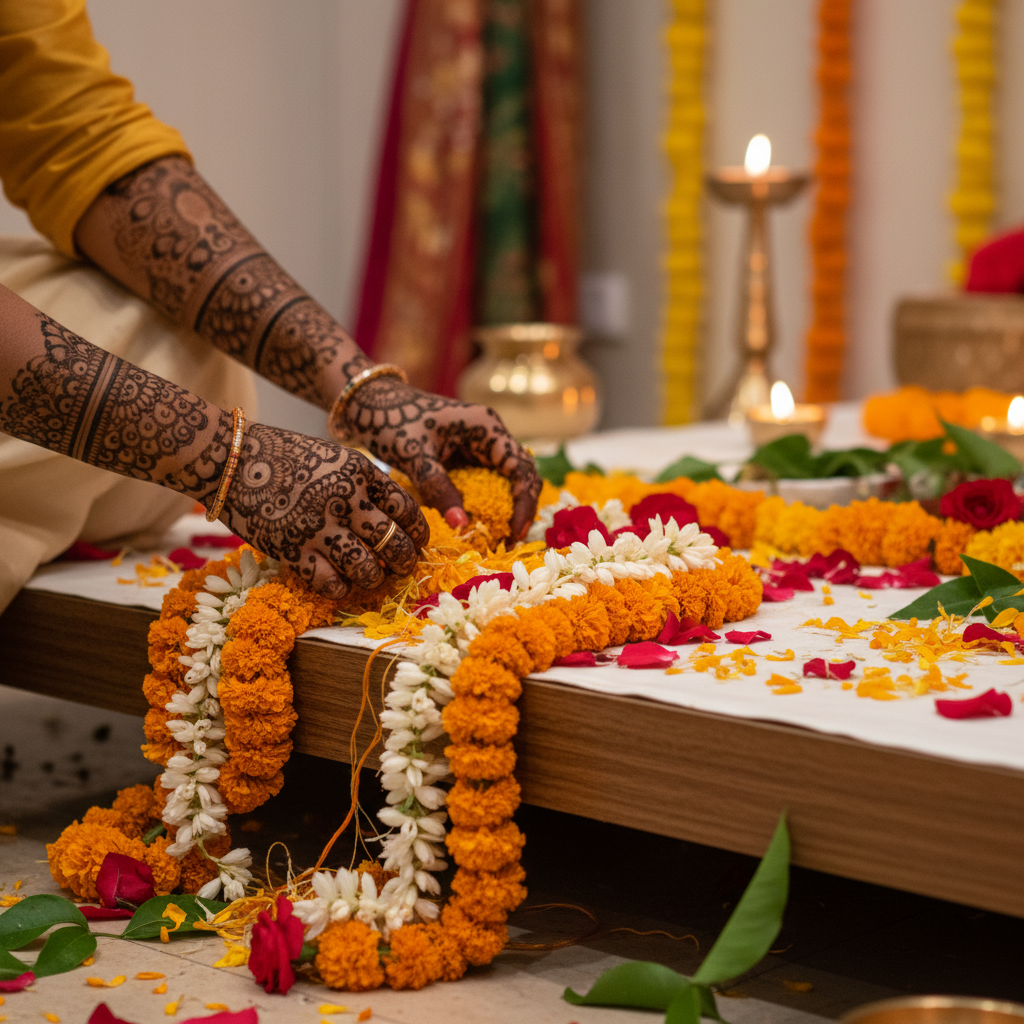
Types of Coordination: Day-Of, Month-Of, Full-Service, Destination
Indian wedding coordination comes in tiers: day-of show-calling, month-of takeover, full-service planning, and destination orchestration. The right fit depends on your planning progress, venue complexity, and the number of cultural rituals across mehndi, nikkah, pheras, and reception.
Day-Of Coordination
- We take your plan and run it—vendor confirmations, timeline finalization, show-calling.
- Best for couples who’ve already booked venue, décor, catering, and DJ.
- Includes rehearsal support and on-the-day execution with a core team.
Month-Of Coordination
- We onboard 4–6 weeks out; refine logistics, fill gaps, and stress-test the run-of-show.
- Ideal when multiple venues are involved (e.g., ceremony hall and separate reception ballroom).
- Stronger vendor management and contingency planning for late changes.
Full-Service Planning + Coordination
- End-to-end: concept, styling, florals, vendor selection, and show-calling across events.
- Recommended for larger guest counts (300–600), complex builds, or high-brand receptions.
- Pairs well with our cinematography, DJ for events, and décor/styling services.
Destination Weddings (Udaipur, Goa, Overseas)
- We align travel, freight, customs realities, and local vendor partnerships.
- Time zones and on-site scouting are built into the project cadence.
- We create a bilingual contact plan when needed and manage remote rehearsals.
Best Practices We Use at Patel Events
Our coordination playbook blends cultural fluency with live-event discipline: lock timelines early, assign a show-caller, build redundancies, and inspect décor and AV before doors open. We anticipate 10–15 common friction points and solve them hours ahead of guests.
Operational Foundations
- Single source of truth: One master run-of-show with vendor call sheets.
- Redundancy planning: Backup mics, spare cables, duplicate copies of scripts.
- Risk register: Track top risks (e.g., traffic, access changes) with owners and mitigations.
Ceremony Precision
- Nikkah: Confirm officiant arrival, seating, witness flow, and documentation table placement.
- Gujarati pheras: Lay out items (agni, rice, flowers) in order; brief pandit on cues and mic.
- Sangeet: Set dance order, run lighting cues, and pre-test guest-of-honor entrances.
Guest Experience
- Clear signage for ceremony and reception transitions; ADA-friendly pathways.
- Water stations near the mandap and a quiet spot for elders to rest.
- Fast coat check and concise MC scripts to keep the evening moving.
In our experience, a 10-minute delay in the first program block can cascade into a 30–40-minute late dinner. Tight show-calling in the first hour protects the rest of the night.
Tools and Resources for Smooth Coordination
Use a master timeline, vendor matrix, floor plans, and cue sheets to keep everyone aligned. Layer in communication tools (radios, group chats) and a risk checklist. These documents reduce confusion and shorten response times during live moments.
- Master timeline: One minute-by-minute plan across mehndi, sangeet, nikkah, pheras, reception.
- Vendor matrix: Contacts, tasks, arrival windows, insurance, power needs.
- Floor plans: Seating, aisle, mandap/stage, AV placements, stations.
- Cue sheets: Procession order, mic cues, music tracks, spotlight moments.
- Comms plan: Radio channels and escalation paths for quick decisions.
- Risk checklist: Top 15 risks with mitigations and backups.
Building your first checklist? This practical post on cultural event prep offers menu and flow prompts you can adapt to the UK context—see a cultural planning outline for additional ideas on guest flow and staging.
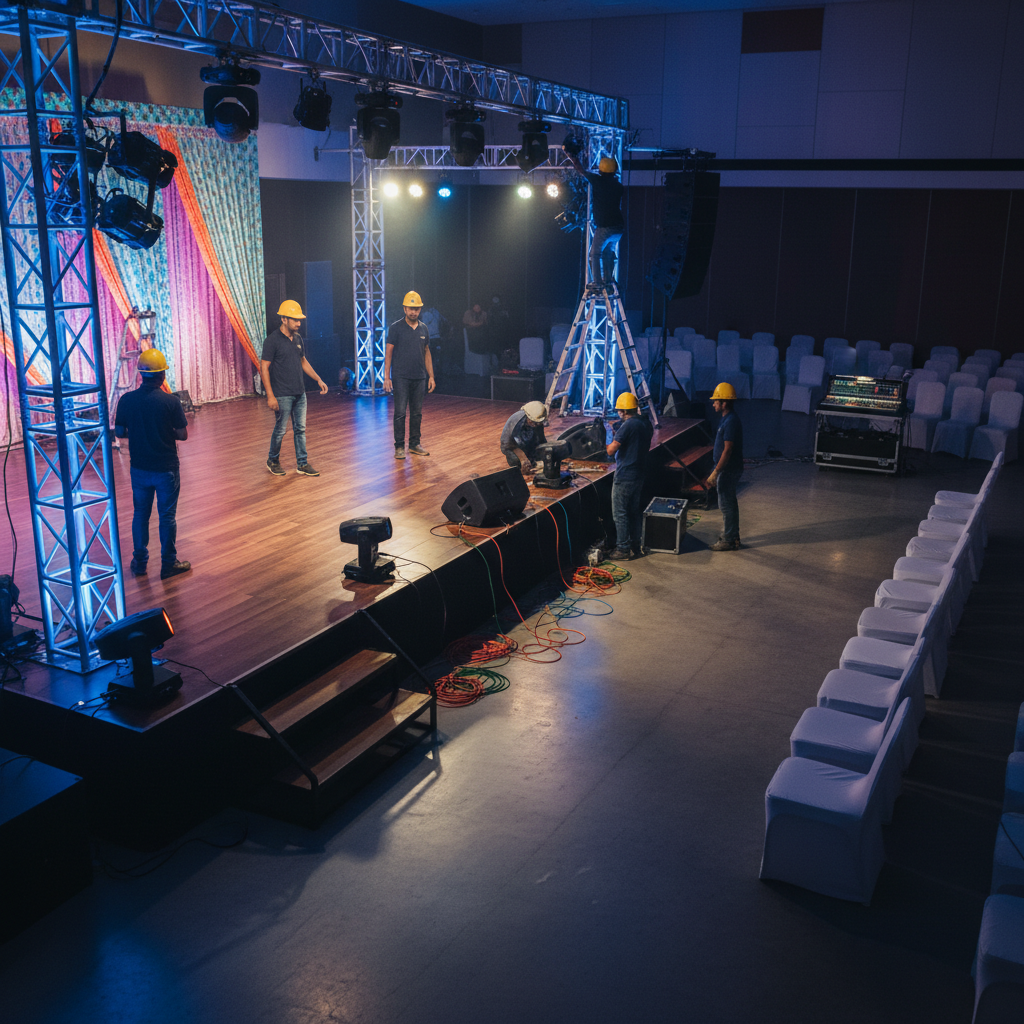
Case Studies and Examples
Real weddings show how coordination removes friction. We’ve handled London ballroom builds, seaside ceremonies abroad, and intimate nikkah gatherings—each with distinct vendor mixes and rituals. The throughline: proactive timelines, cultural fluency, and fast decision-making.
London Grand Reception (Greater London)
- Challenge: 500-person reception with complex lighting, live band, and tight turnaround.
- Approach: Staggered vendor load-ins, dual show-callers (stage and floor), strict speech timing.
- Result: Dinner served within 5 minutes of the target; smooth parent dance and cake reveal.
Intimate Nikkah (Harrow/HA3 0PB)
- Challenge: Short ceremony window; sensitive seating for elders and witnesses.
- Approach: Pre-set documentation table, quiet zone for prayers, dedicated usher for witnesses.
- Result: On-time signing; heartfelt ceremony with clear audio and zero disruptions.
Destination Sangeet + Wedding (Goa)
- Challenge: Multi-venue program with local permits and seaside weather swings.
- Approach: On-site scout, backup indoor plan, and local vendor pairings from our network.
- Result: Full program delivered; dance segments stayed on time despite weather pivots.
Exploring destination venues? Preview considerations such as travel timing, local customs, and weather windows with this destination-planning primer you can adapt for overseas weddings.
Local Coordination in HA3 0PB and Greater London
In HA3 0PB and the Greater London metro, we tailor coordination to venue access rules, transit patterns, and multi-cultural guest needs. Our team manages tight turnarounds, parking constraints, and vendor arrivals so ceremonies start on time and receptions keep their energy.
Patel Events is rooted in Harrow with service across London, Leicester, Kent, and Tooting. We know how local load-in timing, building regulations, and weekend transit flow affect real event days. That local knowledge shortens setup times and prevents avoidable overruns.
Local considerations for HA3 0PB
- Coordinate guest arrival timing around Kenton station schedules when planning afternoon ceremonies.
- Mind weekend congestion near Northwick Park; front-load vendor load-ins to earlier windows.
- During peak wedding season, secure backup AV and florals from two vendors to hedge supply crunches.
We also plan elder-friendly seating near restrooms, and we place water stations by the mandap during warmer months to keep guests comfortable without interrupting rituals.
Planner vs Coordinator vs Day-Of Manager
A planner designs and assembles your event; a coordinator operationalizes it; a day-of manager show-calls the final plan. Many South Asian weddings blend all three—design early, coordination midstream, and day-of show-calling on event days.
| Role | Primary Focus | When to Engage | Typical Deliverables |
|---|---|---|---|
| Planner | Design, vendor sourcing, budgeting, concept | 6–12 months out | Design deck, vendor shortlist, styling plan |
| Coordinator | Logistics, timelines, vendor management | 1–2 months out | Run-of-show, vendor matrix, cue sheets |
| Day-Of Manager | On-the-day show-calling and troubleshooting | Event week to day-of | Radios/comms, stage management, issue logs |
At Patel Events, we offer all three functions under one roof—Weddings & Sangeets, Destination Events, Private Celebrations, and Corporate Events—so you can scale support up or down as your plans evolve.
Need Coordination Help? (Soft CTA)
If you have venues booked and vendors chosen but want a calm, on-time celebration, month-of coordination is usually the sweet spot. We take the reins, close gaps, and run the show—so you can host, dance, and enjoy your guests.
Ready to feel lighter about the to-do list? Book a friendly 15-minute coordination consult with Patel Events. We’ll review your plan, highlight risks, and map the next two weeks of actions so you gain immediate momentum—no obligation, just clarity.
Frequently Asked Questions
These quick answers address how Indian wedding coordinators support South Asian ceremonies in the UK. If you have a unique venue or multi-day plan, we’ll tailor timelines, vendor comms, and ceremony cues to fit.
What does an Indian wedding coordinator handle on the day?
They manage vendor arrivals, décor checks, AV and lighting cues, guest seating, and timing for rituals and speeches. They also troubleshoot issues quietly, align the MC and officiants, and keep the entire run-of-show on schedule so you can stay present with family and friends.
Do I need a coordinator if I already have a planner?
Yes—planning and coordination are different. A planner designs and sources; a coordinator operationalizes. Many couples hire both, or ask their planner to add a dedicated show-calling team to run rehearsals, manage cues, and direct vendors across the wedding days.
How far in advance should we book coordination?
For month-of coordination, 6–8 weeks before your first event works well. Day-of coordination can onboard closer, but complex builds, multiple venues, or destination plans benefit from earlier alignment to secure load-in windows and confirm contingencies.
Will a coordinator help with cultural rituals like nikkah or pheras?
Absolutely. A culturally fluent coordinator prepares ceremony cue sheets, briefs officiants and family leads, lays out ritual items in order, and checks sound so prayers and vows are heard clearly. That stewardship keeps the ceremony faithful and meaningful for elders and guests.
Conclusion and Next Steps
The best Indian wedding coordinators blend cultural fluency with live-event rigor. With clear timelines, vendor alignment, and proactive show-calling, your multi-day celebration feels effortless for guests and meaningful for family.
- Key takeaways:
- Coordination protects culture, timing, and guest experience.
- Choose the right tier: day-of, month-of, full-service, or destination.
- Use a master timeline, vendor matrix, floor plans, and cue sheets.
- Local know-how in HA3 0PB and Greater London prevents overruns.
- Next steps:
- List your events (mehndi, sangeet, nikkah, pheras, reception) and key times.
- Assemble vendor contacts and confirm load-in/out windows.
- Draft your run-of-show; assign a show-caller and backups.
- Book a coordination consult with Patel Events to stress-test your plan.
We’re here to help you celebrate beautifully—from intimate vows to palatial receptions and destination weddings. Let’s make it seamless.