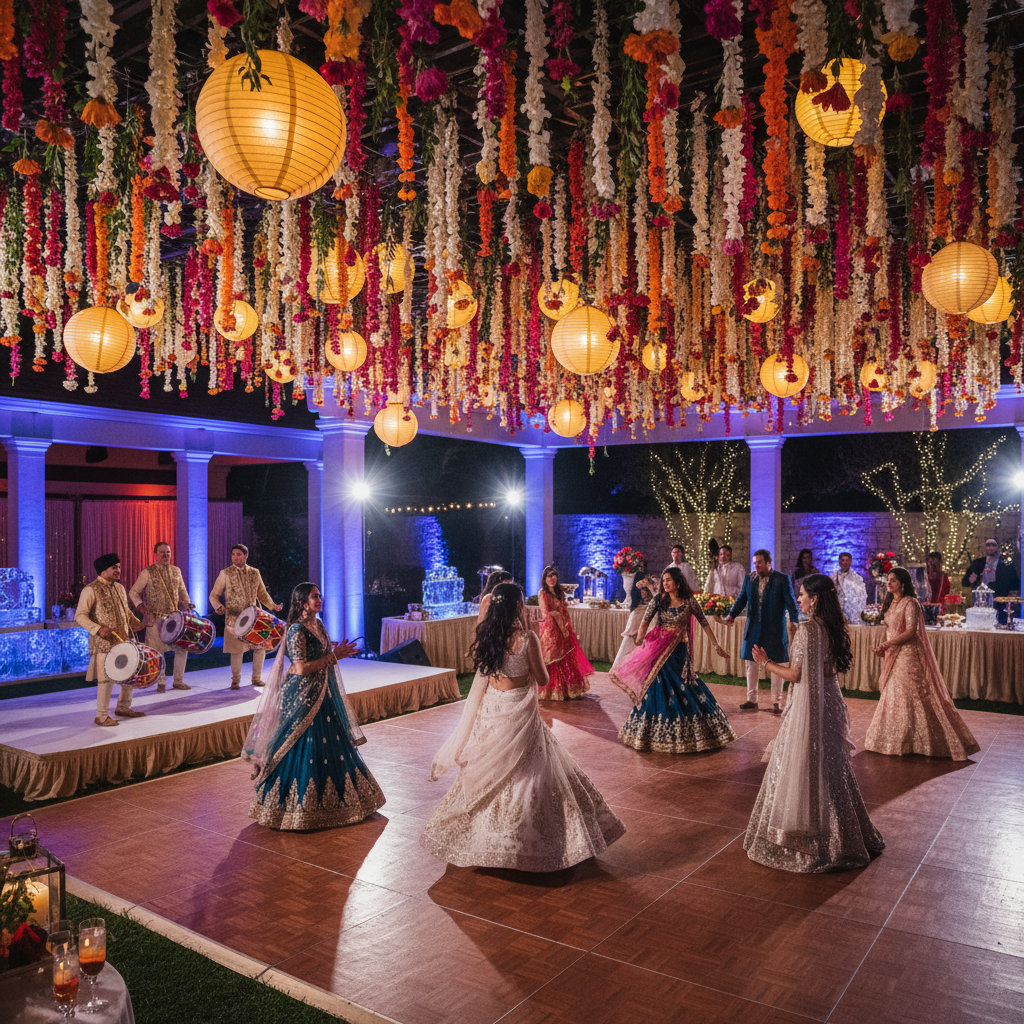
How to plan a sangeet night is the end-to-end process of designing an upbeat pre-wedding celebration with music, dance, décor, and seamless logistics. It includes setting a vision, curating performances, coordinating vendors, and rehearsing a timed program. From our Harrow base at Abercorn Garden (HA3 0PB), Patel Events delivers this with cultural fluency and precision.
By Shani Patel, Patel Events • Last updated: May 6, 2026
Summary
This guide shows you how to plan a sangeet night from vision to execution. You’ll learn prerequisites, a 10-step playbook, timelines, vendor coordination, décor and lighting principles, troubleshooting moves, and advanced tips. Use our run-of-show template and local pointers to keep energy high and transitions smooth.
Sangeet nights blend tradition and modern party energy. In this expert how-to, we map every decision from guest flow to stage lighting so your families can celebrate without stress. Expect practical checklists, sample timings, and cultural notes pulled from Patel Events’ 27+ years planning South Asian weddings across Greater London and beyond.
Introduction
A sangeet is a music-and-dance pre-wedding hosted by both families, focused on performances, mingling, and joyful rituals. Success hinges on a tight run-of-show, rehearsed choreography, reliable sound, and a hospitality-first guest journey. This introduction frames the goals and decisions that shape the night’s rhythm.
Think of your sangeet as an entertainment program wrapped in hospitality. There’s a stage, backstage activity, multiple performances, and constant movement across the room. That means you’re producing a show and hosting a party at the same time. Our approach keeps both in balance, so it feels polished and personal.
- Define your vibe: traditional, modern, or fusion.
- Decide on hosted segments: welcomes, games, and toasts.
- Lock core logistics early: venue layout, staging, and power.
- Build a realistic timeline and rehearse to it.
Before You Start (Prerequisites)
Before you plan a sangeet night in HA3 0PB and the Greater London area, align both families on vision, roles, and cultural rituals. Confirm guest count ranges, venue constraints, quiet hours, and accessibility. Establish one decision-maker and one show-caller. Clear governance prevents last-minute friction.
Strong starts make smooth shows. A few alignment decisions save hours later and keep emotions upbeat.
Core alignments to make now
- Vision board: Colors, mood words, sample stages, and lighting references.
- Rituals: Garba, dandiya, Joota Chhupai moments, or regional traditions to honor.
- Program length: In our experience, a 90–120 minute formal program keeps momentum, then open dance.
- Roles: One emcee, one stage manager, one tech point-of-contact, two ushers.
- Guest profile: Ages, mobility needs, and dietary considerations to influence seating and flow.
Capture these in a brief. We use a one-page planning charter so every vendor and performer understands the north star.
Step-by-Step: Plan Your Sangeet Night
Plan your sangeet in 10 steps: set the vision, build run-of-show, secure venue, assemble vendors, lock music and choreography, schedule rehearsals, design guest experience, complete technical rehearsal, finalize day-of timeline, and capture/close out. Each step below adds detail and tools.
Step 1 – Set the vision
- Outcome: A clear mood and cultural focus (e.g., Gujarati garba-forward or modern Bollywood lounge).
- Why it matters: It drives décor, lighting, music curation, and dress code.
- Action: Build a 12–16 image board and 5–7 song references that define tempo.
Example: For a Gujarati-forward night, we specify circular dance zones, brighter color palettes (saffron, peacock), and live dhol to punch transitions.
Step 2 – Build the run-of-show (ROS)
- Outcome: A timed sequence with emcee lines, cues, and scene changes.
- Why it matters: Keeps energy rising while giving elders breathing room.
- Action: Draft 8–10 total segments; cap speeches to 2–3 minutes each.
In our shows, we put dynamic group numbers up front to set the tone, then alternate high and medium energy to avoid fatigue.
Step 3 – Secure the venue
- Outcome: A room that supports staging, sound, and guest flow.
- Why it matters: Venue constraints dictate rigging, power, and how you seat elders.
- Action: Confirm load-in windows, noise curfews, power distro, and ceiling points.
Review sample amenities and floor plan details like stage depth and green room space; see an example of venue amenities to review when assessing options.
Step 4 – Assemble the vendor team
- Outcome: A coordinated crew across décor, lighting, sound, DJ, photo/video, and catering.
- Why it matters: Cueing and changeovers rely on vendor chemistry and a single show-caller.
- Action: Share your ROS and CAD layout with every vendor one week before show day.
Patel Events’ network of 50+ trusted partners means every specialist receives the same show book and cue sheet, reducing handoffs.
Step 5 – Lock music and choreography
- Outcome: Final audio cuts, performer order, and transition cues.
- Why it matters: Gaps kill momentum; tight edits and handoffs keep the floor buzzing.
- Action: Use 30–60 second intros and 90–120 second numbers for variety.
We coordinate with families and choreographers to edit tracks and assign microphone needs before tech day.
Step 6 – Schedule rehearsals
- Outcome: Performers know marks, mic handoffs, and stage paths.
- Why it matters: Rehearsals reduce show stress and protect elders from long pauses.
- Action: Two living-room run-throughs plus a venue tech rehearsal hit the sweet spot.
Set a family calendar and lock the tech rehearsal 24–48 hours pre-event to catch lighting and audio notes early.
Step 7 – Design the guest experience
- Outcome: A hospitality-forward flow from arrival to late-night bites.
- Why it matters: Guests remember how they felt—seating, service, and wayfinding shape that.
- Action: Seat elders with clear stage views and add soft seating near dance zones.
Food sequencing supports energy: pass-around starters, mid-program stations, and a sweet finish. For inspiration on menu structure, browse these wedding menu planning ideas.
Step 8 – Complete the technical rehearsal
- Outcome: Lighting looks, sound checks, and cue timing are locked.
- Why it matters: Tech friction is what guests notice first; fix it before doors open.
- Action: Run the first and last 15 minutes twice—openings and closers set memory.
We test walk-on music levels, mic swaps, and stage wash color temperatures against your palette for consistent photo and video.
Step 9 – Finalize the day-of timeline
- Outcome: Minute-by-minute with buffers, vendor arrivals, and who calls each cue.
- Why it matters: A realistic script keeps you ahead when surprises appear.
- Action: Add 10% buffer to all changeovers; confirm transport and parking details.
We circulate the final call sheet the morning of, so every vendor works from the same latest version.
Step 10 – Capture and close out
- Outcome: Moments are documented and mementos are protected.
- Why it matters: Storytelling and albums rely on clean coverage and labeled assets.
- Action: Sync a shot list with cinematography, then schedule a 10-minute couple portrait reset.
After show, we debrief within 72 hours to archive playlists, cue sheets, and layout notes for your wedding day team.
Program Flow and Timing (Run of Show)
A strong sangeet run-of-show alternates high-energy numbers with short breathers, caps speeches, and reserves 45–60 minutes for open dance. Use 8–10 segments, lock emcee lines, and time transitions. The table below is a starting point you can tailor.
| Segment | Suggested Duration | Notes |
|---|---|---|
| Guest arrival + light bites | 30–40 min | House playlist at -15 dB; greet line optional |
| Couple grand entrance | 5 min | Sparkulars only if venue permits and safety-inspected |
| Family welcome + quick toast | 8–10 min | Scripted; keep to two speakers |
| Family performance block 1 | 12–15 min | 2–3 numbers; group finale |
| Game/icebreaker | 8–10 min | Quick, inclusive, mic-checked |
| Friends performance block | 12–15 min | Varied tempos; cap each at ~2 min |
| DJ + dhol set | 10–12 min | Bridge into open dance |
| Open dance | 45–60 min | Keep lights dynamic; rotate genres |
| Late-night bites + wind-down | 15–20 min | House playlist; announce transport |
Use this as a scaffold. We’ll tune durations to your guest energy, venue windows, and family performances.
Music, Choreography, and Sound
Anchor your soundtrack to a 3-part arc: warm-up, peak, release. Edit tracks to 90–120 seconds, lock transitions, and mic-check emcees and dhol. Rehearse two walk-ons and one closer twice. Great audio makes average dancing feel electric.
Music sets memory. We design a tempo ladder that rises through the show and smooths into open dance. Choreography should fit performers’ comfort—shorter, punchier numbers beat long routines.
- Track edits: Remove intros/outros; hit chorus within 15 seconds.
- Key instruments: Dhol for lift-offs, shehnai or strings for welcomes, synth hooks for late-night.
- Sound checks: Test handhelds, lapels, and backups; verify battery swaps.
- Stage marks: Use low-tack tape for positions; brief ushers on aisles.

For broader context on wedding timelines and prep flow, skim this practical Indian wedding planning overview.
Décor, Lighting, and Guest Experience
Design for movement and sightlines: seat elders with clear views, keep dance zones open, and light the stage in skin-tone-friendly color temperatures. Layer florals, fabrics, and lanterns; coordinate palette with lighting gels so photos match your mood board.
Décor is more than pretty—it's wayfinding and comfort. We map sightlines from key tables and set pathways for servers and performers. Lighting must support video capture and prevent eye strain.
- Color story: Pick three anchors and two accents; coordinate with stage wash.
- Textures: Combine silks, brocade, and greens for depth at camera.
- Tablescapes: Low-profile centerpieces on performance sightlines.
- Wayfinding: Light the path from seating to dance floor without glare.
Patel Events’ floral styling and event design teams keep it cohesive—from entrance vignette to photo-ops—so the room feels intentional and photogenic.
Vendor Coordination and Logistics
Appoint a single show-caller to cue DJ, lighting, emcee, and performers. Share a unified show book: floor plan, run-of-show, cue sheet, and contact list. Load-in early, label cables, and color-code cases. Well-briefed vendors equal calm hosts.
With 500+ events behind us, we’ve learned that over-communication beats on-the-fly fixes. A shared run-of-show and cue sheet eliminates guesswork.
- Logistics packet: Floor plan, power map, cue sheet, contact tree, parking passes.
- Briefing: 15-minute huddle at call time; confirm hand signals and radio channels.
- Backups: Spare mics, extra DI boxes, gaffer’s tape, and an emergency light kit.
Local considerations for HA3 0PB
- Plan arrivals with nearby transit in mind; guests often route via Preston Road Station or Kenton station, so stagger check-in and valet windows.
- Greater London venues may enforce tighter evening noise and load-out windows; build 10–15 minute buffers between performance blocks.
- For Harrow neighborhoods, confirm reserved bays for vans and a clear trolley path from the loading point to stage to protect décor builds.
Troubleshooting Common Sangeet Issues
Most sangeet hiccups stem from timing slips, audio glitches, or unclear emcee cues. Pre-fade music, cap speeches, keep a spare mic ready, and place a stage manager at stage-left. Clear scripts and backups turn near-misses into non-events.
Here’s how we neutralize the common speed bumps:
- Late arrivals: Float an extra 10 minutes before grand entrance; extend house playlist.
- Audio pops: Swap to backup handheld; keep RF spares powered and labeled.
- Overlong speeches: Emcee cue card with a gentle wrap line at 2:30.
- Stage crowding: Ushers manage stairs; max 8–10 people on stage at once.
- Low dance energy: Drop a short dhol-and-DJ hype set, then pivot to a familiar hit.
We assign a “reset captain” to quietly re-center the room whenever momentum dips. It’s a small role with a big payoff.
Advanced Tips for a Modern Sangeet
Blend heritage with modern production: a brief couple story segment, dynamic lighting cues, and interactive moments. Keep formalities under two hours, program a surprise cameo, and stage a 10-minute photo interlude to capture elders and key groups with perfect lighting.
When you’re aiming for unforgettable, a few showcraft moves help:
- Interactive moments: Quick game or couple quiz with QR voting (venue Wi‑Fi checked).
- Lighting design: Three scene presets—welcome, performances, open dance—for fast switching.
- Storytelling: 90-second montage to bridge into friends’ performances.
- Wellness: Hydration points near dance floor and a quiet corner for elders.
These details create emotional contour without dragging the pace. Our cinematography team can also align camera movement to your lighting scenes for cinematic cuts.
Need a seasoned show-caller? Patel Events coordinates choreography, DJ, décor, and logistics so families can simply enjoy the night. Let’s map your run-of-show and vendor brief together.
Technical Rehearsal and Production
Treat tech rehearsal like opening night: run the opener and closer twice, check every mic, and verify lighting presets. Confirm walk paths, prop placement, and tape marks. When tech sings, the whole show feels effortless to guests.
We build a cue stack that covers walk-ons, transition stings, and lighting looks. A disciplined run-through minimizes on-night decisions.
- Presets: Welcome wash, performance spotlight, and dance-floor dynamic looks.
- Audio: Line-check every channel; set safe headroom to prevent clipping.
- Safety: Keep stairs lit and cables matted; brief all performers on exits.
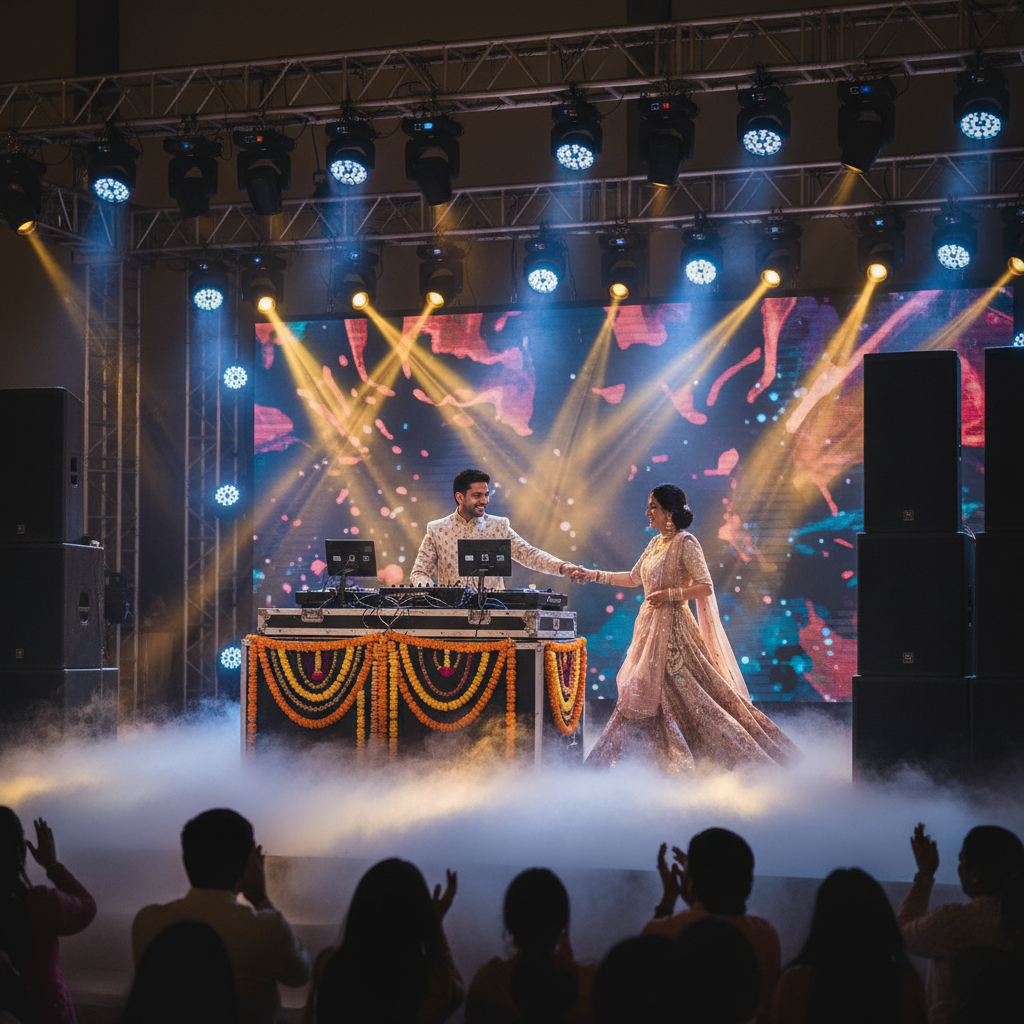
We align stage orientation to camera placement so your highlight reel lands cleanly the first time.
Frequently Asked Questions
Quick answers to the most common sangeet planning questions: ideal timelines, rehearsal needs, program length, music rights, and dress code guidance. Use these as guardrails, then tailor to your families and venue rules.
How far in advance should we start planning a sangeet?
Begin 3–6 months out. Lock venue and core vendors first, then choreography and rehearsals 6–8 weeks before. Tech rehearsal ideally happens 24–48 hours before doors to finalize audio and lighting looks.
How long should the formal sangeet program be?
Keep formalities within 90–120 minutes, then shift into open dance for 45–60 minutes. Short, high-energy performances and capped speeches keep momentum without tiring guests or elders.
Do we need a professional emcee or can a cousin host?
A confident cousin works if they rehearse cue lines and stick to time. For complex programs or larger venues, a professional emcee reduces drift and keeps transitions tight while families focus on enjoying the night.
What’s the best way to handle music transitions?
Pre-edit tracks to performance length, label files clearly, and script transition stings. Share a cue sheet with your DJ and have a backup device ready. Rehearse the opener and closer twice during tech.
Key Takeaways
Define the vibe, write a timed run-of-show, rehearse with tech, and host like pros. Tight audio, smart lighting, and a single show-caller turn a busy schedule into a seamless celebration guests remember.
- Vision and culture drive every decision.
- A realistic, rehearsed timeline is your backbone.
- Seat elders for comfort; keep pathways clear.
- Sound quality shapes perceived polish.
- One show-caller, one cue sheet, zero confusion.
Conclusion
When you approach the sangeet as both show and celebration, you get great pacing, happy guests, and beautiful footage. Align early, rehearse smart, and over-communicate with vendors. That’s how polished memories are made.
Patel Events specializes in South Asian weddings—nikkah, Gujarati, and vibrant sangeet nights—across Greater London and destination settings like Udaipur and Goa. If you want a culturally faithful, impeccably timed night, we’re ready to help.
Final step: Share your preferred date, venue short list, and a few favorite songs. We’ll turn that into a show-ready plan families will love.
Additional Resources
Use a one-page planning charter, a timed run-of-show, and a shared vendor cue sheet. These lightweight documents prevent drift and keep the whole team aligned from the first rehearsal to last dance.
If you’re also organizing a workplace celebration, our corporate playbooks for guest flow and staging translate well to family events. The same principles—clear roles, precise cues, and hospitality-first design—apply beautifully to sangeets.