A Practical Guide to how to Compare Wedding Styling Packages
Comparing wedding styling packages can feel like matching apples to oranges: similar names, very different contents. This guide breaks the process into clear steps so you can assess what’s included, what’s extra, and how each option maps to your priorities. Use the checklists and prompts below to create a like-for-like comparison that fits your venue, vision, and budget boundaries.
Define your styling scope before you compare
Before reviewing any proposals, outline the experience you want your guests to have and the scenes you want photographed. The more specific your scope, the easier it becomes to compare packages on equal footing.
- Spaces to be styled: ceremony, cocktail hour, reception, entrance, stage, cake table, lounge areas, photo backdrop, baraat/vidai pathways, mandap/chuppah/arch, sweetheart or head table.
- Touchpoints that matter: first impressions (entryway), focal moments (vows, toasts, first dance), guest journey (signage, seating plan), and late-night ambience (lighting transitions).
- Design anchors: color palette, textures, metals/finishes, florals or botanicals, candlelight vs. LED, cultural motifs, and any must-have statement pieces.
- Practical constraints: load-in/out windows, ceiling height/rigging limits, flame/pyrotechnic rules, outside vendor restrictions, and storage space.
Translate this scope into a one-page brief with two columns: “Non-negotiables” and “Nice-to-haves.” Share it with each vendor and ask them to tailor or annotate their package accordingly. This keeps proposals aligned and easier to compare.
Unpack common package components
Styling packages often bundle design, decor, and logistics. Names like “Essential,” “Signature,” or “Luxury” aren’t standardized, so focus on components rather than labels. As you read inclusions, categorize them into these buckets:
- Concept and planning
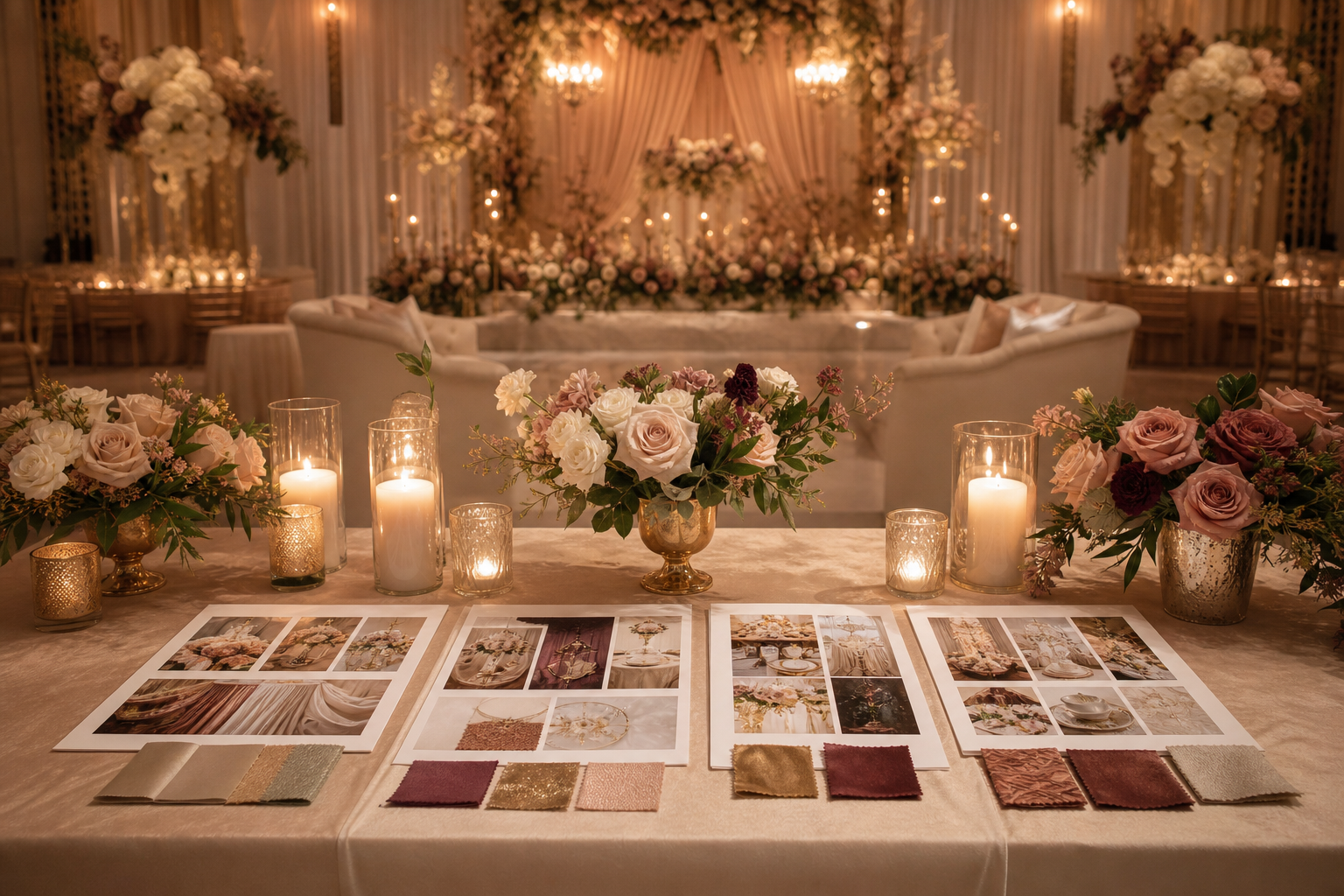
- Design consultation(s) and mood boards
- Site visit and measurements
- Tablescape mockups or digital renders
- Vendor coordination for rentals, florals, lighting, and signage
- Ceremony styling
- Structure (mandap, chuppah, arch) and draping
- Aisle decor (runners, petals, lanterns, florals)
- Seating accents and reserved signage
- Reception styling
- Backdrops, stages, sweetheart table design
- Centerpieces (fresh or faux), candles, table numbers, charger plates, linen upgrades, napkin folds
- Welcome display, guestbook table, cake/dessert stations
- Lighting and effects
- Ambient lighting (uplights, pin-spots)
- Feature lighting (gobos/monograms, fairy lights)
- Practical lighting for pathways and bars
- Floral elements
- Personal florals (bouquets, boutonnieres) if included
- Installations (arches, ceiling features), centerpieces, floral meadows
- Fresh vs. high-quality silk; seasonal substitutions
- Signage and stationery
- Welcome signs, seating charts, bar menus
- Place cards, table names/numbers
- Logistics and labor
- Delivery, installation, styling team size, strike/collection
- On-site styling lead and timeline management
- Overtime or late-night pickup terms
- Contingencies and protections
- Weather plans for outdoor elements
- Damage waivers and rental care instructions
- Emergency substitutions if an item becomes unavailable
Highlight where packages differ in these buckets. For example, two packages might both list “centerpieces,” but the quantities, floral recipes, vessel types, and candle allocations can vary widely.
Build a like-for-like comparison grid
Create a simple scoring grid to assess each package against your scope. Assign weights to what matters most to you (for instance, 30% to reception styling, 25% to ceremony focal design, 20% to lighting, 15% to logistics coverage, 10% to signage/stationery). Then score each package from 1–5 in each category based on how well it meets your brief.
- List categories down the left column; list vendors across the top.
- Note exact inclusions and counts (e.g., “18 centerpieces with mixed-height candle sets”).
- Convert substitutions into equivalents (e.g., “if peonies unavailable, ranunculus + garden roses of similar fullness”).
- Add a row for risk/assurance notes: lead time, backup inventory, and contingency readiness.
By the end, you’ll have a weighted score that reflects fit, not just price or package name.
Questions to ask before you decide
Use these prompts to uncover differences that aren’t obvious on a proposal:
- Design clarity
- What will I see on the day that isn’t shown in the mood board?
- How do you translate color palettes across ceremony and reception?
- Can I review a sample tablescape or mockup before final sign-off?
- Counts and specifications
- How many styled tables are included, and which sizes?
- Are candles/flames or LED alternatives included, and in what quantities?
- Which centerpiece vessels are part of the package vs. premium add-ons?
- Florals and substitutions
- Are the florals fresh, dried, or silk? What’s the substitution policy by season?
- How are large-scale installs supported (rigging, safety, venue approvals)?
- Logistics and staffing
- What is the setup/strike timeline and team size?
- How do you handle late access, quick flips, or restricted load-ins?
- Who is the on-site styling lead on the day?
- Financials and policies
- What triggers additional fees (extended hours, lifts, parking, venue fees)?
- What’s included in delivery and collection, and what is mileage or zone-based?
- What is the payment schedule and change window for design edits?
Spot hidden gaps and extras
Two proposals can have the same bottom-line figure but cover different things. Scrutinize line items that often sit outside base packages:
- Complex linens: specialty fabric, custom runners, or napkins beyond standard colors
- Tabletop details: charger plates, premium glassware, cutlery finishes
- Candles and compliance: open flame permissions, hurricane sleeves, LED alternatives
- Power and lighting: additional circuits, distribution, dimmer packs, or lighting tech
- Rigging and safety: truss, weights, qualified riggers, and venue engineering sign-offs
- Custom fabrication: signage frames, neon, acrylic seating charts, vinyl dance floors
- Labor variables: overtime for midnight breakdowns, next-day collections, union or venue-mandated labor
- Transport: multi-vehicle loads, stairs-only sites, or distance surcharges
Ask for these to be itemized with clear triggers so you can compare the true total for your event’s specifics.
Evaluate visual impact, not just item counts
Quantity doesn’t equal effect. One well-composed focal area can transform a room more than dozens of small accents. When comparing, review how elements work together:
- Layering: linens + runners + chargers + candles + floral height variation
- Balance: statement pieces at entry and stage balanced with consistent table touches
- Sightlines: ensure tall centerpieces or backdrops don’t obstruct key views
- Lighting: pin-spotting centerpieces and dimmed uplights for depth and warmth
- Continuity: repeated motifs and materials that tie ceremony to reception
Request one or two fully designed vignettes in each proposal (e.g., “sweetheart table” and a “guest table”) with callouts of included items. This helps you compare the feel rather than tallying checkboxes.
Align timelines and approval milestones
Great designs need coordinated timing. Confirm how each vendor structures decisions and delivery:
- Design lock date: last day for palette/material changes without fees
- Floral order cutoff: when blooms are booked and substitutions may apply
- Mockups and sample reviews: dates and inclusions (full tablescape vs. component test)
- Venue liaison: who submits load-in plans, insurance docs, and floorplans
- Day-of run sheet: exact windows for install, room flip, and strike
Choose the package whose workflow aligns with your venue’s access times and your own decision pace. A beautiful plan that can’t be installed in time isn’t the right fit.
Compare sustainability and reusability options
If sustainability is a priority, weigh how each package handles materials and waste:
- Floral choices: seasonal sourcing, foam-free mechanics, repurposing ceremony florals at reception
- Rentals vs. disposables: charger plates, vessels, and linens as rentals
- Energy: LED candles and efficient lighting plans
- End-of-night plan: donation pathways for florals or signage reuse
Ask vendors to outline sustainability measures included in the package versus optional add-ons.
How to read photos and portfolios critically
Portfolio images can feature upgrades that aren’t standard. When a proposal includes inspirational photos, annotate them together:
- Label what’s included as-shown versus inspired-by with substitutions
- Note scale: ceiling height, table sizes, guest count, and aisle width in the reference image
- Identify lighting in the photo (pin-spots, fairy lights) and whether those are included
- Confirm floral recipes by category (statement blooms, fillers, greenery) rather than brand names
Request a simple key beneath images so you can replicate impact within your package scope.
Create your decision checklist
Use this quick list when you’re down to two or three contenders:
- Does the package cover all priority spaces and focal moments in your brief?
- Are counts and specifications (centerpieces, candles, linens, signage) clearly quantified?
- Are logistics feasible for your venue’s access limits and timeline?
- Are hidden costs identified with concrete triggers?
- Do the mockups or vignettes demonstrate the feeling you want in photos and in person?
- Is there a clear plan for weather, substitutions, and supplier contingencies?
- Are sustainability or reuse goals addressed where important to you?
FAQ: how to compare wedding styling packages
What should be included in a complete wedding styling package?
A well-rounded package typically includes consultation and design development (mood boards, site visit), ceremony styling (structure, aisle decor), reception styling (centerpieces, linens, candles, signage), lighting components, logistics (delivery, install, strike), and documented contingency plans. Some packages also include mockups or sample tablescapes, which are helpful for visualizing.
How do I compare floral value between packages?
Ask for counts and categories, not just flower names. For centerpieces, request the number per table, composition (feature blooms vs. fillers), height variations, and vessel type. For installations, ask for linear meters or area coverage. Clarify substitution policies by season and confirm whether ceremony florals can be repurposed for the reception.
What are common add-ons that change the final price?
Frequent extras include specialty linens, charger plates, premium glassware, extensive candle packages, feature lighting, rigging for ceiling or stage installs, custom signage or vinyl dance floors, late-night breakdown labor, and multi-vehicle transport. Request itemized pricing and the conditions that trigger each add-on.
How far in advance should styling decisions be locked?
Timelines vary by vendor and venue. As a rule of thumb, lock design elements that affect sourcing and fabrication as early as feasible and confirm floral selections by the vendor’s stated cutoff. Always verify the last date for changes without fees and ensure it aligns with your venue access and production schedule.
Do I need a mockup to make a final decision?
Mockups aren’t always mandatory, but they reduce ambiguity. If a full setup isn’t practical, ask for a mini mockup of key components (e.g., a centerpiece with linen and candle trio) or a detailed render with labeled inclusions. Use this to confirm scale, textures, and lighting assumptions before sign-off.