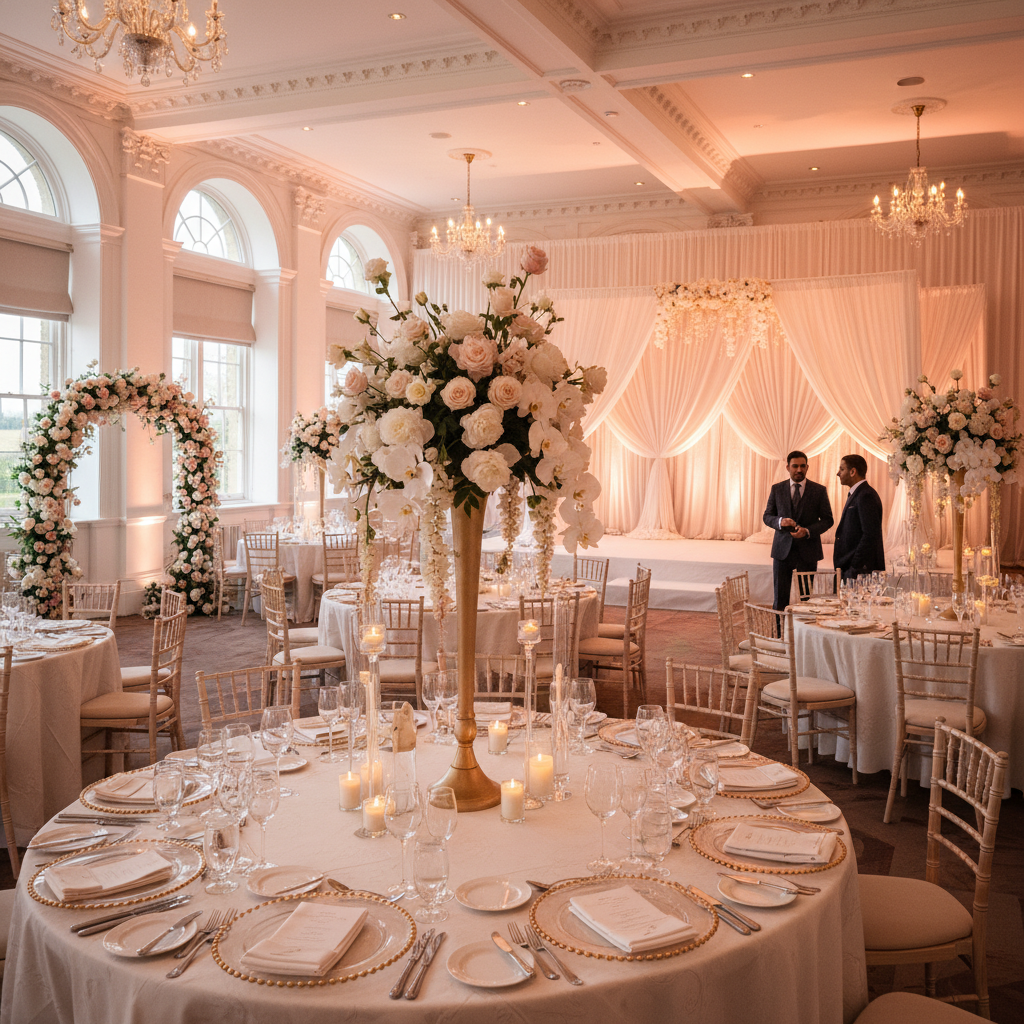
Event organisers for wedding are professional planners who coordinate venues, décor, rituals, vendors, and guest logistics so your celebration runs on time and without stress. From our base near Abercorn Garden in HA3 0PB, we help Greater London couples shape vision into a complete plan, then execute each detail so you can enjoy the day.
By Shani Patel — Patel Events
Last updated: June 5, 2026
Overview
This guide explains how wedding planners reduce stress, clarify decisions, and coordinate every moving part. You’ll learn what services exist, how timelines work, ways to localize plans for Greater London, and checklists you can copy. Use it to choose the right partner and move from ideas to a flawless celebration.
Patel Events is a London-based planning studio with 27+ years of experience across Weddings & Sangeets, Gujarati weddings, nikkah ceremonies, and grand receptions. We also produce corporate events and destination weddings. In this practical playbook you’ll find:
- Clear definitions of what a wedding organizer actually does
- Full-service vs. partial vs. day-of coordination compared
- Month-by-month planning timelines and vendor sequencing
- Ritual-aware flow for South Asian ceremonies
- Décor, styling, and cinematography integration tips
- Local insights for HA3 0PB and the Greater London area
- Downloadable-style checklists you can copy into your plan
What is a wedding organizer?
A wedding organizer is the professional responsible for planning, coordinating, and executing all elements of your celebration—from venue and vendor selection to timelines, rehearsals, and on-the-day orchestration. Great organizers translate your vision into a structured plan, then manage people, budgets, and risks so the day runs flawlessly.
In our experience, the fastest path to a calm planning journey is clarity on roles. Event organisers for wedding bridge three things: your vision, vendor execution, and guest experience. We design the system—timelines, floor plans, run sheets—and then we run that system so you don’t have to.
Core responsibilities (what you can expect)
- Discovery and visioning: Transform loose ideas into a documented mood board and priorities list.
- Venue + vendor curation: Shortlist, schedule viewings, align proposals, and handle contracts.
- Master timeline + run of show: Map every minute from baraat to first dance, including rituals.
- Design + styling: Décor narrative, florals, tablescapes, lighting cues, and signage plan.
- Guest logistics: RSVP tracking, seating, procession lineup, accessibility, and VIP care.
- On-the-day direction: Build, strike, vendor call times, cueing, and live issue resolution.
Here’s the thing: couples who try to hold these threads alone usually become “project managers” on their own wedding day. A dedicated coordinator prevents that role shift so you can be present with your family.
Why wedding organizers matter
Wedding organizers reduce stress, prevent schedule overruns, and protect your design vision. They anticipate bottlenecks, align dozens of vendors, and keep rituals and formalities on time. The right team frees you from micromanaging, which is why most couples report higher satisfaction with professional planning support.
Why does this matter? Because weddings compress months of decisions into one day with zero slack time. A five-minute delay at hair and makeup can ripple into late ceremonies, cold starters, and shortened dance floors. We create buffers, cue teams, and redirect when surprises happen.
What most couples underestimate
- Vendor interdependencies: Power runs, loading docks, fire marshal rules, venue turn times.
- Ritual timing: Nikkah, pheras, vidaai, and blessings each have their cadence.
- Guest movement: 200–400 people rarely move in lockstep; pathways and signage matter.
- Audio/visual beats: Mic handoffs, first-look reveals, and speeches need clean cueing.
We’ve found that when couples see a one-page “run of show,” stress drops immediately. Decisions feel simpler when you can see how pieces connect.
What event organisers for wedding do (scope and deliverables)
Event organizers for wedding provide discovery, vendor curation, design, logistics, rehearsal, and day-of execution. Deliverables include timelines, floor plans, vendor briefs, seating charts, processional lineups, and a run-of-show document. Full-service planners own all phases; partial and day-of packages narrow the scope.
Below is how we structure a typical engagement at Patel Events. This is a template you can adapt to your needs.
Discovery to decision (Weeks 1–4)
- Vision workshop: Must-haves, must-avoid, and guest experience goals.
- Budget guardrails: Set ranges by category; confirm priorities to guide trade-offs.
- Venue shortlist + tours: Layouts, capacity, sound rules, access windows, parking.
- High-level timeline: Preferred month, ceremony time, turn time, and reception length.
Design and vendor alignment (Weeks 5–12)
- Design narrative: Palette, textures, floral direction, tablescape sketch.
- Vendor curation: Florals, décor, lighting, catering, DJ, photo/video, transportation.
- Layout + floor plans: Staging, mandap or nikah backdrop, dance floor, and flows.
- Run of show v1: Ceremony milestones, hospitality beats, and AV cues.
Final build and rehearsal (Weeks 13–Wedding Week)
- Seating and signage: Final counts, escort cards, table numbers, place settings.
- Rehearsal: Processional order, mic checks, cue-to-cue for key transitions.
- Vendor confirmations: Call sheets, load-in maps, contingency contacts.
- Show day leadership: Build, strike, timeline control, and family support.
How wedding planning works (the process)
Effective wedding planning follows a phased process: define vision and guardrails, secure venue and core vendors, design the experience, finalize logistics, rehearse, and execute. Each phase has specific outputs and decisions, and the handoffs between them are where professionals keep momentum and quality high.
Here’s a simple, practical sequence you can model:
- Set goals: Agree on guest count, cultural rituals, and must-experience moments.
- Choose venue: Capacity, access windows, sound restrictions, and backup spaces.
- Book core vendors: Catering, photo/video, DJ, décor/florals, officiant, and AV.
- Design + logistics: Floor plan, timelines, transportation, and guest flow.
- Finalize + rehearse: Seating, scripts, mic cues, and processional order.
- Execute + enjoy: Vendor coordination, timeline control, and guest hospitality.
Self-contained insight: Planning is decision choreography. If you lock venue and core vendors early, every later choice—menus, lighting, procession timing—gets easier because the constraints are known and documented.
Full-service vs. partial vs. day-of (what’s different?)
Full-service planning covers vision to execution. Partial planning supports select phases like vendor curation or design. Day-of (month-of) coordination focuses on final timelines, rehearsals, and show-day leadership. Choose the model that matches your time, complexity, and confidence level.
| Model | Best for | Key inclusions |
|---|---|---|
| Full-service | Busy schedules, multi-ritual days, destination plans | Concept to execution; all vendors; design, logistics, rehearsals, on-day |
| Partial planning | Couples who enjoy planning but want expert guardrails | Vendor shortlist, timeline build, design review, monthly check-ins |
| Day-of (Month-of) | DIY planners who need a pro to run the show | Final timeline, rehearsal, vendor confirmations, show-day direction |
In our London work, the most common upgrade is from “day-of” to “partial” when couples realize design and vendor choices benefit from earlier curation. The earlier we’re involved, the more cohesive the result.
Planning in Greater London and HA3 0PB: what to expect
Greater London weddings often involve tight access windows, sound policies, and complex vendor logistics. In the HA3 0PB area, plan transport buffers and staging maps. Local knowledge speeds load-ins, avoids neighborhood bottlenecks, and keeps your ceremony and reception running right on time.
Local context shapes execution. Venues have strict delivery routes, some municipalities require advance notice for amplified sound, and guest arrival patterns change with transit schedules. We build timelines that account for city rhythms and real travel times between Kenton and Central London corridors.
Local considerations for HA3 0PB
- Consider guest arrivals around Preston Road Station; plan clear wayfinding and a buffer for late trains.
- Summer weekends fill fast; align rehearsals to avoid overlapping with major events and traffic near Northwick Park station.
- Load-in/out: secure parking permits early and map staging so florals, AV, and catering don’t block one another.
South Asian ceremony flow (nikkah, Gujarati, sangeet)
South Asian weddings blend sacred ritual with high-energy celebration. A smooth flow balances cultural cadence—nikkah or pheras timing, blessings, and family protocols—with hospitality beats like photos, courses, and dance sets. The best plans protect the sanctity of ritual and the joy of the party.
We specialize in culturally faithful sequencing. Here’s a simplified outline you can tailor with your officiant and family elders.
Nikkah-centered day
- Arrival hospitality and modest photo moments before the contract signing.
- Khutbah, ijab-o-qubul, and signing with planned mic checks and seating.
- Family blessings, portraits, reception transition, and first course service.
Gujarati pheras + sangeet weekend
- Day 1 Sangeet: artist sound checks, dhol player cues, MC script, dance sets.
- Day 2 Pheras: mandap build, agni safety planning, priest timeline, vidaai.
- Reception: grand entrances, speeches pacing, first dance, open floor.
Ritual-aware planning matters. For example, a 30–45 minute buffer after pheras allows elders to give blessings without rushing starters. That one buffer protects kitchen service and keeps speeches on schedule.
Design, décor, and styling that photograph beautifully
Cohesive design starts with a narrative—palette, textures, and lighting—then flows through florals, tablescapes, and staging. The secret is functional beauty: choices that look incredible in photos while supporting movement, service, and safety on the day.
Our design team develops a short “style deck” and a buildable plan. We love tactile contrasts—silk runners, mirrored chargers, soft uplighting—that pop in cinematography.
- Tablescapes: Keep centerpieces under seated eye-line; vary heights for depth without blocking views.
- Lighting: Uplights define architecture; pin spots make cakes and mandaps glow in photos.
- Florals: Choose hardy stems for summer heat; prep water sources at staging.
- Signage: Bigger, high-contrast fonts read better in low light (and on older eyes).
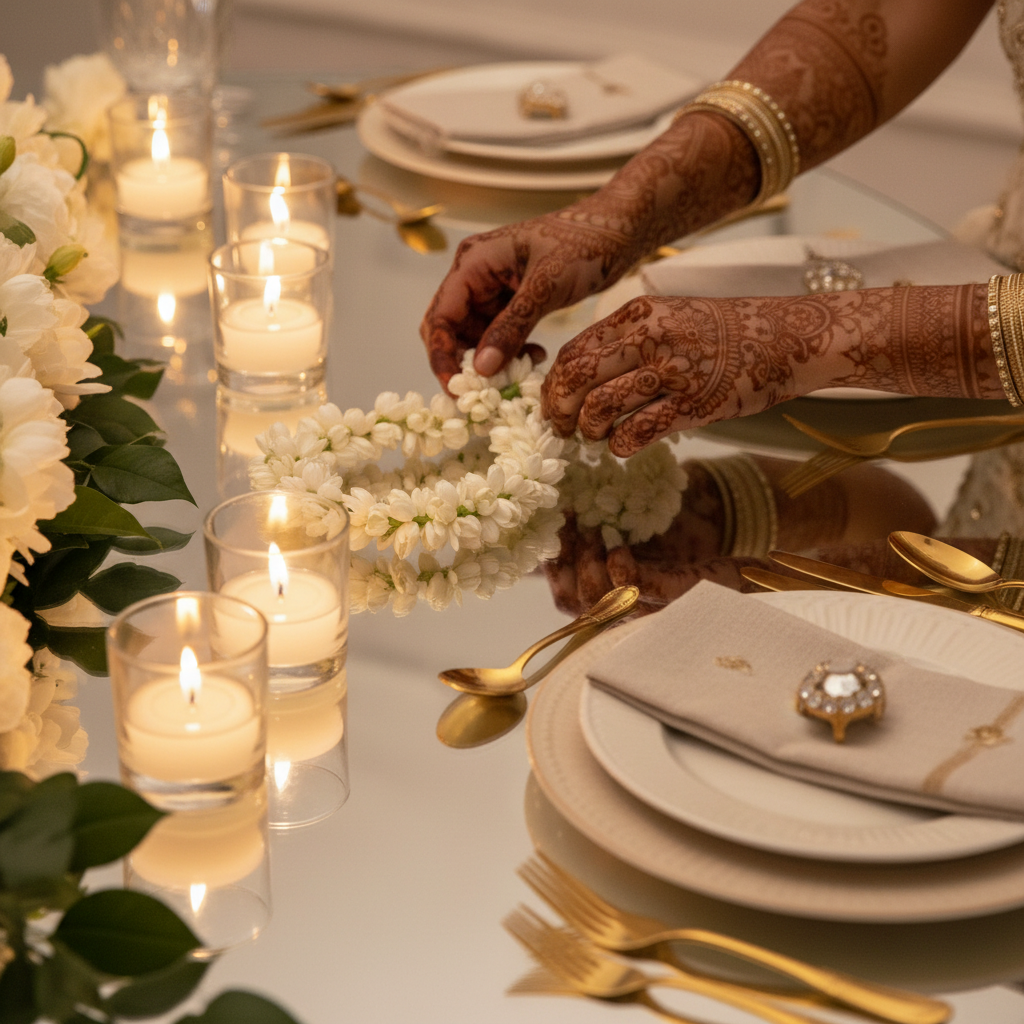
Self-contained insight: Design dies in bottlenecks. When florals, AV, and catering share the same dock, staging maps and staggered call times keep your look intact and the kitchen on pace.
Timelines and checklists you can copy
Strong timelines sequence vendor arrivals, ritual blocks, hospitality beats, and contingency buffers. Use simple checklists to align family, wedding party, and vendors. Consistency wins: one shared timeline, one point of truth, and clear responsibilities per role.
Month-by-month highlights (12 to 0)
- 12–10 months: Lock venue and core vendors; define guest count and cultural flow.
- 9–7 months: Design direction, menu tasting, accommodation blocks, transportation plan.
- 6–4 months: Invitations, attire fittings, rehearsal planning, audiovisual outline.
- 3–1 months: Final seating, signage list, vendor confirmations, detailed run of show.
- Wedding week: Rehearsal, final walkthrough, emergency kit, envelope and gift plan.
Copy-and-paste checklists
- Family + wedding party: Arrival times, lineup order, photo groups, key contacts.
- Vendors: Load-in window, power needs, staging map, point of contact.
- Décor: Table counts, centerpiece heights, signage list, candle policy.
- Guest care: Accessibility needs, dietary flags, childcare plan, prayer space.
We keep checklists short and visible. A one-page “who does what” by role prevents 90% of on-the-day confusion.
Tools and resources couples actually use
Use one shared planning hub for timelines, seating, and vendor files; a simple messaging group for day-of comms; and a clear photo/video brief. Lightweight tools beat complex dashboards—if everyone can find the latest plan fast, execution stays sharp.
- Shared drive: One folder for contracts, floor plans, menus, and the run sheet.
- Messaging channel: Small, dedicated group for show-day leaders only.
- Photo/video brief: Must-have shots, family sensitivities, and timeboxed portraits.
- Staging map: Where trucks park, which dock, who unloads when.
For venue thinking, review these venue planning prompts; they’ll help you spot load-in and guest-flow details early. See examples of venue operations questions and a practical South Asian venue checklist that mirrors many UK considerations. For menus, this catering planning overview offers helpful sequencing for tastings and dietary notes.
Case studies and real-world examples
Real examples show how planning choices play out. Here are three snapshots—from a Gujarati pheras and reception in Greater London, a nikkah celebration, and a destination wedding—that highlight timelines, vendor choreography, and guest experience design.
Greater London Gujarati pheras + reception (350 guests)
- Challenge: Tight venue turn between pheras and reception.
- Approach: Pre-set reception ceiling florals; fast strike crew for mandap; 30-minute buffer for blessings.
- Result: Reception opened on time; kitchen served hot starters; speeches and first dance cued cleanly.
Nikkah with elegant dinner (180 guests)
- Challenge: Balancing sacred atmosphere with photo requests.
- Approach: Silent-shutter portrait window after signing; mic plan to support khutbah.
- Result: Ceremony felt reverent; families got portraits; dinner pacing remained smooth.
Destination wedding in Goa (three-day)
- Challenge: Multi-venue logistics and vendor language differences.
- Approach: Local producer partner; bilingual call sheets; weather backups for sangeet.
- Result: Seamless handoffs; no missed cues; unforgettable party energy.
Self-contained insight: Event organisers for wedding succeed when every stakeholder has the same plan and the same clock. That’s why we print “run of show” cards for team leads and use cue lights for AV moments.
Entertainment, DJs, and dance floors
Great entertainment feels curated, not chaotic. Lock a soundtrack that reflects your cultures and set clear cue sheets for entrances, performances, and speeches. Coordinate DJ, MC, and live musicians with one timeline so transitions land and dance energy builds naturally.
Our DJ for Events team collaborates with dhol players and bands to script grand entrances and segment the evening. We plan mic handoffs, speech timers, and “reset tracks” that bring guests back after dessert.
- Entrance beats: 20–30 second intro clips keep energy high without dragging.
- Performance blocks: Group sets to minimize stage resets and maintain flow.
- Open dance: Alternate genres to keep multigenerational floors full.
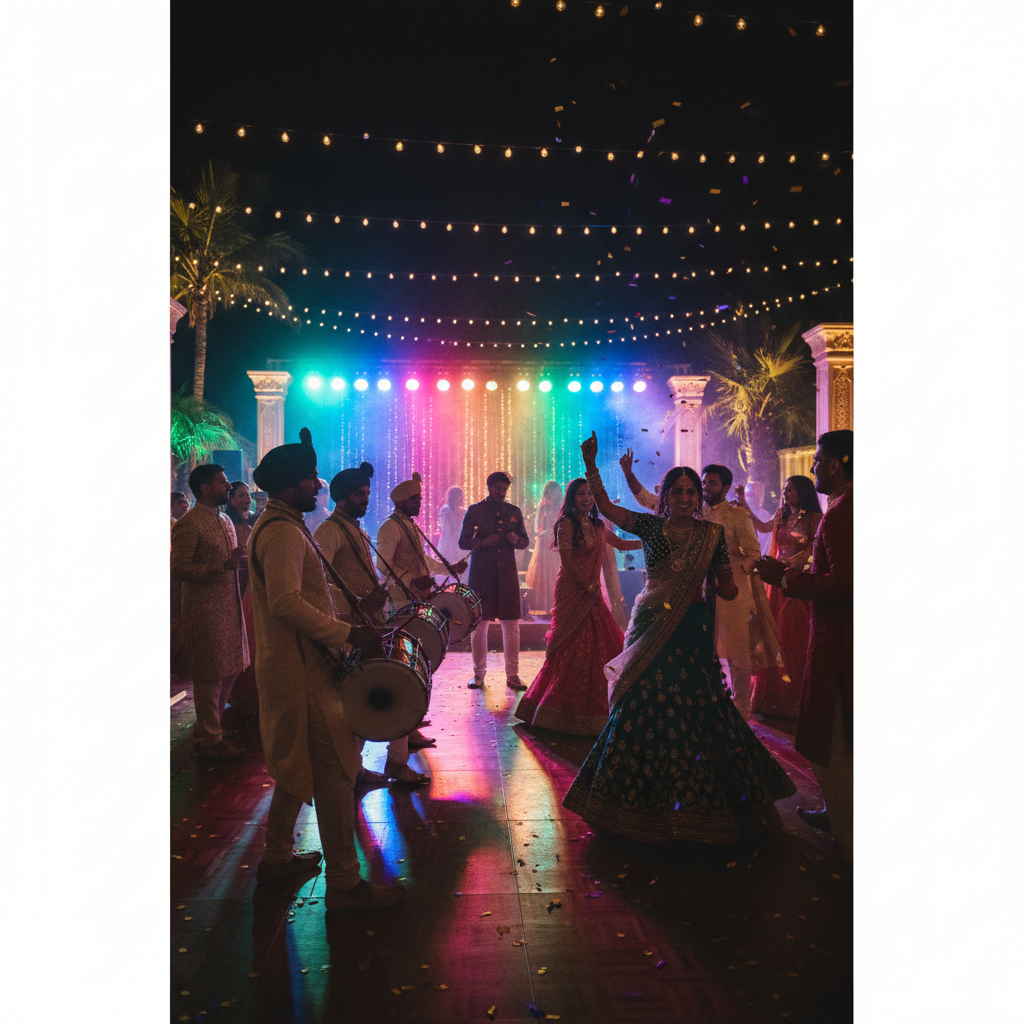
We also align lighting looks to the music arc—warm for toasts, saturated colors for the first open set—so photos and video feel intentional throughout.
Cinematography integration (tell the story well)
Strong films come from planned moments. Build portrait windows, protect clean audio, and stage light for key rituals. When photo, video, and planning work from the same shot list and timeline, your story feels cohesive and you avoid missed memories.
Our cinematography team coordinates with planners to place stands discreetly, set lav mics for officiants, and stage detail shots before guests enter. We also plan “quiet minutes” after ceremonies for couple portraits while makeup is fresh.
- Audio: Redundant mics on officiants and lecterns to avoid drops.
- Lighting: Pre-marked exposures at mandap/nikah table and cake.
- Run sheet: Locked portrait slots and backup indoor locations.
Risk and contingency planning
Risk planning keeps the day calm. Identify weather backups, power redundancy, vendor gaps, and travel delays. Assign owners for each risk, add time buffers where impact is highest, and pre-write messages you can send if plans shift. Prepared teams look lucky.
- Weather: Tents, indoor holds, and floor protection for sudden showers.
- Power: Dedicated circuits for AV; no daisy-chaining high-draw gear.
- Travel: Extra 15–20 minutes for coach routes; backup cars for VIPs.
- Health + safety: Water stations, allergy flags, first-aid contacts, safe flame plans.
Event organisers for wedding who lead with contingency thinking protect your guest experience and your peace of mind. We treat buffers as design features, not afterthoughts.
Best practices we follow on every wedding
The best weddings feel effortless because the groundwork is strong: one source of truth, crisp cueing, cultural fluency, and friendly but firm timeline control. We codify these habits so every vendor team can deliver their best work.
- One plan: One shared timeline and floor plan—distributed, printed, and versioned.
- Role clarity: Who cues whom, who owns what, and who has authority to call shifts.
- Cultural leadership: Ritual timing honored; elders respected; space for blessings.
- Guest-first lens: Wayfinding, water, wheelchair routes, and kid corners.
- Post-event wrap: Clear strike plan and item returns so families aren’t left packing.
How to choose the right planner (a 7-point checklist)
Choose a planner by evaluating cultural fluency, portfolio fit, communication style, vendor network, process maturity, on-the-day leadership, and transparency. Ask for recent examples similar to your ceremony style and guest count, then assess how they problem-solve in real scenarios.
- Cultural fit: Can they sequence your rituals without rushing elders?
- Design alignment: Do past events match your desired aesthetic and vibe?
- Communication: Are emails crisp, timelines clear, and responses timely?
- Network: Do they have reliable florists, caterers, DJs, and AV partners?
- Process: Can they show a sample run sheet and staging map?
- Leadership: How do they handle last-minute changes and tricky family dynamics?
- References: Ask for two recent couples you can speak to.
At Patel Events, our 50+ trusted vendors network and 500+ events delivered give couples confidence that we’ve solved the problem you’re facing—likely dozens of times.
Frequently Asked Questions
These concise answers address the questions couples ask most about planners. Each response is practical and designed for quick scanning, so you can make decisions with confidence and move your plan forward today.
What does a day-of coordinator actually do?
They take your final plan, confirm vendors, run the rehearsal, and direct the wedding day. They manage timelines, cue entrances and speeches, and troubleshoot issues so you and your families can be present.
How far in advance should we book a planner?
Aim for 9–12 months before your date, sooner if you’re planning a multi-ritual weekend or peak-season Saturday. Early booking locks key vendors and gives more time for design development.
Can you help with South Asian rituals?
Yes. We’re deeply experienced with nikkah, Gujarati pheras, sangeet nights, and grand receptions. We map each ritual’s cadence and coordinate with your officiant and elders to keep the day respectful and on time.
What’s the difference between full-service and partial planning?
Full-service covers everything from vision to on-the-day execution. Partial focuses on selected phases—like vendor curation and timeline building—while you lead other tasks. Day-of takes a finished plan and runs the show.
Key takeaways and next steps
The fastest path to a calm wedding is a clear plan and a capable team. Lock your venue and core vendors early, align on rituals and design, and choose a planner whose process you trust. Then protect buffers and enjoy the day you’ve imagined.
- Event organisers for wedding translate vision into an executable plan.
- Choose a service model that fits your time and complexity.
- Local know-how in Greater London avoids delays and bottlenecks.
- Design choices must support photos and guest movement.
- One shared timeline is your single source of truth.
Ready to get started? Book a discovery call with our team in Greater London. We’ll listen first, then map the simplest path to your day. Visit Patel Events to begin.