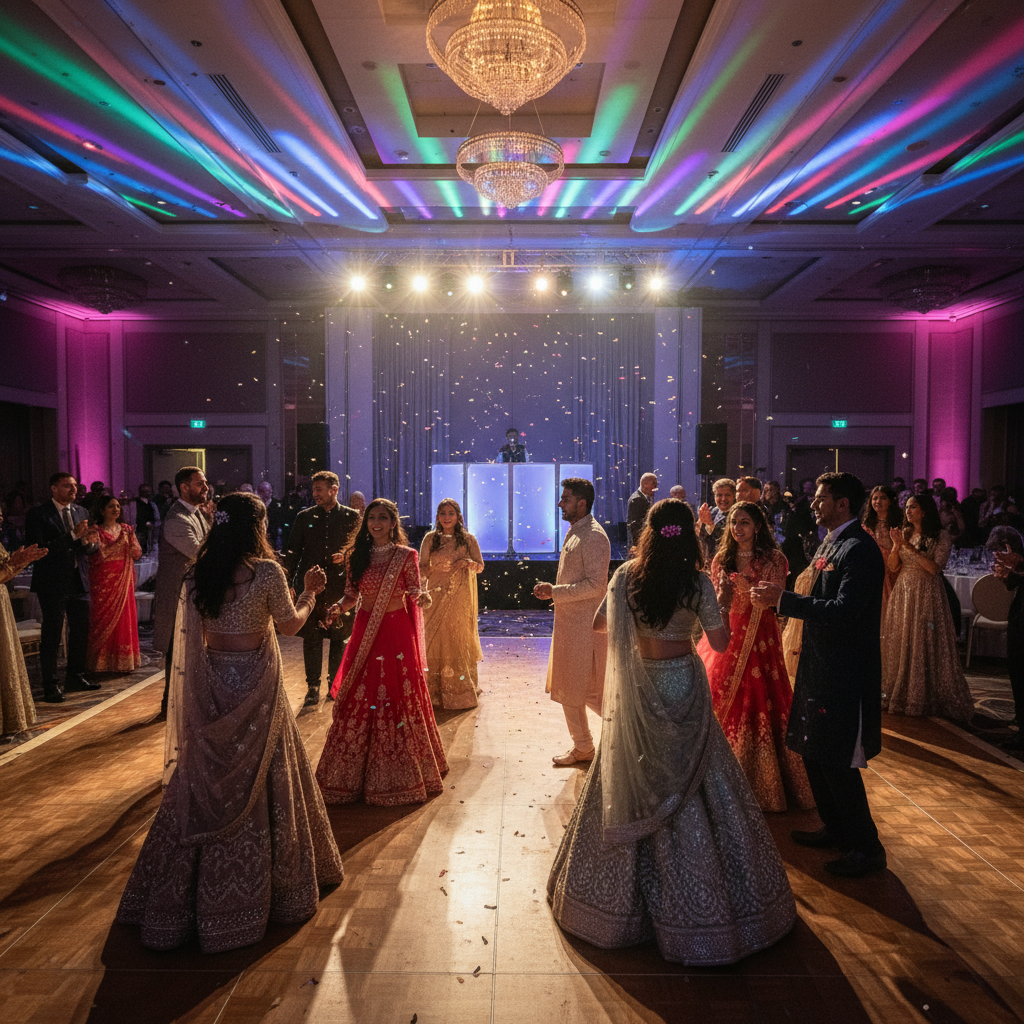
DJ planning for sangeet night is the end-to-end process of designing the music, sound, and run of show so your dance party flows without dead air or technical hiccups. For couples near HA3 0PB in Greater London, Patel Events handles playlists, cues, and logistics to keep the floor full and the energy high all night.
By Shani Patel — Patel Events, Weddings & Sangeets
Last updated: 2026-05-27
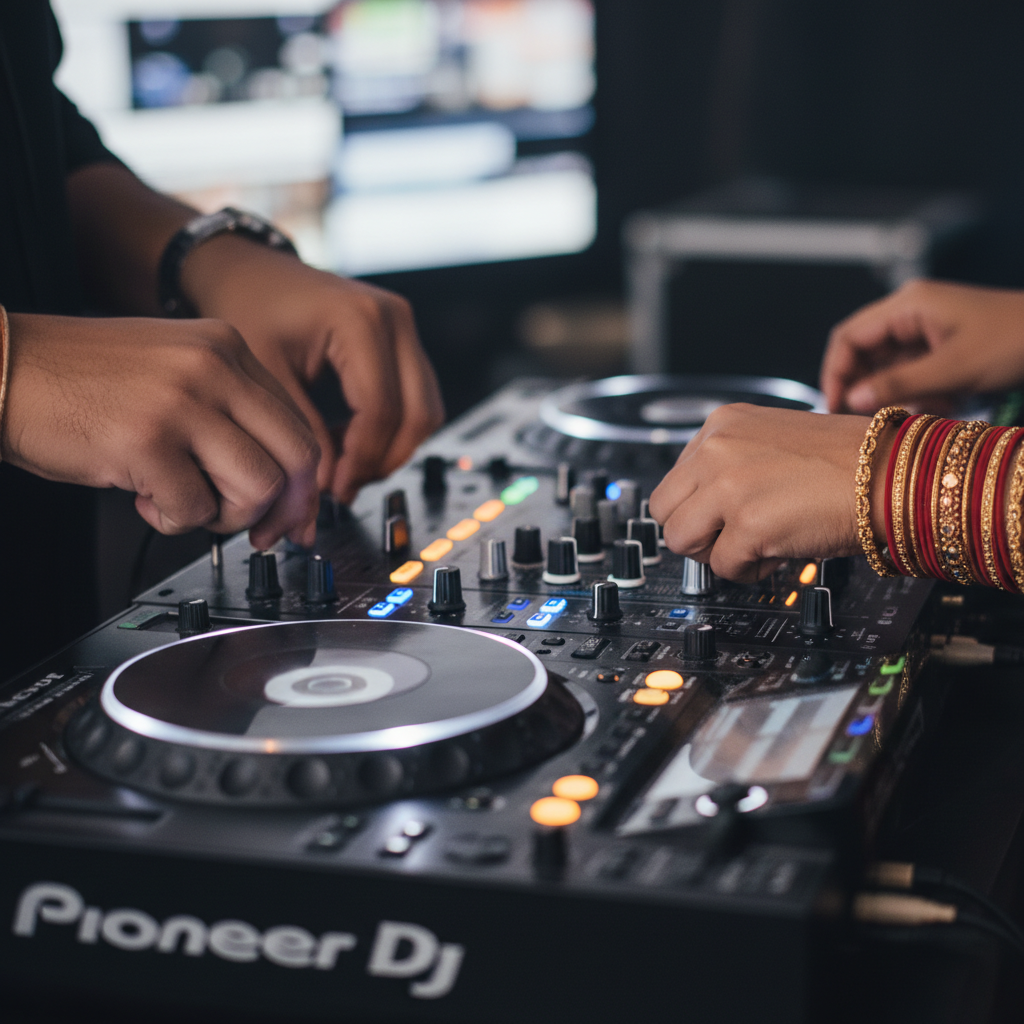
Summary
A successful sangeet DJ plan defines your music vision, technical setup, and minute-by-minute flow. Build a balanced playlist, lock in equipment and backups, align dance cues, and rehearse transitions. With a clear run of show, you’ll avoid awkward pauses and keep guests dancing from first beat to final track.
This complete guide shows you exactly how we plan, program, and run a high-energy sangeet night. You’ll find:
- Plain-English definitions and the planning prerequisites most couples miss
- A step-by-step run of show you can adapt immediately
- Mixing formats: Bollywood, garba/raas, Punjabi, 2000s hits, and dhol fusion
- Best practices for smooth MC moments, transitions, and dedications
- Tools, checklists, troubleshooting tips, and real Patel Events examples
Local considerations for HA3 0PB
- Allow buffer time for guest arrivals if your venue is near Kenton station; build a welcoming playlist and extend cocktail music by 15–20 minutes if trains run late.
- Autumn and winter nights in Greater London get dark early; confirm exterior load-in lighting and a dry path for equipment cases.
- If your venue is close to Northwick Park station, coordinate with management on sound checks before peak residential quiet hours.
What is sangeet DJ planning?
Sangeet DJ planning is the structured design of your music journey—from guest arrival to last dance. It aligns playlists, dance cues, MC notes, and sound engineering so every transition feels intentional. The result is a packed floor, zero dead air, and a signature vibe that reflects your families.
Think of it as your music blueprint. It spells out who is speaking, who is dancing, what plays next, and how we shift styles without losing momentum. When couples treat DJ planning like a program, the night feels effortless—even when it’s complex.
Why this matters
- Energy management: The right sequence turns good songs into unforgettable moments.
- Culture and rituals: Gujarati garba/raas, Punjabi sets, and family medleys all need timing and cues.
- Technical certainty: Clear inputs, backups, and checks prevent last‑minute scrambles.
Patel Events perspective
We’ve supported 500+ celebrations across London, Leicester, Kent, and Tooting. In our experience, shared planning between DJ, dhol, MC, and choreographers is the single biggest predictor of a floor that stays full for 3+ straight dance blocks.
Prerequisites for a seamless sangeet night
Before building playlists, secure the core foundations: venue rules, power access, load-in path, stage plot, and who owns each cue. In HA3 0PB and the Greater London metro, confirm noise policies early, allocate a dedicated soundcheck, and define backups for music, mics, and dhol.
Venue and technical
- Power and circuits: Identify two separate 13A circuits for audio and lighting. Map outlet locations within 25–50 feet of the booth.
- Load-in path: Reserve elevators/ramps; ensure a dry, level route for cases and subs.
- Stage plot: Mark DJ booth, dhol, singers, and MC positions; keep cable runs short and taped.
- Noise and curfew: Get written policies on volume limits and cutoff times for amplified sound.
- Mic inventory: Minimum: 2 handheld wireless, 1 backup wired, spare batteries.
- Network access: Prefer offline files. If streaming is allowed, arrange a private network and a hotspot backup.
Program and people
- Run of show owner: Assign one person to call cues (planner, stage manager, or MC).
- Dance teams: Collect final audio and timings 5–7 days prior.
- Do‑not‑play and must‑play: Short, specific lists prevent mixed signals during the party.
- Pronunciations: Send phonetics for names/titles to the MC/DJ the week of the event.
- Cultural notes: Flag any rituals or elders’ requests that affect song choices or timings.
Pro tip: Build a shared folder labeled 01_Introductions, 02_Dances, 03_Party, 04_Contingency, with WAV/320 MP3 files and a printed set list. Label each file with entry order and duration (e.g., “03_SiblingMedley_4m10s.wav”).
How DJ planning works: step-by-step run of show
Structure your sangeet with a clear timeline: welcome, family entries, performances, open dance blocks, and one planned encore. Lock transitions at 30–90 seconds, pre‑fade intros, and rehearse cues. A precise run of show turns a good playlist into a seamless experience.
Step-by-step framework
- Arrival ambiance (45–60 min): Mid-tempo Bollywood classics, soft Punjabi, or acoustic covers at conversational volume.
- Grand family entries (10–15 min): Pre-trimmed 30–45 second hooks for each group; MC names; quick fades.
- Welcome + blessing (5–10 min): One mic, one spotlight; bed music muted.
- Choreographed sets (30–45 min): Pre-mixed medleys with exact start/stop points; cue sheets on the booth.
- Garba/raas block (25–40 min): Progressive tempo; announce transitions.
- Main party block (60–90 min): Punjabi, Bollywood bangers, 2000s hip-hop/pop crossovers; layer dhol for peaks.
- Dedications & birthday/anniversary shoutouts (5–10 min): Keep to 2–3 total; limit interruptions.
- Finale + planned encore (10–15 min): Signature couple track, then one high-energy closer.
Run of show process table
| Time | Segment | Music/Style | Owner | Notes |
|---|---|---|---|---|
| 6:00–7:00 | Arrival | Bollywood acoustic | DJ | Low volume; greet playlist |
| 7:00–7:15 | Entries | 30–45s hooks | MC + DJ | Names on cue cards |
| 7:15–7:25 | Welcome | Bed muted | MC | One-mic protocol |
| 7:25–8:05 | Performances | Pre-mixed medleys | Stage mgr | Printed cue sheet |
| 8:05–8:40 | Garba/Raas | Progressive tempo | DJ | Announce transitions |
| 8:40–10:10 | Open Dance | Bollywood/Punjabi/2000s | DJ + Dhol | Dhol peaks every 2–3 songs |
| 10:10–10:20 | Shoutouts | Dedications | MC | Limit to 2–3 |
| 10:20–10:35 | Finale | Couple track + closer | DJ | One planned encore |
Keep transitions tight. Trim intros to 10–15 seconds, plan 3–5 second crossfades, and allow 60–90 seconds between segments for mic changes or announcements. That micro‑timing is what guests feel as “effortless.”
Music formats and fusion options
Win your sangeet by sequencing styles: warm-up classics, family medleys, garba/raas, then a Punjabi/Bollywood main set with one standout crossover moment. Add dhol on live peaks and finish with a signature couple track plus one planned encore.
Core styles to plan
- Bollywood classics: Mid-tempo for arrivals, speeches, and transitions.
- Family medleys: Pre-mixed sets for siblings, cousins, and friends—with exact cue points.
- Garba/raas: Progressive tempo, clear announcements before speed-ups.
- Panjabi bangers: High-energy set; layer live dhol for drops and chorus hits.
- 2000s/Global crossover: One 3–5 track segment that unites generations.
Fusion ideas that work
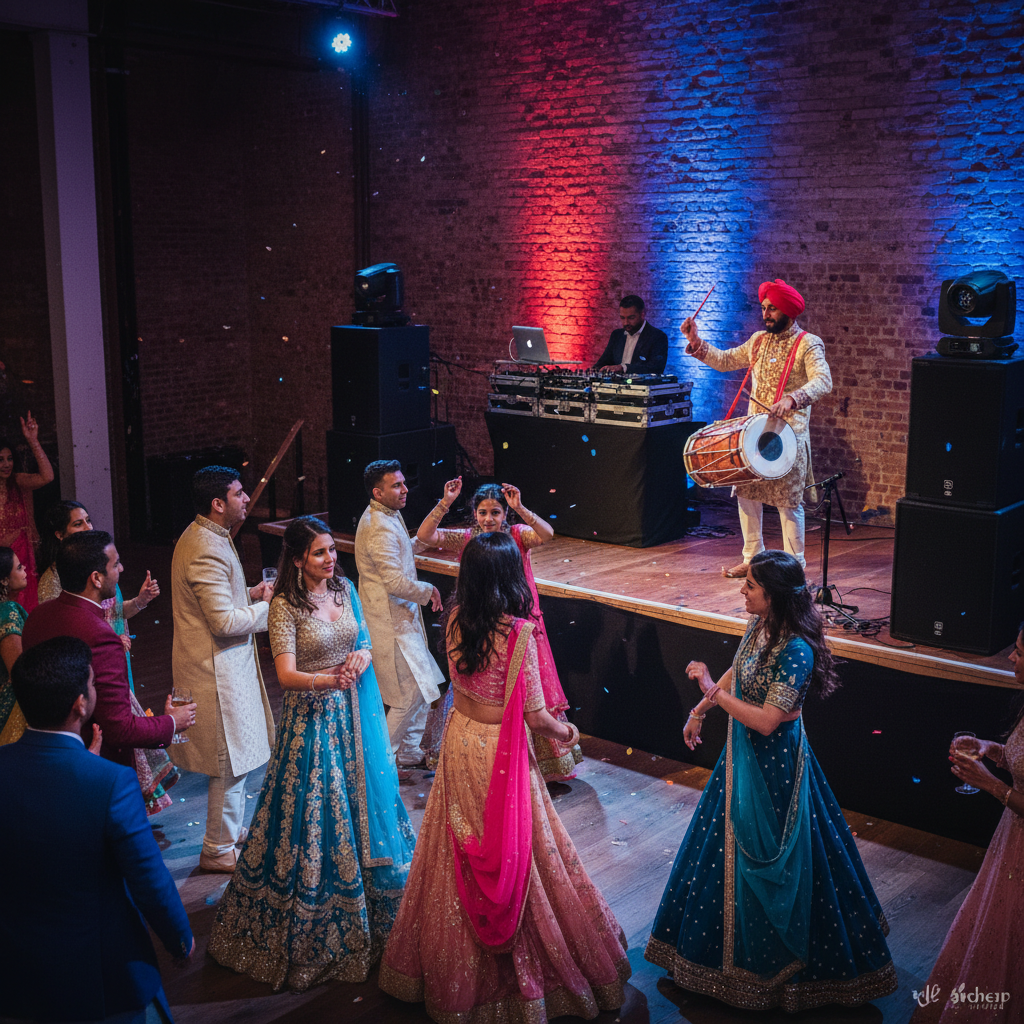
- DJ + Dhol: Dhol accents on build-ups and chorus hits during peak hour.
- Live singer cameo: One live vocal over a pre-mix for emotional lift.
- Acoustic welcome: Guitar/keys on arrival before ramping to DJ sets.
- Regional spotlight: Short Tamil/Telugu/Gujarati insert as a family nod.
Keep fusion focused. One or two big “moments” beat five ideas executed halfway. Anchor the night with your couple’s signature track and place it 10–15 minutes before closing, so the encore can lift even higher.
Best practices for DJs, MCs, and sound
Protect the dance floor by mastering transitions, volume, and mic discipline. Pre-trim songs, limit speeches to scheduled slots, test every mic, and define hand signals for the MC, DJ, and dhol. Consistency here is what keeps the energy high and the floor full.
Sound and mixing
- Gain staging: Keep input gains conservative; ride the master fader, not the channel trims, for smooth room control.
- Crossfades: 3–5 seconds on like-for-like tempos; hard cuts only for planned drops.
- EQ basics: Roll unnecessary sub-bass during speeches; return for dance sets.
- Monitor placement: Aim booth monitors away from mics to minimize feedback.
Mic and MC discipline
- One-mic rule: Only the MC holds a live mic during speeches.
- Names on cards: Phonetic spellings taped to the booth or lectern.
- Bounded shoutouts: Keep dedications to a single 5–10 minute window.
Playlist governance
- Must‑play vs. vibe: Honor must-plays, but empower the DJ to read the floor.
- Do‑not‑play: Keep it short; broad bans limit flexibility for mixed-age floors.
- Family approvals: Lock the performance medleys 72 hours prior.
When the pillars above are set, even last‑minute curveballs feel manageable. That’s the point of planning: not to over-script, but to make improvisation safe.
Tools and resources for DJ planning
Build your toolkit around reliable playback, redundant power, and clear documentation. Use pro DJ software, offline audio files, printed cue sheets, and a labeled folder structure. Add a battery pack, spare cables, and a hotspot so plan A, B, and C are ready.
Core equipment checklist
- Pro mixer/controller with dual USB or SD redundancy
- Two active tops plus a sub where allowed
- Two wireless handheld mics, one wired backup
- Laptop with DJ software and external drive clone
- Power strips, tape, spare XLR/TRS/RCA adapters
- Hotspot, battery bank, and flashlight
Documentation and files
- Printed run of show and cue sheets at booth and stage door
- Folder structure labeled by segment with durations in filenames
- One-page contact sheet for DJ, MC, planner, venue, and dhol
For layout inspiration and vendor coordination, general venue planning checklists can help you spot blind spots early; this venue checklist resource offers a useful high-level sweep you can adapt to any ballroom.
Troubleshooting and contingencies
Expect the unexpected: bring backups for music, mics, and power; script a short “reset” playlist; and pre-approve a rain or curfew Plan B. Assign one point of contact to make real-time calls while the DJ keeps music flowing.
Common issues and fixes
- Mic feedback: Lower stage monitor, tighten EQ, and reposition the speaker line-of-fire.
- Playlist changes: Use the reset playlist and slot the request in after two songs.
- Late performances: Collapse one break between medleys; preserve the finale.
- Noise complaints: Pull subs back 3–6 dB, angle tops inward, and close doors.
- Power blip: Battery bank on router/controller; quick restart track queued.
Weather and transport realities
- Rain plan: indoor load-in route and towel kit for cables and cases.
- Transit delays: extend cocktail music 15–20 minutes; keep formalities tight.
- Curfew shifts: shorten open dance by one mini-set but maintain your finale.
Resilience is designed in advance. A two-page contingency plan taped to the booth saves hard decisions from being made on a hot mic.
Case studies and real-world examples
The best DJ plans blend culture, family stories, and logistics. Here are snapshots from Patel Events sangeets across London and the wider UK—showing how a tight run of show and smart fusion choices deliver packed floors and smooth transitions.
Harrow family medley + dhol peaks
At a Harrow ballroom near HA3 0PB, we staged five short family medleys before a 70‑minute open dance. Dhol entries landed on pre-planned chorus drops every two songs. The finale used the couple’s 90‑second signature edit followed by an encore Punjabi closer—no dead air anywhere.
Leicester garba focus with modern crossover
For a Leicester sangeet, we organized a 35‑minute garba/raas block with three announced tempo lifts, then pivoted into a 20‑minute 2000s crossover burst. Because we trimmed intros and set 3–5 second crossfades, the room moved as one—even grandparents stayed on the floor through the transition.
Tooting boutique venue, tight curfew
With a strict sound cutoff, we front-loaded performances, condensed dedications into a single five-minute window, and preserved a 12‑minute finale+encore. The DJ ran a reset playlist during a mic swap so the beat never stopped.
Food and flow also matter. When dinner service and dance timings clash, even great playlists suffer. Consider a compact menu service plan to support your timeline; this menu planning overview offers ideas for sequencing meals to protect the dance floor.
Why DJ planning matters and what to avoid
Great music alone doesn’t guarantee a great sangeet. Avoid overlong speeches, unvetted requests, and untrimmed intros. Do pre‑production with timelines, cue sheets, and backups so your DJ can read the room instead of firefighting avoidable issues.
Common mistakes
- Open‑ended speeches sprinkled throughout the night
- Multiple live mics with no clear host
- Last‑minute medley files in poor quality
- Requests that derail the floor mid‑peak
- No contingency for rain, delays, or curfew
What to do instead
- Time‑box speeches and run them earlier in the evening
- “One MC, one mic” rule, with a wired spare on standby
- Submit final audio 5–7 days before, with durations labeled
- Batch requests into a single 5–10 minute window
- Write a two-page Plan B and assign a decision owner
When couples follow these guardrails, the dance floor becomes the center of gravity. That’s the test of great sangeet DJ planning.
How Patel Events supports your sangeet
We design your music journey, coordinate vendors, and stage‑manage the night. From garba/raas timing to DJ+dhol fusion, we handle cue sheets, pronunciations, and technical backups so you can enjoy the celebration while we run the floor.
- End‑to‑end planning across rituals, décor, styling, and logistics
- Deep expertise in South Asian ceremonies and traditions
- Vendor network of 50+ partners for flawless delivery
- On‑site stage management, cue calling, and timeline control
Exploring a brand event or gala as well? Our playbooks carry over. The same run‑of‑show discipline powers flawless corporate annual galas and product launches—aligned to your brand voice and guest experience goals.
Planning your sangeet now? Let’s design a music journey that fits your families and venue. Patel Events coordinates DJ, dhol, MC, and choreography so your floor stays full from first beat to encore.
Request a friendly consultation to get started.
Templates and quick-reference checklists
Use these quick lists to lock the essentials: who speaks, what plays, and how gear is backed up. Print two copies—one for the booth and one for stage management—so everyone follows the same script on the night.
Run of show essentials
- Arrival ambiance: 45–60 minutes, conversational level
- Entries: 30–45 second hooks, MC names on cards
- Performances: pre‑mixed medleys with exact cues
- Garba/raas: progressive tempo, announced transitions
- Open dance: 60–90 minutes, plan two mini‑peaks
- Finale + encore: signature couple track, then closer
Booth pack
- Dual‑USB controller, laptop, clone drive
- 2 wireless handhelds, 1 wired spare
- Gaffer tape, spare cables, batteries
- Printed timeline, cue sheets, contacts
People and roles
- MC: names, timings, one-mic rule
- Stage manager: cue calling, performance lineup
- DJ: mixing, transitions, floor reading
- Dhol: peaks on drops/choruses
For more timeline inspiration, high-level venue and program articles can be useful for new ideas; see this short venue/program overview for additional prompts when shaping your flow.
Frequently Asked Questions
Couples ask us about timelines, fusion, and requests. Here are direct, practical answers you can use right away when planning your sangeet music and run of show.
How far in advance should we finalize our sangeet playlist?
Lock must-plays and do-not-plays two weeks out, then finalize performance medleys and entry hooks 5–7 days before the event. This gives your DJ time to prep cue points, trim intros, and rehearse transitions.
What’s the ideal length for open dancing at a sangeet?
Aim for 60–90 minutes of open dancing, shaped into two mini-peaks. Keep dedications in one short window so the floor doesn’t fragment. Place your signature couple track 10–15 minutes before the end, then close with a planned encore.
How do we balance garba/raas with Bollywood and Punjabi bangers?
Use a dedicated 25–40 minute garba/raas block with a progressive tempo and clear announcements. After that, transition into a Punjabi/Bollywood main set. Keep one global crossover moment to unite mixed-age guests.
Do we need a live dhol player, or is the DJ enough?
A skilled DJ can carry the night, but a live dhol player adds dynamic peaks that elevate big drops and chorus hits. If you add dhol, schedule it for 3–5 planned moments during the main party block.
Conclusion and next steps
Plan your sangeet DJ flow with structure: prerequisites, a detailed run of show, and focused fusion. Trim intros, protect the dance floor from interruptions, and end with a signature moment. That’s how great music becomes a great night.
Key takeaways
- Treat DJ planning like a program with owners and cues
- Lock venue rules, power, and stage plot before playlists
- Sequence: arrivals → entries → performances → garba/raas → main set → encore
- One MC, one mic; dedications in a single window
- Design one signature couple moment before your closer
Ready to map your music journey? Patel Events brings 27+ years of expertise across sangeets, weddings, and destination celebrations. Book a discovery session in HA3 0PB and we’ll shape a floor-filling plan together.
Looking for more high-level planning prompts as you build timelines and vendor notes? This brief events overview offers additional angles you can adapt to your sangeet planning document.