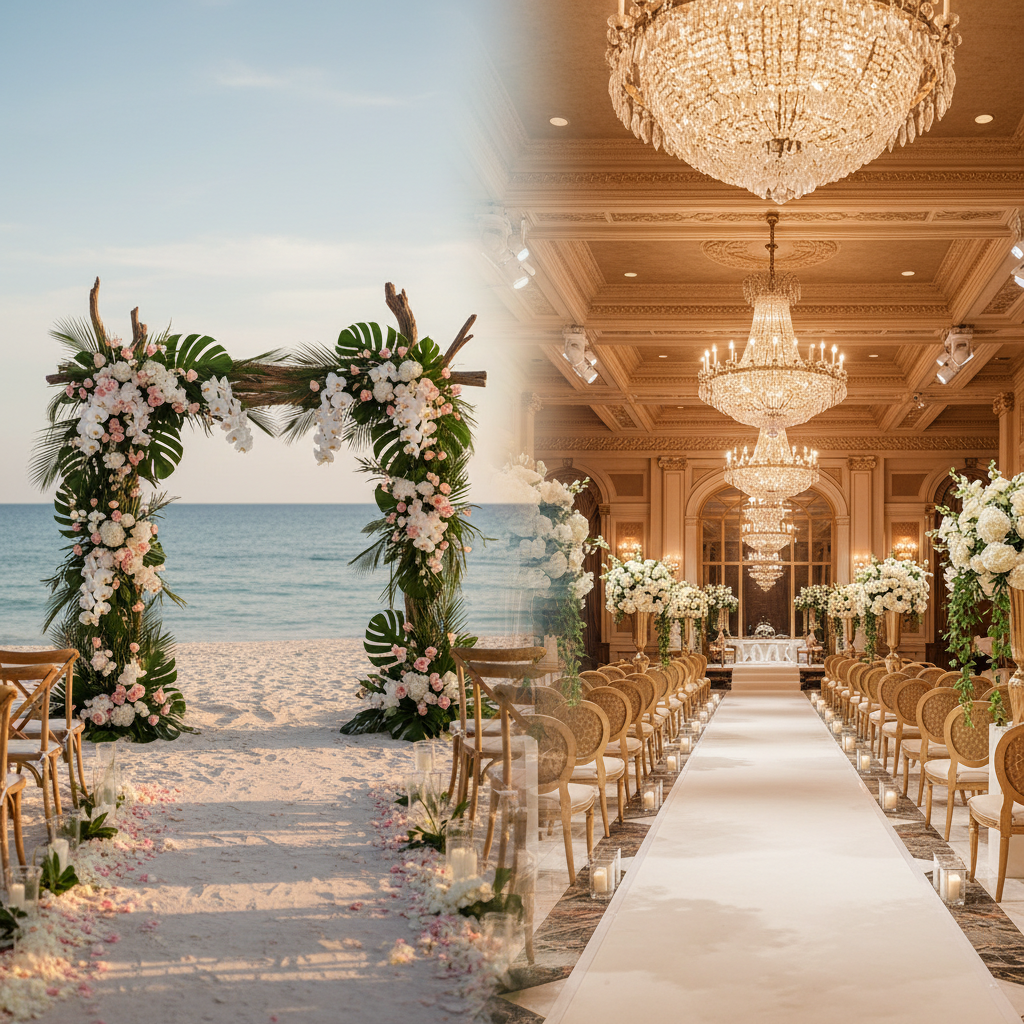
Choosing between a destination wedding planner and a local planner is the process of matching your venue location, culture, and logistics with the right expertise. For couples near HA3 0PB at Abercorn Garden, Patel Events guides this decision by aligning rituals, travel, and on-site execution—so your celebration feels effortless and true to you.
By Shani Patel • Last updated: May 24, 2026

Overview
A destination wedding planner specializes in events outside your home region and manages travel, venue, and vendor logistics on-site, while a local planner focuses on venues near you with deep neighborhood vendor ties. The right choice depends on where you’ll marry, cultural needs, and how much support you want abroad.
Here’s what you’ll get in this guide and how to use it to decide with confidence.
- Clear definitions and when to choose each planner type.
- A quick comparison table you can scan in 30 seconds.
- Our Top Pick plus nine strong alternatives for common scenarios.
- A step-by-step selection process and readiness checklist.
- Real examples from Patel Events: nikkah, Gujarati, sangeet, and destination weddings.
- Local tips for HA3 0PB in Greater London to streamline planning milestones.
Destination vs Local Wedding Planner: Quick Answer
Choose a destination wedding planner if your ceremony is abroad or far from home and you need on-the-ground coordination. Choose a local planner when your venue is near you and you want nearby vendor access and frequent walkthroughs. Hybrid teams bridge both when culture, travel, and scale intersect.
Both planner types deliver full-service support, but the emphasis changes. Destination experts prioritize travel logistics, time zones, and cross-border vendor management. Local pros emphasize frequent site visits, rapid supplier communication, and rehearsal oversight. Patel Events does both: from Udaipur palaces to Greater London ballrooms, we align design, rituals, and logistics.
| Factor | Destination Planner | Local Planner |
|---|---|---|
| Primary Focus | Travel, overseas venues, on-site vendor management | Neighborhood venues, nearby vendors, frequent walkthroughs |
| Best For | International or out-of-region weddings | Home-city celebrations and regional events |
| Site Visits | Bundled intensives (1–3 concentrated visits) | Flexible, recurring (monthly/quarterly) |
| Vendor Network | Curated partners abroad; import key specialists as needed | Deep local bench; rapid sourcing and hold dates |
| Risk Controls | Timezone buffers, shipping and customs playbooks | Contingency holds, same-day swap options nearby |
| Cultural Execution | Adapts rituals to host-country norms | Replicates full tradition with familiar suppliers |
| Communication | Pre-planned windows; bilingual teams | High-frequency touchpoints; in-person previews |
Our Top Pick
For London-based couples planning rich South Asian rituals, a hybrid team is our top pick: a local lead plus a destination specialist. This model combines deep cultural fluency with on-the-ground execution abroad, preserving tradition while managing travel, customs, and venue rules without compromise.
Why hybrid? Many couples in Greater London host multi-event celebrations—mehndi, sangeet, nikkah or mandap ceremony, and grand reception. When one event lands overseas (for example, vows in Goa) and another returns home (reception in London), a hybrid team preserves continuity: one design language, one master timeline, and one point of accountability.
- Continuity of vision: One design board spanning 3–5 functions maintains palette and floral DNA.
- Vendor leverage: A 50+ partner network supports backups and imports for specialty needs.
- Ritual fidelity: Gujarati or nikkah requirements are translated into venue rules abroad.
- Efficiency: A single master run-of-show limits handoffs and miscommunication.
Patel Events has executed 500+ celebrations with a 98% satisfaction rate, including destination weddings across India. In our experience, a hybrid team reduces rework by consolidating design and logistics—especially across different time zones and regulatory environments.
Alternatives: Entries #2–10
If a hybrid model isn’t right, consider focused options. A destination-only planner fits fully abroad events; a local-only planner excels near home. Specialist and DIY-boosted options help with narrow needs. Choose based on venue location, ritual complexity, travel tolerance, and decision-making style.
Entry #2 — Destination-Only Planner (Full Abroad Execution)
- Best for: All key events outside your region (e.g., Udaipur sangeet, ceremony, and reception).
- Strength: On-the-ground vendor control; 1–3 site intensives finalize floor plans and menus.
- Why it matters: Reduces timezone latency by 30–50% during final month when approvals spike.
- Patel Events example: We coordinated a three-day palace celebration with synchronized baraat routes and nightly entertainment checks without daily cross-continental calls.
Entry #3 — Local-Only Planner (Home-Base Power)
- Best for: Venues in Greater London or within driving distance.
- Strength: Rapid vendor holds; same-week tastings; rehearsal oversight.
- Why it matters: Same-city access enables 2–4 décor previews and live mockups before install day.
- Patel Events example: A Gujarati reception with tall centerpieces and a live DJ load-in tested a week prior to reduce day-of changes by half.
Entry #4 — Cultural Specialist Co-Planner
- Best for: Ritual-intensive weddings where traditions are non-negotiable.
- Strength: Ceremony sequencing, priest/imam coordination, and family-side processions.
- Why it matters: Accurate ritual timing protects 60–90 minutes of sacred moments without venue friction.
- Patel Events example: We mapped a nikkah signing and sangeet program into a European resort’s curfew policy with buffer windows for readings and blessings.
Entry #5 — Venue-Preferred Partner Team
- Best for: Resorts or ballrooms requiring pre-approved planners and florists.
- Strength: Faster approvals; known load-in/load-out rhythms minimize overtime risk.
- Why it matters: Pre-cleared partners can trim 1–2 weeks off permits and production schedules.
- Patel Events example: Our pre-vetted décor plan passed safety checks on first submission, allowing an extra styling pass on seating charts.
Entry #6 — Design-Led Planner with Local Logistics Assist
- Best for: Couples who want couture design with vendor admin support.
- Strength: Story-driven palettes, floral narratives, and lighting arcs synced to program beats.
- Why it matters: Cohesive design sequencing increases perceived production value without adding elements.
- Patel Events example: A sangeet stage used layered marigolds and programmable LEDs timed to entrances, rehearsed twice the night before.
Entry #7 — Logistics-First Planner with Design Partner
- Best for: Complex guest movement (200–500+), split venues, and VIP handling.
- Strength: Transport matrices, boarding sequences, and greenroom operations.
- Why it matters: Smooth transitions can reclaim 20–30 minutes for dance and family photos.
- Patel Events example: Dual-coach shuttles staged on a 6-minute cadence kept baraat and ceremony starts precisely on time.
Entry #8 — Partial Planning + Day-Of Coordination
- Best for: Hands-on couples who enjoy vendor scouting but want flawless execution.
- Strength: Month-of takeover; 2–3 run-throughs; final vendor confirmations.
- Why it matters: A month-of planner resolves 80–90% of timeline conflicts before rehearsal.
- Patel Events example: We took over a client-booked venue and refined the timeline to merge a live performance with traditional entrances.
Entry #9 — Travel Concierge + Planner Duo
- Best for: Destination guests flying from multiple countries.
- Strength: Room blocks, ground transfers, and visa window tracking.
- Why it matters: Consolidated travel updates cut guest question volume by 40–60% in peak weeks.
- Patel Events example: We paired ceremony planning with group travel dashboards that tracked arrivals across three continents.
Entry #10 — Production-Heavy Planner (Entertainment-Led)
- Best for: Sangeet nights or receptions with live bands, celebrity emcees, or dance troupes.
- Strength: Stage plots, audio lines, and rehearsal scheduling.
- Why it matters: Precision sound checks and cue sheets preserve 45–60 minutes of program energy.
- Patel Events example: Our stage manager locked final cues 24 hours before doors, freeing the couple for family time.
How to Choose: A Step-by-Step Selection Process
Decide in five steps: pick your venue region, rank ritual complexity, map guest travel, preview two design directions, then interview 2–3 planners who match that profile. Validate with a timeline test and a vendor hold drill to ensure systems are real, not theoretical.
Step 1 — Confirm the Venue Region
- Decide “home-base” vs “abroad” by Week 2 of planning.
- Shortlist 3–5 venues aligned to your headcount and rituals.
- Action: Ask each venue about planner requirements and load-in rules.
Step 2 — Rank Ritual Complexity
- List each event (mehndi, sangeet, nikkah/mandap, reception) with duration and must-have elements.
- Flag cultural items that require specific vendors (e.g., live dhol, mandap style).
- Action: Choose a planner with verified work in your traditions.
Step 3 — Map Guest Travel Patterns
- Capture passports, dietary needs, and tentative arrival days in one sheet.
- Segment VIPs and elders for private transport and seating ease.
- Action: If 40%+ guests fly internationally, favor a destination or hybrid team.
Step 4 — Preview Two Design Directions
- Request two mood boards: “cultural classic” and “contemporary fusion.”
- Define a single floral vocabulary across all functions for visual unity.
- Action: Approve one direction within 14 days to protect production lead times.
Step 5 — Run the Planner Stress Test
- Timeline test: Ask for a sample 90-day run-up calendar with rehearsal slots.
- Vendor hold drill: Can they secure 2–3 critical suppliers within 48–72 hours?
- Contingency brief: Request a one-page plan for weather, power, and transport delays.
Value and Pricing Signals (No Numbers)
Evaluate value through deliverables and risk reduction: timeline control, vendor leverage, and cultural precision. Compare service scopes, site-visit cadence, and contingency depth. Choose the planner who eliminates the most uncertainty across the 60–120 days before your wedding week.
- Scope clarity: Full planning vs partial—define inclusions like travel concierge, rehearsals, and production management.
- On-site days: Count install, ceremony, reception, and strike coverage.
- Design development: Number of revisions, mockups, and sample runs.
- Vendor ecosystem: Access to 50+ vetted partners accelerates replacements.
- Post-event deliverables: Cinematography timelines and asset coordination.
Here’s the thing: the most valuable planner is the one who prevents avoidable issues. In our experience, earlier lock-ins on staging, power, and transport avoid dozens of last-week emails and preserve rehearsal energy.
Local Context: HA3 0PB and Greater London
For couples near HA3 0PB in Greater London, local logistics like rehearsal timing, vendor access routes, and transit windows shape planner fit. Use neighborhood lead times, venue curfews, and travel peaks to decide whether a local, destination, or hybrid team protects your timeline best.
Local rhythm matters. Weeknight rehearsals across Greater London can run smoother when planned around evening transit. Neighborhood access routes, loading bays, and venue quiet hours shape install timing. A local lead who knows municipal rhythms plus a destination specialist abroad can protect both ends of a split celebration.
Local considerations for HA3 0PB
- Plan rehearsal arrivals to avoid peak-hour congestion near Preston Road Station; a 15–20 minute buffer reduces late-call stress.
- For split events, coordinate early vendor access with venues and monitor weekend service near Northwick Park station to keep load-ins on track.
- When elders attend, front-load seating charts and escort cards; this saves 10–15 minutes at doors and keeps ceremony starts punctual.
Suggested Timeline and Process
Aim for a 9–12 month runway for design-heavy weddings and 12–15 months for destination events. Lock venues early, secure cultural suppliers next, and schedule two production checkpoints before final walkthroughs. Treat the last 30 days as execution-only, not discovery.
- 12–15 months out (destination): Region shortlist, venue holds, guest travel signals.
- 9–12 months out (local): Venue contract, décor direction, headline vendors.
- 6 months: Menu tasting, entertainment brief, transportation matrix.
- 90 days: Seating logic, ceremony flow, rehearsal order.
- 30 days: Final confirmations, cue sheets, power plans, backups.
- Week-of: Install windows, stage marks, family liaisons, weather watch.
Tools, Checklists, and Templates
Use one command center: a master timeline, vendor tracker, travel manifest, and design board with version control. Add a risk log for weather, transport, and power. Sharing a single dashboard cuts duplicate questions and missed approvals.
- Vendor tracker: Contact, holds, insurance, and deliverables in one sheet.
- Design board: Mood, palette, florals, lighting, stage elevations.
- Travel manifest: Flight windows, rooming list, shuttles, VIP notes.
- Run-of-show: Minute-by-minute beats, cues, and handoffs.
- Risk log: Mitigation steps for weather, power, transport, and illness.
We keep a single source of truth that all vendors reference. It’s the fastest way to prevent misalignment as creative and logistics evolve.
Case Examples from Patel Events
Complex, multi-ritual weddings benefit from planners who speak culture and production. Our team has delivered 500+ events with 98% satisfaction by pairing design leadership with disciplined logistics, across London venues and destination sites in India.
- Udaipur destination: Three-day celebration with synchronized baraat, staged entrances, and nightly entertainment checks.
- Goa beachfront vows: Tidal charts informed ceremony timing; stage load secured with anti-wind rigging standards.
- Greater London reception: Tall floral centerpieces and programmable lighting rehearsed a week prior to reduce change orders.
- Nikkah + sangeet hybrid: Signing and readings aligned with resort curfews; family photo blocks protected elders’ comfort.
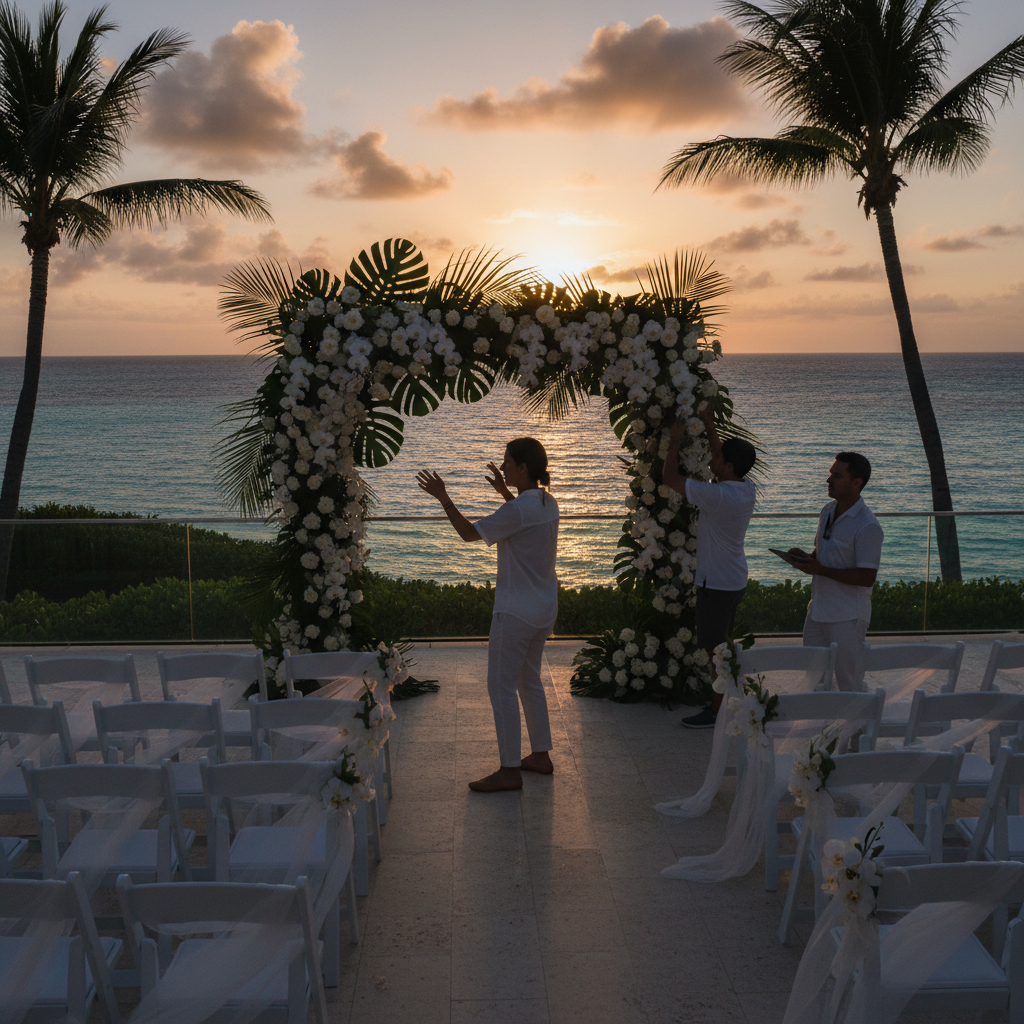
Quick Comparison Table (Feature-by-Feature)
Scan capabilities side-by-side to see which planner type aligns with your priorities. If you’re torn, highlight three mission-critical rows and select the model that wins at least two of them. Clarity beats compromise when timelines get tight.
| Capability | Destination Planner | Local Planner |
|---|---|---|
| Travel & Visas | Manages blocks, transfers, and embassy windows | Coordinates regional travel and day-of shuttles |
| Ritual Mastery | Adapts rituals to host-country guidelines | Replicates rituals with familiar suppliers |
| Design Previews | Virtual mockups; condensed site intensives | In-person samples; frequent walkthroughs |
| Vendor Bench | Curated abroad; import key specialists | Deep local network; backup options nearby |
| Contingencies | Shipping, customs, weather, timezone buffers | Equipment swaps, local holds, rapid responses |
| Communication | Pre-planned windows; bilingual coordinators | High-frequency calls; in-person checks |
Methodology: How We Evaluated
We assessed planner models by timeline control, cultural fluency, vendor depth, and risk management. We weighted hybrid performance for split-location weddings in London and India, reflecting Patel Events’ 27+ years, 500+ deliveries, and a 50+ vendor network.
- Evidence: Internal run-of-show archives, design boards, and rehearsal logs across 500+ events.
- Criteria: Cultural fidelity, guest movement, install precision, and post-event wrap.
- Validation: Timeline tests and vendor drills simulating 30-day run-ups.
We also considered broader event-planning frameworks and venue readiness checklists, such as this concise wedding venue comparison guide for scanning must-have features before you commit.
How to Work with Patel Events
Start with a 30-minute consultation focused on venue region, rituals, and guest travel. Then choose a support model—local, destination, or hybrid. We’ll co-create a master timeline, align design direction, and run vendor holds to confirm feasibility within 72 hours.
- Discovery: Venue region, rituals, guest patterns, headcount.
- Direction: Two mood boards; select one within 14 days.
- Decision: Lock support model; schedule site visits.
- Delivery: Run-of-show, rehearsals, production, and strike.
Midway through planning, we run a readiness drill that pressure-tests load-ins, entertainment cues, and power plans. This creates calm, confident execution in the final 30 days.
Buying Guide: Questions to Ask Any Planner
Ask for proof of systems, not promises. Request a sample run-of-show, a vendor tracker screenshot, and a risk log from a recent wedding. True professionals show real artifacts, not templates alone, and can name two backups for each critical vendor.
- How many site visits are included and when do they occur?
- Which cultural ceremonies have you produced in the past 24 months?
- Who is your technical lead for power and staging?
- How do you manage rehearsals across multi-event weekends?
- What’s your backup plan for entertainment or weather disruptions?
- Can we see anonymized cue sheets and floor plans?
For menu planning inspiration during tastings, this practical wedding catering guide is a helpful example of organizing flavors and courses for a cohesive guest experience.
Resources and Inspiration
Is a destination wedding planner necessary if only one event is abroad?
If one core function—like your ceremony—is abroad, use either a destination specialist or a hybrid team. You gain on-the-ground coordination for permits, vendors, and rehearsal timing while preserving design continuity across home and away events.
What does a local planner do that a destination planner doesn’t?
Local planners offer frequent site walkthroughs, fast vendor holds, and hands-on previews like floral samples. They’re ideal when venues are near home, timelines are tight, and you prefer more in-person checks leading up to rehearsal.
Can one team manage both a London reception and an overseas ceremony?
Yes. A hybrid team pairs a local lead with a destination specialist to keep one design language, one master run-of-show, and one accountability line. It’s efficient for multi-event schedules across different time zones.
When should we book the planner?
Plan on 12–15 months for destination weddings and 9–12 months for local celebrations. Securing your planner early protects venue dates, cultural suppliers, and travel windows, which get competitive fast.
How do we compare value without talking about price?
Compare deliverables: site visits, design mockups, on-site days, vendor network depth, and contingency detail. Choose the team that removes the most risk in the last 60–120 days before the wedding week.
Key Takeaways
Pick based on venue location, ritual complexity, and guest travel. Local planners win near home; destination planners win abroad; hybrids win split celebrations. Choose proof of systems over promises, and protect rehearsals with early lock-ins and clear backups.
- Location drives the planner type; culture and travel refine it.
- Ask for real artifacts—run-of-show, vendor tracker, and risk log.
- Consolidate design decisions within 14 days to protect timelines.
- Treat the final 30 days as execution-only, not discovery.
- For HA3 0PB couples, plan around transit windows to keep rehearsals on time.
Ready to Compare Your Options?
Book a consultation to map your venue region, rituals, travel, and guest movement. We’ll recommend a local, destination, or hybrid model and outline the first three milestones so you can move forward with clarity and calm.
We serve couples from Harrow to Greater London and beyond, with deep fluency in South Asian weddings and destination execution across India. Let’s shape a plan that fits your story—beautifully and practically.
Soft CTA: Share your dates and venue shortlist, and we’ll run a quick feasibility check (holds, travel windows, rehearsal cadence) within 72 hours.