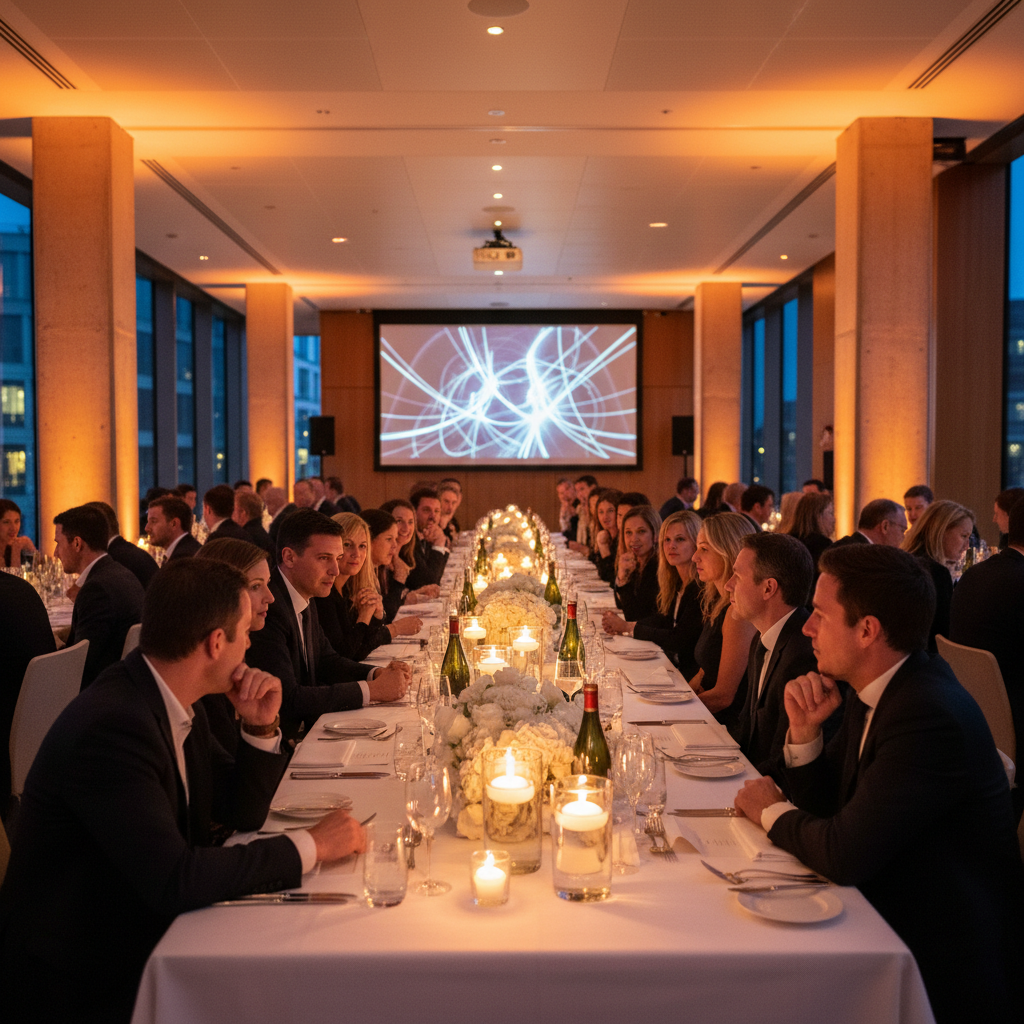
Corporate dinner planning is the end-to-end process of designing, organizing, and executing a formal meal for employees, clients, or partners. It aligns food, venue, décor, AV, and run-of-show to meet business goals. For teams near HA3 0PB in Greater London, Patel Events delivers culturally aware, brand-aligned dinners that feel effortless.
By Shani Patel — Patel Events
Last updated: May 29, 2026
Above the Fold: Your Corporate Dinner Game Plan + TOC
Plan a corporate dinner by clarifying goals, selecting a right-sized venue, curating an inclusive menu, mapping a timed run-of-show, and coordinating décor, AV, and staffing. Lock dates early, confirm dietary needs, and rehearse transitions. A simple plan prevents overruns and keeps guests engaged from welcome to closing remarks.
Here’s how to use this complete guide. Scan the table of contents, jump to what you need, then circle back to the examples and checklists. Patel Events brings 27+ years of planning expertise, 500+ delivered events, and a 50+ vendor network to every milestone and corporate dinner we produce.
- What is a corporate dinner?
- Why corporate dinners matter
- How a dinner runs: timeline and roles
- Dinner formats and approaches
- Buying guide: venue, menu, AV (Greater London)
- Comparison: venues and service models
- Best practices for flawless execution
- Tools and resources for planners
- Case studies and examples
- Frequently asked questions
- Key takeaways and next steps
What Is a Corporate Dinner?
A corporate dinner is a hosted business meal designed to achieve a clear objective—recognition, relationship-building, launches, or fundraising—through curated food, environment, and program flow. It blends hospitality with brand storytelling, turning a shared meal into measurable engagement and lasting goodwill.
In practice, a corporate dinner is more than great food. It’s an experience shaped by intention.
- Purpose first: Recognition, deal acceleration, stakeholder alignment, or culture building.
- Guest-centered design: Accessible seating, inclusive menus, and thoughtful pacing.
- Run-of-show discipline: Doors open, welcome, service cadence, speeches, awards, closing.
- Brand expression: Color story, florals, stage design, and tactile details that mirror values.
At Patel Events, our corporate event management team uses the same precision we bring to large wedding receptions and sangeet nights. The difference is the business goal. We calibrate décor, AV, and service to support outcomes—not distract from them.
Why Corporate Dinners Matter
Corporate dinners matter because face-to-face connection accelerates trust, celebrates teams, and drives strategic outcomes. When the room, menu, and program align with objectives, organizations see higher engagement, stronger loyalty, and clearer next actions after the event.
We’ve seen well-run dinners energize teams and move pipelines. Here’s why the format works.
- Human connection: Shared meals create psychological safety. People open up across a table.
- Signal of respect: A carefully hosted evening tells guests they matter.
- Focused storytelling: Speeches and staging turn a meal into a message.
- Memorable anchors: Signature courses, lighting cues, and live moments stick in memory.
Patel Events has delivered 500+ events with a reported 98% client satisfaction rate. That consistency comes from method—not luck. We blend cultural fluency, rigorous logistics, and design thinking to make each corporate dinner feel easy while achieving its purpose.
How a Corporate Dinner Works: Timeline and Roles
Successful dinners follow a clear arc: pre-production (goals, vendors, design), production (load-in, rehearsals, service), and post-production (thank-yous, content sharing, debrief). Named owners for run-of-show, AV, catering, and VIP care keep the evening smooth and on-message.
Here’s a high-level flow we use across London and the wider UK.
Pre-production (design and decisions)
- Objectives and audience: Clarify outcomes, headcount range, guest mix, and accessibility.
- Venue and date locking: Hold options, confirm availability, and decide on banquet vs. family-style.
- Menu scoping: Gather dietary data, plan inclusive options (halal, vegetarian, vegan, gluten-free).
- Program design: Welcome, awards, keynotes, entertainment, breaks, and closing.
- Creative direction: Palette, florals, tablescapes, stage look, signage style.
- Vendor roster: Catering, rentals, AV, lighting, photography/cinematography, transport.
Production (onsite execution)
- Load-in and checks: Layout mark-up, lighting focus, soundcheck, seating charts on-site.
- Front-of-house brief: Service timings, VIP cues, dietary cards, and speech handoffs.
- Run-of-show calling: A show-caller (Patel Events) keeps segments on time.
- Hospitality touches: Water on tables, prayer/quiet spaces, coat checks, and clear wayfinding.
Post-production (follow-through)
- Thank-you and media: Send a concise recap with photos/video highlights from our cinematography team.
- Debrief and improvements: Capture learnings while fresh; update playbooks for the next dinner.
In our experience, naming a single owner for each major lane (venue, menu, AV, VIPs) prevents crossed wires. It’s simple accountability that protects the guest experience.
Types of Corporate Dinners and Approaches
Choose a dinner format that fits your goal and guest mix: plated banquet for formality, family-style for connection, chef stations for movement, or tasting menus for storytelling. Add awards, keynotes, or entertainment to balance business with celebration.
Service formats
- Three-course plated: Predictable timing and presentational polish.
- Family-style sharing: Conversational energy and casual connection.
- Chef stations: Movement, customization, and networking flow.
- Tasting menu flight: Culinary narrative for VIP groups and product reveals.
Evening intents
- Awards celebration: Energize recognition with tight pacing and spotlight moments.
- Client hosting: Quiet luxury, seamless service, and time for meaningful talk.
- Product launch: Staging, reveals, and sensory tie-ins to message and menu.
- Board/leadership dinner: Privacy, security, and flawless white-glove service.
Design and ambiance
- Color and texture: Brand-aware palette; linens and florals that photograph well.
- Lighting plan: Warm ambient base, spotlight for stage, and candle accents.
- Soundscape: Speech clarity first; music as a supportive layer.
We regularly adapt this playbook across Greater London venues, from intimate private rooms to grand halls. Our vendor network covers rentals, AV, and floral design so you have one accountable partner from concept through strike.
Buying Guide: Venue, Menu, and AV in Greater London
For HA3 0PB and Greater London, shortlist venues by capacity, transport links, load-in rules, and inclusive menu options. Collect dietary data early, confirm AV specs in writing, and request floor plans. For hybrid needs, ensure bandwidth and power are tested at rehearsal.
Use this checklist when planning a corporate dinner with Patel Events. It reflects real constraints we manage in London every week, from venue policies to transport timing.
Local considerations for HA3 0PB
- Leverage proximity to Kenton station for guest arrival notes and post-event transit guidance.
- Mind weekend sports and hospital traffic near Northwick Park; adjust load-in and shuttle timing.
- Ask venues about quiet rooms for prayer or decompression; we build these into floor plans as standard.
Venue selection factors
- Capacity and layout: Round vs. king tables, stage visibility, and true seated counts (not just max fire code).
- Access and logistics: Lift size, loading bay hours, storage limits, and hard cutoffs.
- AV-friendly: Ceiling heights, rigging permissions, in-house vs. external AV policies.
- Location: Rail links and parking notes in confirmations and guest comms.
Menu planning essentials
- Inclusivity: Offer halal, vegetarian, vegan, and gluten-free variants without compromise.
- Service pace: Courses timed around remarks; avoid clashing hot plates with key speeches.
- Allergen clarity: Discreet table markers and server briefings; keep dignity and safety balanced.
AV and staging
- Microphones and coverage: 1–2 handhelds, 1–2 lavaliers, and a podium mic as backup.
- Projection and sightlines: Test content; ensure no table is blocked by pillars or floral height.
- Recording: Our cinematography team can capture edits for internal comms and social recaps.
Comparison: Venues and Service Models
Pick the model that fits your objective. Plated dinners favor formal remarks and predictability; family-style builds connection; stations promote networking; private-room restaurants simplify logistics for smaller groups. Balance capacity, control, and brand fit.
| Option | Best for | Pros | Watch-outs |
|---|---|---|---|
| Hotel ballroom (plated) | Awards, keynotes, large teams | Predictable service; strong AV; capacity | Union/in-house policies; décor needed for warmth |
| Event hall (family-style) | Team bonding, celebrations | Conversation-friendly; generous feel | More tabletop space; pacing requires show-caller |
| Chef stations | Networking, launches | Movement; customization; energy | Wayfinding and queue control critical |
| Private-room restaurant | Leadership, client hosting | Built-in ambiance; simplified ops | Limited staging and branding |
Our team will pressure-test your short list against program needs. For example, if you’re planning awards plus live music, we’ll model stage size and power draw before you sign.
Planning a corporate dinner? Let Patel Events map the run-of-show, menu, and guest journey. We coordinate décor, AV, and a vetted vendor team so you can host with confidence.
Best Practices for Flawless Execution
Lock objectives early, brief vendors with a single master schedule, rehearse transitions, and protect guest comfort. Use inclusive menus, clear signage, and disciplined timing. Assign owners for AV, VIPs, and service to keep the evening smooth and on-message.
Design for guests first
- Seating logic: Balance familiarity and cross-team mixing; seat speakers near the stage.
- Wayfinding: Simple signage, clear table numbers, and a visible check-in.
- Comfort: Chair count, aisle width, line-of-sight, and ambient lighting all drive ease.
Orchestration discipline
- One source of truth: A master run sheet with minute marks, responsibilities, and contacts.
- Show-calling: Cue sheets for mics, walk-on music, and lighting looks.
- Contingencies: Backup mics, printed notes, and rain/transport plans.
Inclusive hospitality
- Dietary dignity: Equally beautiful plates for all variants.
- Quiet spaces: Prayer/parents’ room, nursing accommodations, and step-free routes.
- Photography etiquette: Coordinate shot lists; avoid flash during key remarks.
These habits come from delivering hundreds of events, including culturally rich South Asian celebrations where flow, respect, and precision matter. We bring the same care to every corporate dinner we produce.
Tools and Resources for Planners
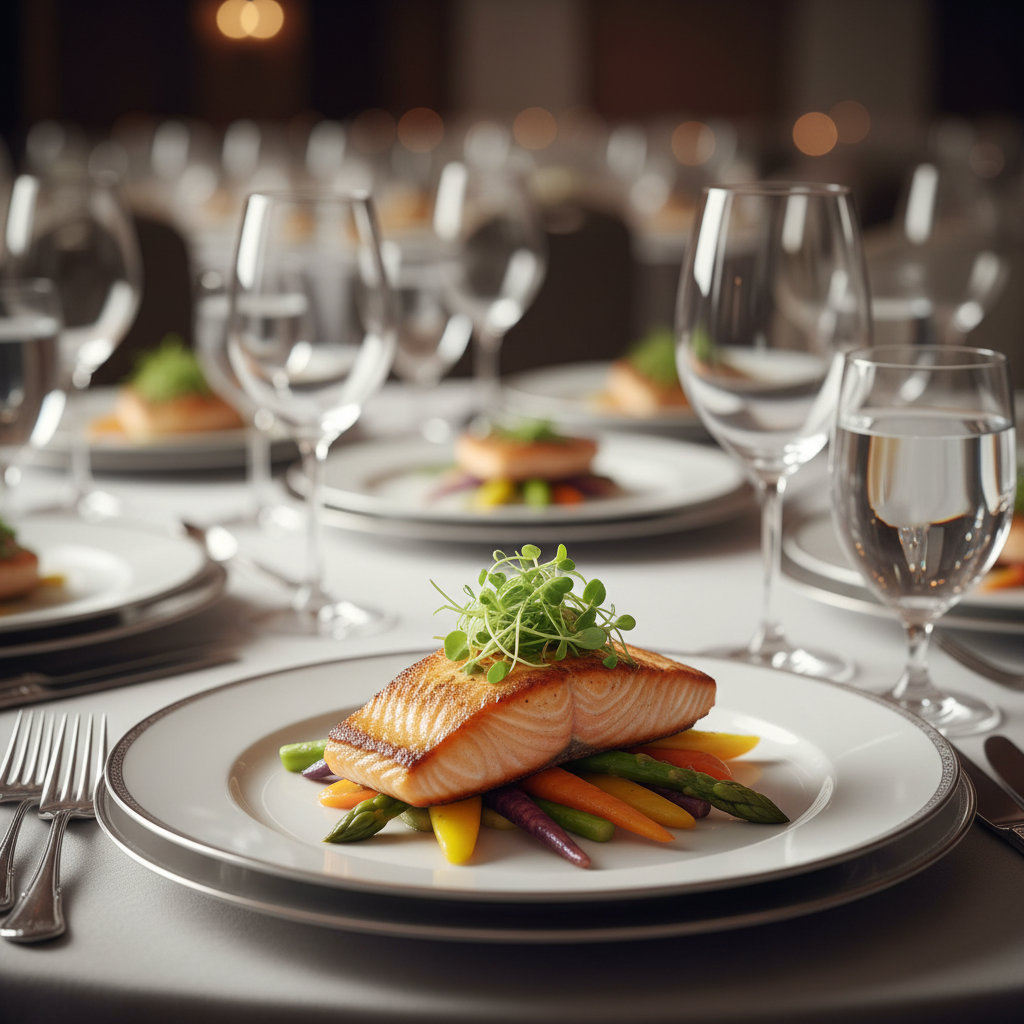
Use simple, reliable tools: shared run sheets, floor-plan software, guest dietary trackers, and a rehearsal checklist. Pair tools with clear roles so information flows to the right people at the right time.
Planning stack we like
- Run-of-show template: Minute-by-minute schedule with cues and owners.
- Floor-plan sketching: Grid-based layouts to confirm capacity and sightlines.
- Guest data capture: RSVP form fields for allergens and access needs.
- Vendor matrix: Contacts, load-in times, insurance docs, and deliverables.
Operational checklists
- Rehearsal list: Mic checks, content test, timing drill, and handoffs.
- Service cues: Table-release order, silent service during speeches, and VIP monitoring.
- Strike plan: Asset inventory, load-out windows, and reset conditions.
Our clients often ask for vendor referrals. Patel Events maintains a 50+ partner ecosystem across AV, décor, florals, and catering. We’ll build the right team for your format and brand.
Case Studies and Examples (Patel Events)
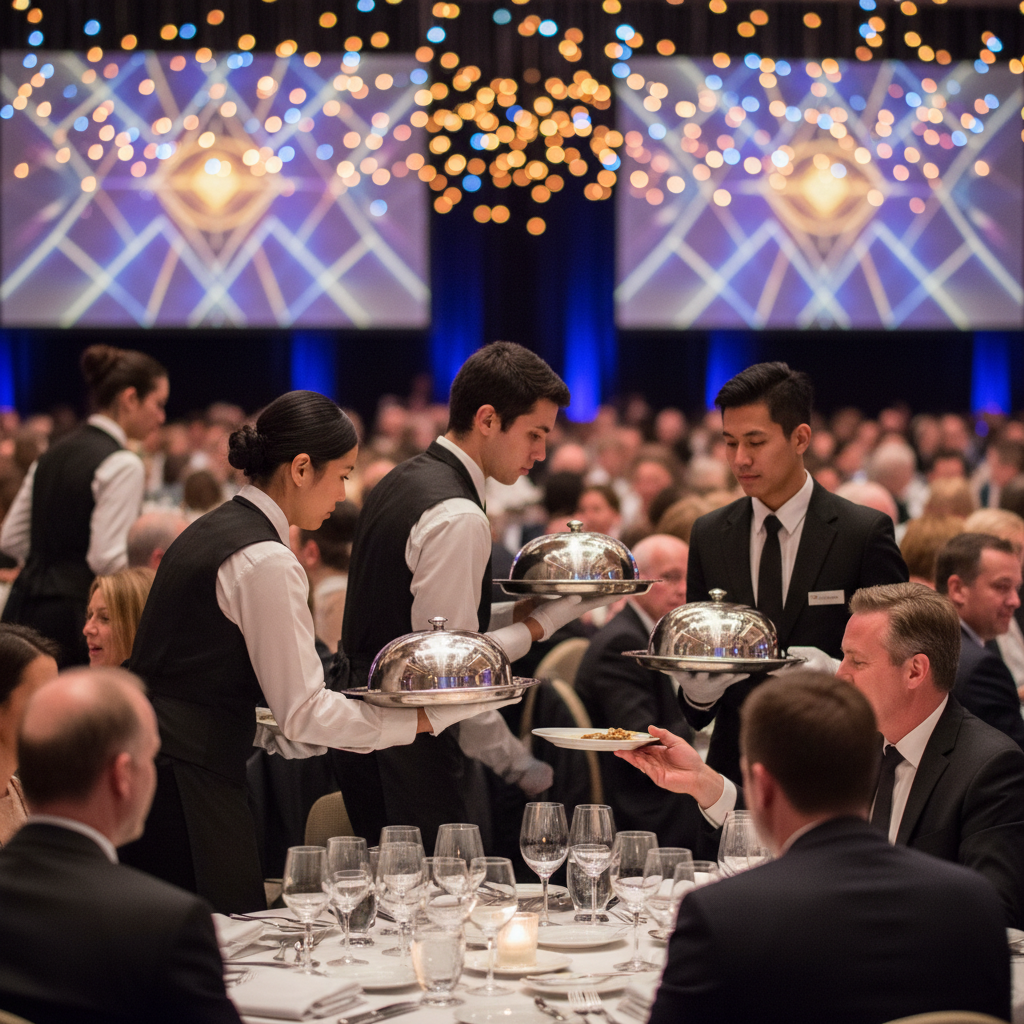
Examples clarify choices. Here are real-world scenarios that show how goals, menus, and staging come together. Use them to shape your own brief and to anticipate operational needs that don’t show up on mood boards.
Awards night with leadership keynotes
- Objective: Celebrate quarterly performance; align on next-quarter roadmap.
- Format: Plated three-course with stage, spotlight looks, and timed walk-ons.
- Design: Brand palette linens, low florals under 10 inches, clear podium.
- Outcome: Crisp pacing kept speeches under time; post-event survey showed strong morale lift.
Client hosting dinner (12–18 guests)
- Objective: Build trust with strategic accounts.
- Format: Private room; tasting menu flight; sommelier pairing on request.
- Design: Candle accents, textured runners, minimalist centerpieces for unobstructed sightlines.
- Outcome: High satisfaction; clear next-step syncs booked the following week.
Product reveal with sensory tie-ins
- Objective: Launch a new line with an immersive narrative.
- Format: Chef stations themed to product attributes; short stage reveals between courses.
- Design: Lighting color shifts synced to segment cues; projection surfaces for motion visuals.
- Outcome: Strong social capture; internal teams received edited highlight reels.
Inclusive cultural dinner for a global team
- Objective: Celebrate diversity and shared wins.
- Format: Family-style with halal, vegetarian, and gluten-free parity.
- Design: Warm metallics and jewel tones; mixed-height candle clusters.
- Outcome: Guests reported feeling seen and valued; repeat brief requested.
Leadership board dinner
- Objective: Confidential strategy discussion.
- Format: Private room; plated; white-glove service.
- Design: Understated tablescapes; sound masking at entry; zero cameras.
- Outcome: Frictionless environment supported focused decision-making.
Milestone dinner for a brand anniversary
- Objective: Celebrate a major year marker with partners and alumni.
- Format: Plated banquet with brief awards, archival visuals during dessert.
- Design: Heritage palette; floral nods to founding story.
- Outcome: Emotional resonance; strong alumni engagement post-event.
Sustainability-forward dinner
- Objective: Walk the talk on environmental goals.
- Format: Seasonal, low-waste menu; local sourcing highlighted.
- Design: Reusable rentals; live potted elements instead of single-use florals.
- Outcome: Positive feedback; sustainability notes included in debrief pack.
Cross-team mixer with chef stations
- Objective: Foster new connections after a reorg.
- Format: Stations and roaming entertainment; timed stage touchpoints.
- Design: Zone lighting and soft lounge pockets near the stage.
- Outcome: Noticeable lift in inter-team introductions and follow-ups.
Charity gala dinner
- Objective: Fundraise and build community visibility.
- Format: Plated banquet; live pledge moment; compact keynote.
- Design: Elegant, timeless décor; focused AV on speeches.
- Outcome: Strong participation; post-event summary shared with stakeholders.
Hybrid recognition dinner
- Objective: Celebrate global team members with remote participation.
- Format: In-room banquet synced with remote watch parties.
- Design: Redundant streams; clear camera lines; content-pack delivery next day.
- Outcome: Inclusive reach; global thank-yous captured on video.
These examples mirror how we execute corporate dinners across London and the UK, drawing on our experience in weddings and sangeet nights where timing and cultural nuance are non-negotiable.
Frequently Asked Questions
Here are direct answers to the most common corporate dinner questions—timelines, dietary needs, speeches, and what to expect from a planner like Patel Events. Each answer is concise and based on our London planning experience.
What should a corporate dinner agenda include?
Keep it simple: welcome, first course, brief remarks, main course, awards or recognition, dessert, closing thanks. Build pauses for service and reset. A clear, short agenda respects your guests and keeps the evening purposeful.
How do we handle diverse dietary needs gracefully?
Collect dietary details during RSVP and confirm counts at final check-in. Use discreet table markers and brief servers on allergens. Offer halal, vegetarian, vegan, and gluten-free options that match the main menu’s quality.
How long should speeches be at a business dinner?
Shorter is better. Aim for one focused keynote and very brief toasts. Coordinate with service so hot courses aren’t held during remarks. A show-caller will cue mics and transitions to keep everything tight.
Do we need a professional planner for smaller dinners?
If outcomes matter—client trust, leadership alignment, or launches—yes. A planner coordinates venue, menu, AV, and timing so you can host. For intimate groups, our team right-sizes production while protecting the guest experience.
Key Takeaways and Next Steps
Define your goal, choose the right format, and protect guest comfort. Use a disciplined run-of-show and inclusive menu. Partner with a planner who can align décor, AV, and service to your purpose and venue constraints.
- Start with purpose: Recognition, relationships, or launches guide every choice.
- Right-size the room: Capacity, sightlines, and load-in shape feasibility.
- Inclusive menus win: Design for dignity and flavor parity across all needs.
- Time is everything: Rehearse transitions; keep speeches crisp.
- One accountable partner: Patel Events carries the details so you can connect.
Ready to host a corporate dinner that feels effortless? Our Harrow-based team supports clients across London, Leicester, Kent, and Tooting—with destination expertise when your story needs a bigger backdrop.
For additional perspective on space planning and gala flow, see this corporate gala venue guide. To spark menu ideas and service cadence, browse an event center’s planning checklist. And for catering planning basics, these corporate catering tips outline common coordination points.